Fifty years after the fall of Saigon, the lessons of the Vietnam War continue to resonate with a painful urgency. Phillip Noyce's 2002 political drama, The Quiet American, adapted from Graham Greene's novel, stands as a searing cinematic critique of American interventionism that feels, if anything, more pertinent today.
A Fatal Friendship in 1950s Saigon
The film opens with a grim discovery: the lifeless body of Alden Pyle, a young American aid worker, played by Brendan Fraser. His acquaintance, the world-weary British journalist Thomas Fowler, portrayed by Michael Caine, describes him to a French policeman as a "quiet American" and a "friend". The story then flashes back to 1952 Saigon, where Fowler reports on the First Indochina War while maintaining a tranquil existence with his young Vietnamese lover, Phượng.
This fragile peace shatters with the arrival of Pyle, an idealist who fervently advocates for US involvement to contain communism and establish a US-backed "third force" in Vietnam. Pyle's unwavering belief in American righteousness immediately clashes with Fowler's cynical pragmatism. Their unlikely friendship is further complicated when Pyle falls for Phượng, setting the stage for a personal and ideological conflict.

Performances that Define an Era
Brendan Fraser delivers a masterful performance, imbuing Pyle with a polite, boyish charm that disarms both Fowler and the audience. Fraser portrays Pyle's convictions with such sincerity that the character seems less a calculating agent of imperialism and more a victim of the very ideology he champions.
Michael Caine offers what many consider a career-best performance, meticulously charting the collapse of Fowler's jaded exterior under the weight of jealousy, guilt, and a rediscovered moral compass. Caine moves through Saigon like a spectre, his slow gait and sardonic wit masking a man terrified of losing his power and his love.
Phượng: The Embodiment of a Nation
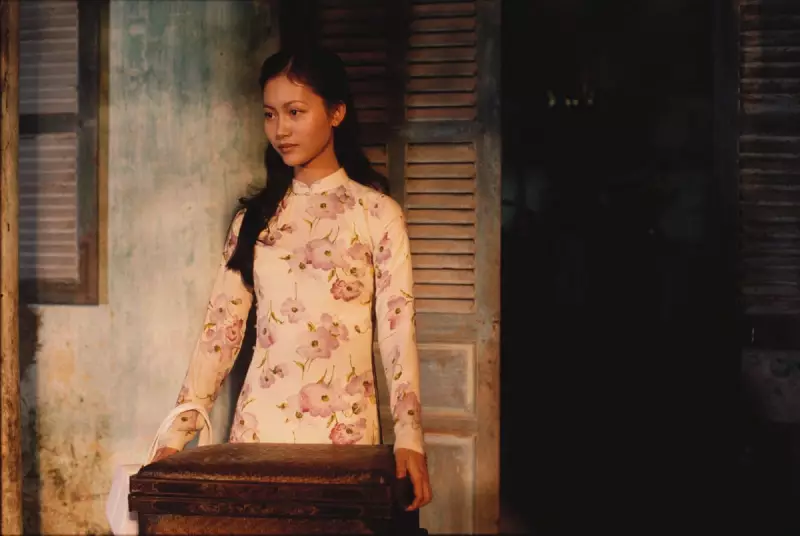
The true soul of the film, however, is Phượng, played with silent, profound brilliance by Đỗ Thị Hải Yến. Caught between two Western men and their conflicting visions for her country, Phượng becomes a potent symbol of Vietnam itself. She is objectified as a prize to be won, just as foreign powers fought over her homeland.
Yet, through Đỗ's measured performance—expressed in melancholic glances and quiet contemplation—Phượng retains an enduring dignity. In a poignant moment, she explains her name means 'phoenix', a subtle prophecy of Vietnam's eventual rise from the ashes of war to claim its independence. Her presence, elegantly framed by Christopher Doyle's elegiac cinematography, personifies the nation's resilience.
A Cinematic Warning Unheeded
Noyce's direction reaches its powerful peak in the film's climax. A brutal massacre outside the Saigon Opera House is shot with the frantic, handheld realism of cinéma vérité, a technique that visually echoes decades of documented atrocities from the conflict soon to escalate into the Vietnam War.
The film's release was itself historically significant, arriving on the eve of the US-led invasion of Iraq in 2003, making its warnings starkly immediate. Now, fifty years after the end of the Vietnam War, with the US deeply involved in backing conflicts such as the war in Gaza, the film's central admonition against foreign intervention rings out once more, a tragic reminder that its lessons remain unlearned.
The Quiet American is available to stream on Prime Video in the UK, on SBS On Demand in Australia, and on Fubo in the US. It is also available for digital rental.