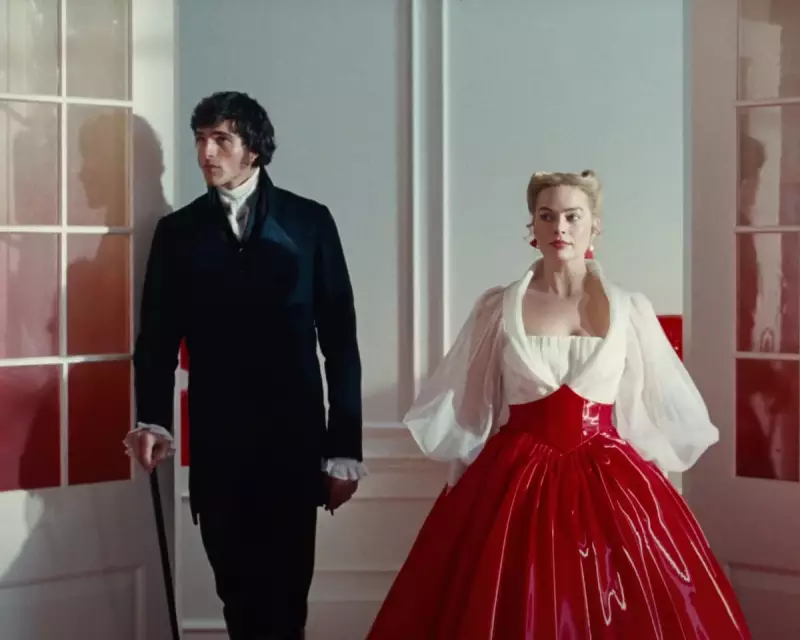
The first trailer for director Emerald Fennell's highly anticipated adaptation of Wuthering Heights has landed, and it is already proving as provocative as the director's previous work, Saltburn. Starring Margot Robbie and Jacob Elordi as the iconic Cathy and Heathcliff, the film is slated for release on 13 February, the day before Valentine's Day. Yet, this timing has sparked a fundamental debate: is Emily Brontë's 1847 novel truly "the greatest love story of all time," as the trailer claims, or is it something far darker and more complex?
A Legacy of Misinterpretation
The promotional tagline is almost identical to that used for the classic 1939 film starring Laurence Olivier and Merle Oberon, which was sold as "the greatest love story of our time … or any time!". This repetition highlights a century-long tendency to sanitise Brontë's original vision. The novel's plot is notoriously brutal. After being rejected by Cathy due to her social snobbery, Heathcliff embarks on a lifelong campaign of psychological and physical vengeance that ensnares the next generation.
This inherent darkness is why most film adaptations, including the 1939 version, stop at Cathy's death, offering a ghostly, romantic conclusion. A rare exception was Peter Kosminsky's 1992 TV version, which covered the entire narrative and even featured Sinéad O'Connor as Emily Brontë warning viewers not to smile. Andrea Arnold's raw 2011 film hewed closer to the book's grim tone but also focused primarily on the first half of the story.

Why The Novel Is a 'Nightmare to Adapt'
The challenges of adapting Wuthering Heights are legion. Beyond the central pair's toxic dynamic, the novel's second half is filled with almost unfilmable cruelty. Heathcliff abuses his own son and Cathy's daughter, forces them into marriage, and rents out property where a grotesque side-plot involves a ghost and broken glass. The book's complex, nested narrative structure adds another layer of difficulty.
Contemporary critics were horrified upon the novel's publication. Graham's Magazine wondered how the author didn't commit suicide after writing it, citing its "vulgar depravity and unnatural horrors," while The Spectator labelled it "coarse and disagreeable." In this light, rumours that test audiences found Fennell's film "aggressively provocative and tonally abrasive" might be seen as a sign of fidelity to the source material's shocking spirit, even if specific scenes (like one involving a public hanging) are new inventions.
Love, Nihilism, and a Virgin's Story
So why does this story of obsession, revenge, and misery continue to be framed as a grand romance? Some scholars, like Sandra Gilbert and Susan Gubar, have interpreted Heathcliff as a feminist force against the patriarchy that confines Cathy. Others, such as critic Elizabeth Hardwick, suggested it is "a virgin's story"—an abstract fantasy about love that can only be perfected in death, which may explain its powerful appeal to teenagers. Director Emerald Fennell has said she wants to capture the feeling of reading the book at age 14.
Emily Brontë herself was no naive teenager when she wrote it; she was a 27-year-old woman of formidable intellect and worldly engagement. Her novel masterfully holds a tension between wild passion and utter nihilism. In a key moment, Heathcliff confesses to digging up Cathy's grave, telling housekeeper Nelly Dean he dreamed of "dissolving with her." Brontë seems to ask if this all-consuming, destructive passion is what we truly desire from love.
The novel's actual ending offers a quiet, healing alternative, as Cathy's daughter gently teaches Hindley's son to read—a scene of tender connection that has rarely made it to the screen. Whether Fennell's version will embrace the full, troubling scope of Brontë's vision, including this poignant conclusion, remains to be seen. One thing is certain: by labelling it a great love story, the film has already reignited the fierce debate that the novel has provoked for over 175 years.