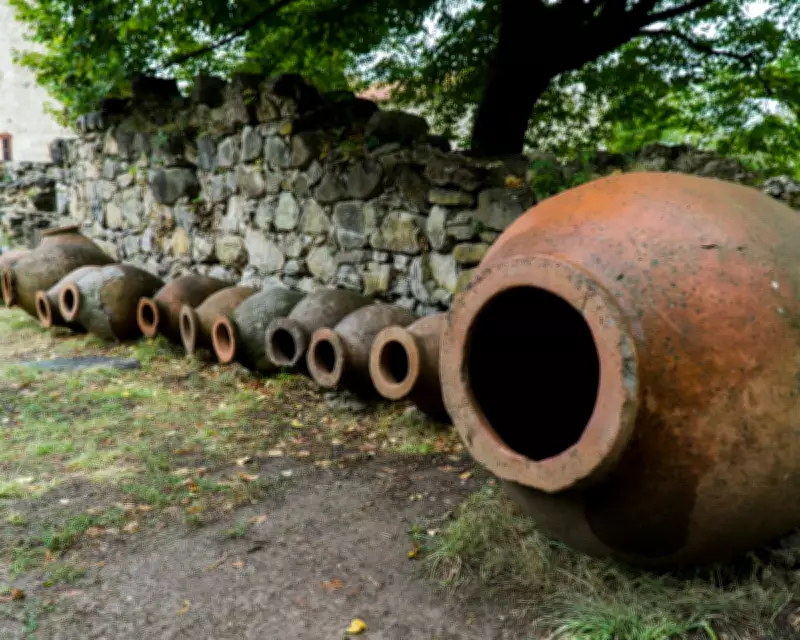
The story of Georgian wine is not merely a tale of viticulture; it is a profound narrative woven into the very fabric of human civilization, spanning an astonishing 8,000 years. Archaeological evidence from the South Caucasus region firmly establishes Georgia as the cradle of winemaking, with discoveries of grape residue and ancient pottery shards providing irrefutable proof of this enduring legacy. This ancient tradition, once overshadowed by more prominent European wine regions, is now experiencing a remarkable global renaissance, captivating sommeliers and enthusiasts alike with its unique methods and indigenous grape varieties.
The Ancient Foundations: Qvevri and Enduring Techniques
At the heart of Georgia's winemaking identity lies the qvevri, an egg-shaped earthenware vessel used for fermentation, aging, and storage. This traditional technique, recognized by UNESCO as an Intangible Cultural Heritage of Humanity, involves burying the qvevri underground to maintain a constant temperature. The process typically includes fermenting grapes with their skins, seeds, and stems, often resulting in distinctive amber-colored wines known as 'orange wines' that boast complex tannic structures and deep, earthy flavors. This method, largely unchanged for millennia, represents a living connection to the past and a stark contrast to modern industrial winemaking.
A Modern Revival on the Global Stage
Following decades of Soviet-era standardization that prioritized quantity over quality, the post-independence era has sparked a vibrant revival of Georgia's artisanal wine heritage. A new generation of winemakers, alongside dedicated families preserving ancestral knowledge, is championing traditional qvevri methods while embracing sustainable practices. This movement has propelled Georgian wines onto the international scene, with exports growing significantly and accolades pouring in from prestigious competitions. Wine bars and restaurants from London to Tokyo now proudly feature Georgian selections, introducing global palates to unique indigenous grapes like Saperavi, a bold red, and Rkatsiteli, a versatile white.

Cultural Significance and Future Prospects
Wine in Georgia transcends mere beverage status; it is deeply embedded in religious rituals, social ceremonies, and daily life, symbolizing hospitality and community. The Georgian supra, or traditional feast, is invariably guided by a tamada (toastmaster), with wine flowing as a central element of storytelling and connection. Looking ahead, the future of Georgian wine appears exceptionally bright. Producers are skillfully balancing reverence for ancient traditions with innovative approaches to viticulture and marketing. As climate change poses challenges to established wine regions, Georgia's diverse microclimates and resilient native varieties position it as a region of growing interest and potential, ensuring its 8,000-year story continues to evolve for generations to come.