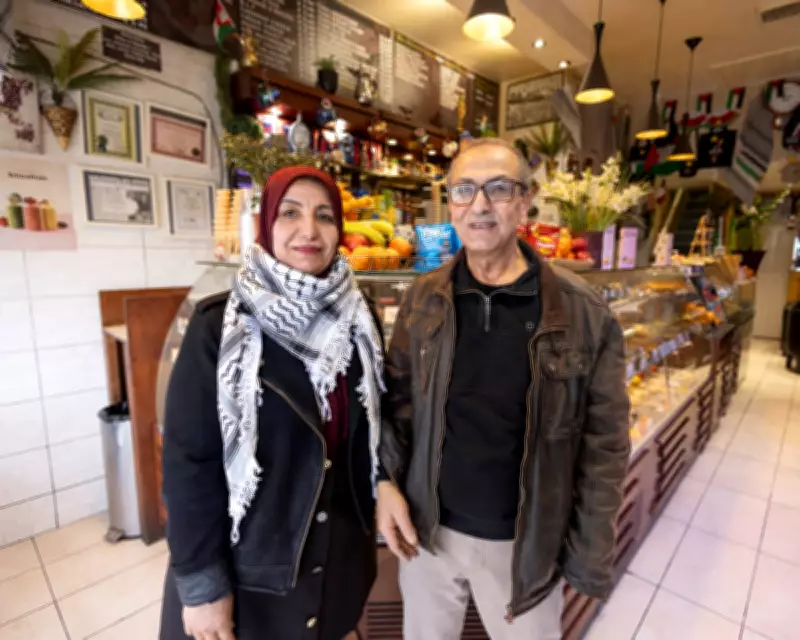
Food as Resistance: Palestinian Cafe in London Faces Corporate Rivalry Amid Gaza Conflict
In the bustling neighborhood of Archway, north London, a small Palestinian-owned cafe has become an unexpected frontline in the Israel-Gaza war. Cafe Metro, run by Faten Sehwail and Mahmoud Ismail, has been hosting sold-out supper clubs for six months, serving traditional dishes like maqluba and falafel while raising funds for Gaza aid. However, the arrival of upscale bakery chain Gail's just two doors away has ignited tensions over gentrification, corporate ties to Israeli security firms, and the symbolism of food in political conflict.
A Culinary Sanctuary in Troubled Times
Faten Sehwail moved to London in 2014, leaving behind family in Gaza's refugee camps. At Cafe Metro, she recreates recipes taught by her mother, transforming the intimate space into a hub of Palestinian culture and community. "We love to show people our culture," she says, describing food as a vital link to her homeland amid Israel's military campaigns. The supper clubs, which began as a one-off fundraiser, now attract loyal patrons weeks in advance, offering comfort and resistance through meticulously spiced meals.
Mahmoud Ismail, the cafe's co-owner, emphasizes their commitment to ethical competition. "We compete with them legally," he notes, pointing out that Cafe Metro's cappuccino costs £2.95 compared to Gail's £4.50. The cafe, established in the 1980s, has long championed its Palestinian heritage, but recent years have seen it targeted by pro-Israel activists who place stickers with messages like "Stop killing people" on its windows. Islington council has even attempted to remove Palestinian flags from the premises, reflecting the broader climate of suspicion facing Palestinian businesses in Western societies.

Corporate Intrusion and Symbolic Warfare
The conflict escalated when Gail's, a British bakery chain founded by an Israeli baker in the 1990s, opened a new branch near Cafe Metro. Critics accuse Gail's of accelerating gentrification and note that its parent company, Bain Capital, invests in military technology, including Israeli security firms. Although Gail's denies specific connections to any government, its proximity to the Palestinian cafe has been interpreted as a symbolic act of aggression. Less than a week after opening, Gail's windows were smashed and its walls graffitied with slogans like "reject corporate Zionism." No arrests have been made, and the local Palestine Solidarity Campaign has distanced itself from the vandalism.
A spokesperson for the Board of Deputies of British Jews condemned the incidents as part of a trend to marginalize Jewish participation in civil society. Meanwhile, Cafe Metro continues to operate under pressure, with Mahmoud asserting their focus on culinary excellence over confrontation. The rivalry highlights a deeply asymmetric war: a small independent cafe versus a corporate giant with indirect ties to geopolitical conflicts, set against the backdrop of London's rapidly changing high streets.
Food as a Political Statement in a Disenfranchised Age
In an era where traditional Palestinian activism struggles to influence global events, food has emerged as a potent tool of defiance. The supper clubs at Cafe Metro represent more than mere dining; they are acts of cultural preservation and political statement. As Faten and Mahmoud serve dishes like lentil soup and baklava, they navigate a world where their existence is constantly threatened. The falafel and maqluba may seem like blunt instruments against military-industrial complexes, but they offer a tangible connection to heritage and resistance.
This microcosm of conflict in Archway underscores broader themes: the denial and celebration of food cultures, the impact of corporate expansion on local identities, and the ways marginalized communities assert their presence. Despite the challenges, Cafe Metro's supper clubs thrive, feeding north Londoners while standing as a testament to resilience. In a forever war fought on distant battlefields and local streets, food remains a recurring motif—a source of sustenance, identity, and quiet rebellion.