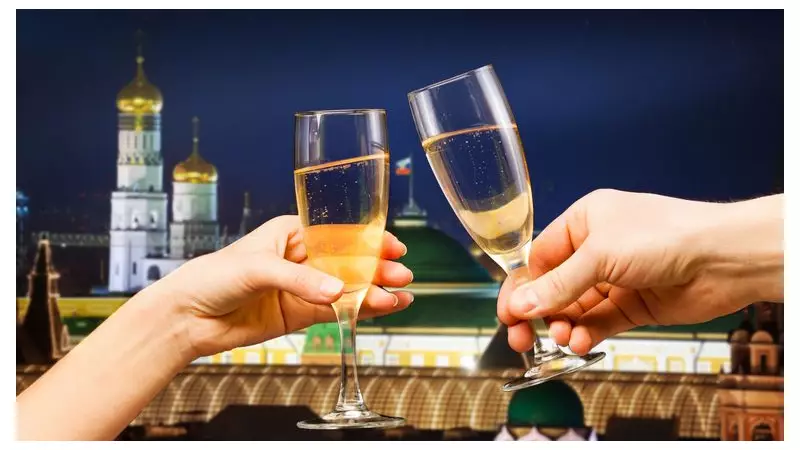
In the sun-drenched hills of Russia's Krasnodar region, near the Black Sea, a quiet revolution is fermenting. With Western imports largely cut off due to sanctions following the invasion of Ukraine, domestic winemakers are seizing the moment, ambitiously striving to produce vintages that can stand alongside the world's best from France and Italy.
A Sparkling Ambition in the Shadow of Sanctions
At the heart of this push is the Nikolaev & Sons vineyard, a family business started two decades ago. Standing amidst rows of Chardonnay and Pinot Noir vines, Mikhail Nikolaev, one of the sons, makes a bold claim. "Climatically, we have the potential to be within the top sparkling regions of the world," he asserts, comparing their method—the traditional technique used in Champagne—to options from Britain and Northern Italy.
The estate, with its Tuscan-style visitor complex, currently produces 60,000 bottles of sparkling wine annually, with plans to double output by 2032. While international recognition is on hold due to geopolitical strife, the domestic market is booming. A decade ago, local wines held just a quarter of the Russian market; today, they command nearly two-thirds of all sales, spurred by scarce and expensive imports and a Kremlin-backed patriotic push for homegrown produce.

The Sommelier's Verdict and a Patriotic Shelf Presence
Denis Rudenko, a member of the Russian Sommelier Society with 25 years of experience, has watched this transformation unfold. He believes that for mass-market wines, there is now little difference between Russian and foreign offerings. While the country may not yet have many "collectable" vintages, Rudenko suggests that could change within the next two decades as the industry matures.
This confidence is visible on supermarket shelves across Russia, where domestic labels now dominate and are heavily promoted. The question, however, remains for the consumer: is the quality truly there, or is it a choice driven more by necessity and patriotism than by palate?
The Blind Taste Test: Theory Meets Reality
To find an unbiased answer, a blind tasting was arranged at an upmarket Moscow wine bar. The challenge pitched a Russian Riesling against a German counterpart. The results were decisive.
The first taster preferred the second wine, finding it lighter. A man at a neighbouring table agreed, noting the Western wine had "more nuanced flavours," while the Russian sample was more acidic. A third participant enjoyed the aroma of the Russian wine but ultimately preferred the softer taste of its German rival.
The score was a clear three-nil victory for the Western wine. The experiment suggested that, for now at least, when labels are hidden and patriotism is set aside, the refined palates of Moscow's wine drinkers still lean towards established European classics.
The journey for Russian winemakers like Nikolaev & Sons is far from over. Sanctions have provided an unprecedented opportunity for growth and investment at home. Yet, as the blind tasting in the capital revealed, achieving international elite status requires more than ambition and favourable climate—it demands a consensus of taste that, for the moment, still resides elsewhere.