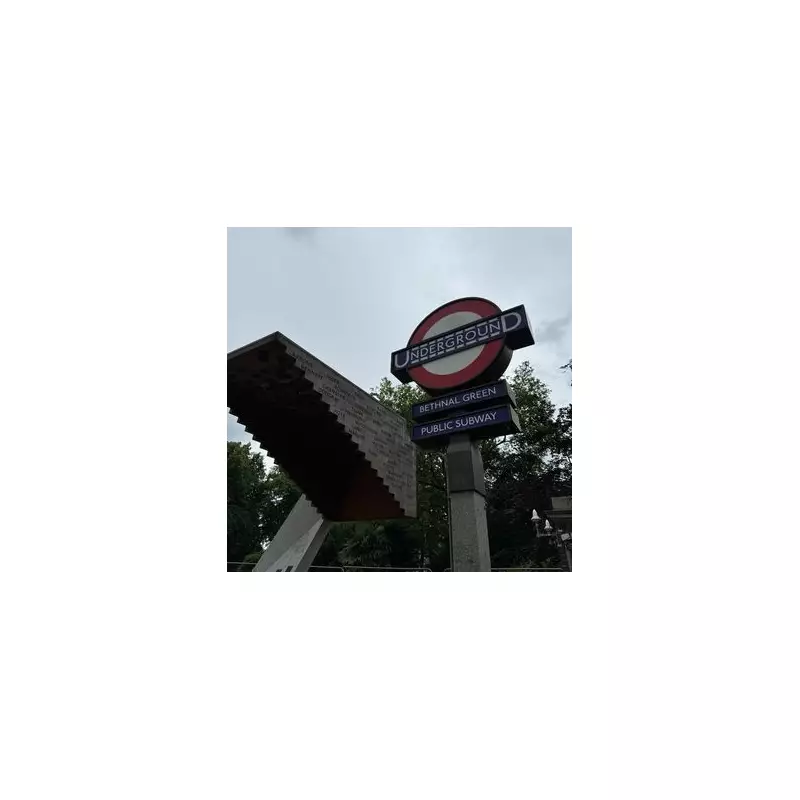
One of the darkest and most secretive chapters of London's wartime history unfolded not from a bomb, but from panic, at a busy Underground station in the East End. The Bethnal Green tube disaster of March 3, 1943, resulted in the single largest loss of civilian life in the UK during the Second World War, claiming 173 lives. The truth was deliberately suppressed by the government for the remainder of the conflict.
The Night of the Crush: A Tragedy of Misunderstood Sounds
As the Blitz raged, stations on the London Underground network served as vital air raid shelters for thousands. On that fateful Wednesday evening, air-raid sirens sounded across Bethnal Green. Residents, well-practised in the drill, began making their way to the deep-level station for safety.
However, no enemy bombs were falling. The panic was triggered by the unfamiliar and terrifying sound of a new British anti-aircraft rocket battery being fired for the first time in nearby Victoria Park. The roar of the rockets was mistaken for incoming explosives, causing a surge of people to rush towards the station's single, narrow entrance.

A Deadly Chain Reaction on the Stairs
As hundreds hurried down the wet, poorly lit staircase, a woman carrying a baby lost her footing and fell near the bottom. An elderly man tripped over her, creating a blockage. Those at the front tried desperately to stop, but the crowd behind, unable to see or hear what was happening in the blackout, continued to push forward under the impression a bomb had struck.
In the ensuing crush, people piled on top of one another. Air Raid Wardens fought to halt the flow and pull bodies free, but the scale of the catastrophe was immense. The final death toll was horrific: 27 men, 84 women, and 62 children were asphyxiated or trampled. Around 90 more people were injured.
A Wartime Cover-Up to Maintain Morale
In the immediate aftermath, an official cover story was circulated stating the station had been hit by a bomb. When a detailed report reached Prime Minister Winston Churchill, he made the decision to withhold the full, horrifying facts from the public until after the war. The government feared that revealing how 173 people had died in a preventable accident, rather than by enemy action, would devastate civilian morale and could lead to dangerous panic at other shelters.
The medical staff who dealt with the casualties were haunted for life. Dr. Joan Martin, who helped treat the injured, recalled the night in a 2016 BBC interview. "We received a phone call telling us to expect 30 faints from a Tube shelter. 30 faints!" she said. The reality was very different. "The first wet, mauve, body was carried into the hospital... Mauve, because they were all asphyxiated." She added, "I've had nightmares ever since."
The official inquiry placed blame on the government for poor lighting and the lack of a crush barrier, but its findings were not published until 1946.
A Memorial and a Legacy
For decades, the disaster remained a painful, semi-forgotten memory for the East End community. Today, outside Bethnal Green station, the victims are commemorated by the 'Stairway to Heaven' memorial, a striking bronze and concrete sculpture unveiled in 2017. It stands as a permanent testament to the 173 Londoners who lost their lives in one of the war's most heartbreaking civilian tragedies, a story finally told in full.