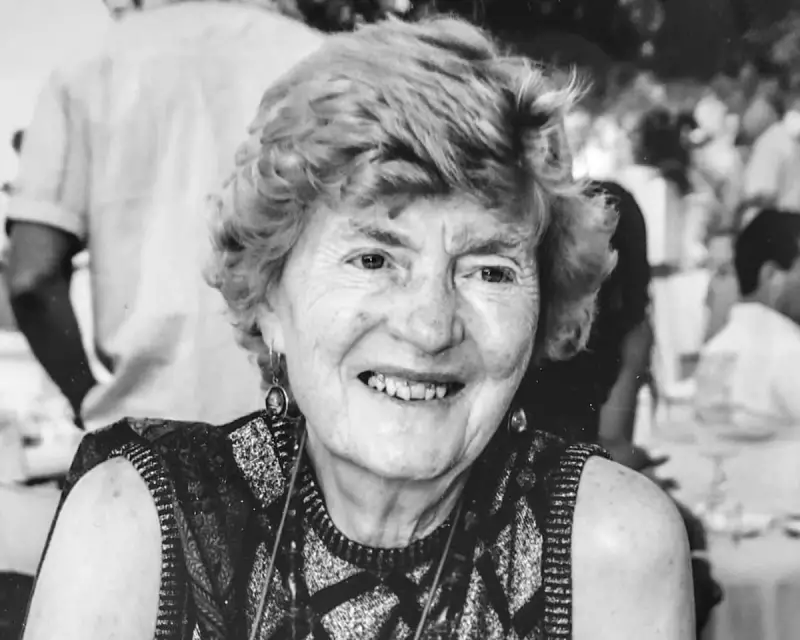
The remarkable life of Betty Hudson, a musician and teacher whose adventures took her from the Royal Academy of Music to translating for the Hungarian football team during the 1966 World Cup, has been celebrated following her death at the age of 98.
A Life Centred on Music and Adventure
Betty Hudson's varied and fascinating life was fundamentally shaped by her deep love of music. A fine pianist, she studied at the Royal Academy of Music in London in the late 1940s. There, she received tuition from a pupil of the eminent Polish virtuoso, Theodor Leschetizky, a connection of which she was immensely proud.
Her sense of adventure truly ignited in the 1950s when, after falling in love with a Hungarian violinist, she followed him to Budapest. In the Hungarian capital, she immersed herself in the country's rich musical culture, studying with the renowned composer and music educationist, Zoltán Kodály. She also formed a friendship with the composer György Kurtág, who gave her piano lessons.

Betty adored her life in Budapest, where she also undertook some teaching work. However, this chapter was abruptly closed in 1956 when she was forced to flee due to the Hungarian uprising, returning to the safety of the United Kingdom.
From Sheffield Classrooms to the World Cup
Born in Sheffield, Betty was the youngest of three daughters to Rose, a dressmaker, and William Hudson, a table knife cutler. Her musical talent was evident from a young age when she began learning the piano.
After attending Abbeydale Girls' Grammar School and completing a music degree at Sheffield University (1945-48), she embarked on her professional path. Back in England from Hungary, she combined her twin passions: music and language.
She became a dedicated music teacher and head of department, with many of her students achieving great success. Notably, she taught the leading bass-baritone Matthew Brook, who would later fondly remember his A-level music teacher as "a lovely lady."
Alongside her teaching, her fluent Hungarian led to unique translation opportunities. Most famously, this skill secured her a role working as a translator for the Hungarian national football team during the 1966 FIFA World Cup, hosted in England.
A Legacy of Passion and Lifelong Learning
Betty's career in education saw her join Brighouse Girls' Grammar School as head of music in the mid-1960s. In the following decade, she became deputy head of the music department at Huddersfield Technical College, where she formed lasting friendships with colleagues.
Retirement in 1992 did not slow her down. She continued to travel extensively, often to European music festivals, with the Verbier festival in Switzerland being a particular favourite. Her passion for music remained undimmed; she took up the cello and played in a string quartet well into her eighties.
Known also as an excellent cook and a lover of fine wines, Betty Hudson lived a full and vibrant life. She is survived by two nephews and a great-niece, leaving behind a legacy of cultural bridge-building, educational inspiration, and artistic devotion.