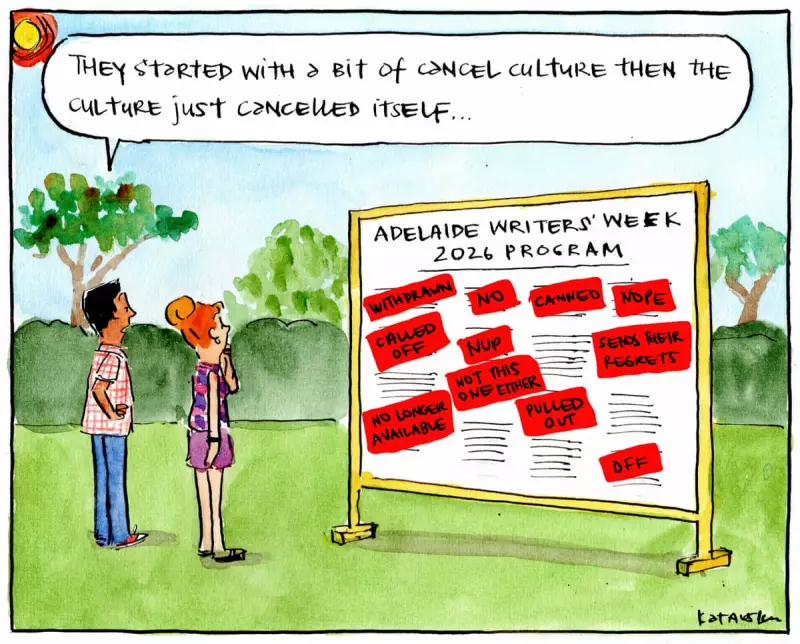
The future of one of the world's most respected literary gatherings, Adelaide Writers' Week, hangs in the balance as it approaches its 2026 edition. The festival, a cornerstone of the Adelaide Festival, finds itself at the epicentre of intense cultural and political debates, leading many to question its very survival.
A Festival Under Fire
Traditionally a haven for open dialogue and intellectual exchange, Adelaide Writers' Week has recently become a battleground. The event has faced escalating pressure and controversy stemming from the authors it invites and the topics they discuss. These tensions reflect a wider, global phenomenon often termed 'cancellation' or intense public scrutiny, where cultural institutions are challenged on platforms of representation, politics, and historical context.
The specific details of the 2026 programme remain under wraps, but the shadow of previous years' disputes looms large. Organisers are now tasked with programming an event that navigates an increasingly polarised landscape, where every speaker selection is potentially incendiary. The core mission of the festival – to celebrate literature and ideas – is now fraught with commercial, reputational, and social risks.

Financial and Social Repercussions
The controversy has tangible consequences. Sponsorship and funding have become more difficult to secure as corporate partners grow wary of association with controversy. Simultaneously, audience attendance and engagement can be impacted, with potential boycotts from various quarters of the public depending on the perceived political slant of the programme.
This creates a perilous tightrope for the festival's directors. They must balance artistic integrity and freedom of expression with the practical realities of running a major international event that relies on broad support. The question is no longer just about which authors to book, but about whether the festival, in its current form, can withstand the relentless pressure from all sides.
What Does Survival Look Like?
For Adelaide Writers' Week to endure beyond 2026, several paths are conceivable, each with its own compromises. The festival could radically reshape its identity, perhaps focusing on less contentious literary forms or historical topics. Alternatively, it might lean further into the debate, explicitly framing itself as a defender of free speech in the literary world, a move that would itself attract fierce support and opposition.
Another possibility is a more fundamental change in structure, moving towards smaller, more niche events rather than the large, centralised gathering it is known for. This could diffuse tension but also diminish its global stature and influence.
The 2026 edition is therefore seen as a critical inflection point. Its programming decisions, audience reaction, and subsequent fallout will likely determine the long-term trajectory of this iconic cultural institution. The literary world is watching closely to see if the festival can adapt to the new realities of public discourse or if it will become another casualty of the era's intense cultural wars.
Ultimately, the struggle of Adelaide Writers' Week is a microcosm of a broader challenge facing cultural pillars worldwide. How does an institution dedicated to the free exchange of ideas operate in an age where every idea is subject to immediate and unforgiving judgement? The answer to that question will define not just this festival's future, but that of many similar forums for years to come.