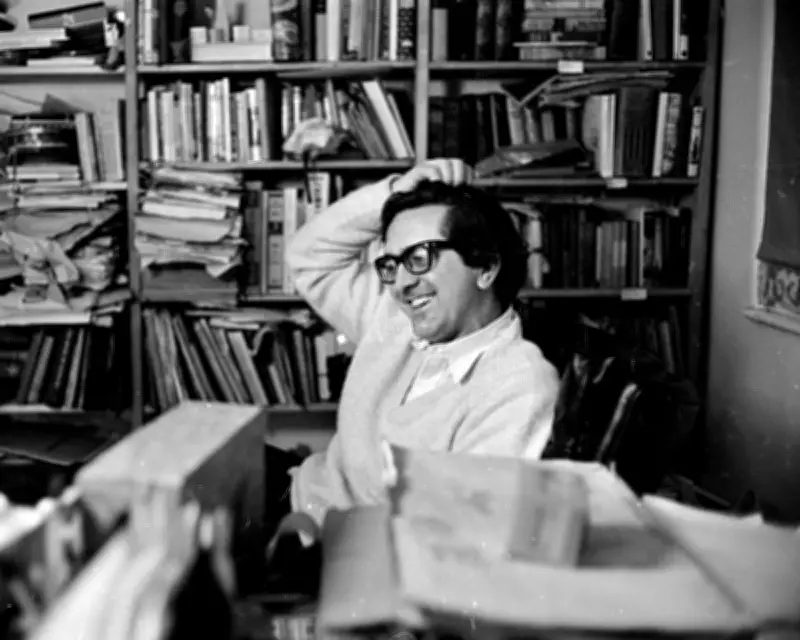
Len Deighton, Renowned Spy Novelist and Author of The Ipcress File, Dies at 97
The literary world mourns the loss of Len Deighton, the influential British spy novelist who passed away at the age of 97. Deighton, best known for his groundbreaking debut The Ipcress File, brought a unique blend of wit, realism, and class consciousness to cold war espionage fiction, reshaping the genre during the 1960s and beyond.
A Prolific Career and Lasting Impact
Over a career spanning four decades, Deighton authored more than 30 books, establishing himself as one of the most distinctive voices in postwar fiction. His work, often compared to that of John le Carré, combined meticulous research with sharp observations about class and bureaucracy, setting a new standard for spy thrillers.
Published in 1962, The Ipcress File was an immediate success, selling millions of copies worldwide. It introduced readers to an unnamed sardonic working-class intelligence officer, a stark contrast to the glamorous archetype embodied by Ian Fleming's James Bond. This novel's success led to a film adaptation in 1965 starring Michael Caine, who reprised the role in subsequent films, and a 2022 television adaptation featuring Joe Cole.

Early Life and Diverse Background
Born Leonard Cyril Deighton in Marylebone, London, in 1929, Deighton's childhood was marked by wartime experiences, including witnessing the arrest of a pro-Nazi spy neighbor, which may have inspired his later plots. His education was disrupted by World War II, and after working as a railway clerk and serving in the Royal Air Force, he studied at Saint Martin's School of Art and the Royal College of Art.
Before turning to fiction, Deighton pursued a varied career as a flight attendant, illustrator, and chef. He designed over 200 book covers, including the first UK edition of Jack Kerouac's On the Road, and popularized Mediterranean cuisine in Britain through his "cookstrip" guides published in the Observer.
Legacy and Literary Contributions
Deighton started writing The Ipcress File while in France in 1960, launching a prolific writing career that included numerous bestselling novels with complex narratives. His work emphasized bureaucracy, institutional rivalries, and moral ambiguities, often including footnotes on spycraft details, which brought a new air of authenticity to the genre.
In his later years, Deighton became increasingly private. He was married twice, first to illustrator Shirley Thompson and later to Ysabelle de Ranitz, with whom he had two sons. His legacy endures through his transformative impact on spy fiction, celebrated for its innovation and depth.