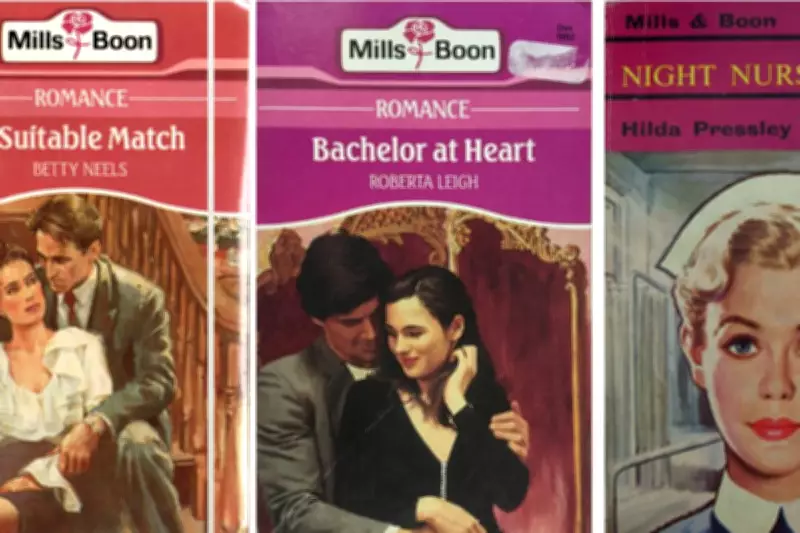
Romance Fiction's Economic Resilience: From Mills & Boon to BookTok Boom
Romance fiction has captivated readers for over a century, evolving from Mills & Boon paperbacks to viral BookTok sensations. This genre's enduring popularity raises a compelling question: is it a recession indicator? As economic uncertainties loom, the romance boom offers insights into consumer behavior and literary trends.
Personal Journeys into Romance
For many, romance novels spark early literary passions. Author Rachael Stewart discovered Mills & Boon at age 11, sneaking books from her grandmother's collection. "That was it, I devoured them so quickly, and I just fell in love with the whole world," she recalls. Stewart, now publishing her 30th title with Mills & Boon, emphasizes that love, not just sex, captivated her. Similarly, readers often encounter romance through diverse paths, from classic series to modern digital platforms.
Mills & Boon: Defining a Genre
Founded in 1908 by Gerald Rusgrove Mills and Charles Boon, Mills & Boon began as a general publisher before pivoting to women's romance in the 1930s. Capitalizing on tuppenny libraries, it sold cheap, high-volume paperbacks with distinctive brown bindings and a guaranteed happy ending. Today, with around 11,000 titles, Mills & Boon has become synonymous with fast-paced plots, swept-away heroines, and a touch of smut. Executive editor Flo Nicoll notes, "It's funny watching people discover something that they think is shiny and new... we think of ourselves as the originals."

The Romance Formula and Market Evolution
Despite new trends like 'sports romance' and 'enemies to lovers', Mills & Boon's vast back catalogue covers nearly every fad. The publisher targets a loyal fan base of slightly older, working-class women in semi-urban or rural areas, primarily stocking supermarkets. However, romance has expanded to younger, middle-class readers via platforms like BookTok. Author Rachael Stewart describes the writing process as a recipe: "First, you want to show the reader how good these people could be together... Then you want to tear them apart." This 'black moment' followed by a joyous reunion creates 150-200 page paperbacks, each taking about two months to write.
Is Romance Recession-Proof?
Romance novels thrive during economic downturns, offering escapism and reassurance. During the 2008 recession, romance sales increased while overall adult fiction remained flat. For Harlequin, Mills & Boon's US imprint, sales jumped by 32%. In 2025, romance sales rose 10%, a trend expected to continue. Stewart attributes this to happy endings: "It's like having a hug in the book. You can read the whole thing and you know at the end of it you're going to feel good." Mills & Boon categorizes books into specific groups like 'billionaire romances' and 'fake dating', allowing readers to choose their adventure. Interestingly, recent trends show less demand for the 'black moment', as readers seek stories without third-act breakups, reflecting real-life fatigue.
Conclusion: A Timeless Appeal
From Mills & Boon's century-long legacy to BookTok's viral impact, romance fiction demonstrates remarkable economic resilience. Its formula of love, conflict, and happy endings provides comfort in turbulent times, making it a barometer for consumer sentiment. As the genre adapts to modern tastes, its core promise of escapism ensures continued popularity, proving that romance is not just a literary trend but a recession-proof phenomenon.