AI Art Revolution: Can Machines Create Meaningful Art?
In a darkened room at Camden's Arebyte Digital Art Centre, visitors kneel before an illuminated red keyboard, pressing grotesque buttons shaped like human body parts. Words dance across a screen, forming fragmentary prophecies like "Seek the path of truth" and "Woe to the hills where the raven cries." This interactive installation, part of artist Auriea Harvey's Prophecy exhibition, uses artificial intelligence to generate cryptic messages, while computer-generated prophets re-enact Biblical scenes behind viewers.
The Human Element in AI Creation
Despite the proliferation of AI-generated content online that some dismiss as "slop," artists are increasingly engaging with artificial intelligence as both subject and tool. London-based artist and researcher Anna Ridler explains, "Every material you use will have its own history, associations, and connotations. Machine learning is no different." Her approach involves thoughtfully examining these associations within her creative process.
In 2019, Ridler exhibited two groundbreaking works at the Barbican's More Than Human exhibition. For Myriad (Tulips), she manually categorized 10,000 flower photographs by color and bloom state, projecting them across 50 square meters. This collection became the training data for Mosaic Virus, where a generative adversarial network produced AI-generated tulips that changed color and pattern based on bitcoin's fluctuating value.

Spiritual Dimensions of Artificial Intelligence
Other artists explore AI's spiritual potential. Last year, the Serpentine Gallery hosted Holly Herndon and Mat Dryhurst's exhibition The Call, which framed AI as a "collective achievement" shared by all contributors to its training data. The artists traveled across the UK recording 15 community choirs performing religious songs and vocal exercises covering all English language sounds.
These recordings formed the training data for AI choral models, with participating choristers joining a "Data Trust" to maintain control over future model usage. This ethical approach contrasts sharply with large AI models that scrape internet data without consent. Herndon noted the exhibition's spiritual undertones emerged from "searching for new rituals around these technologies."
The Robot Artist Phenomenon
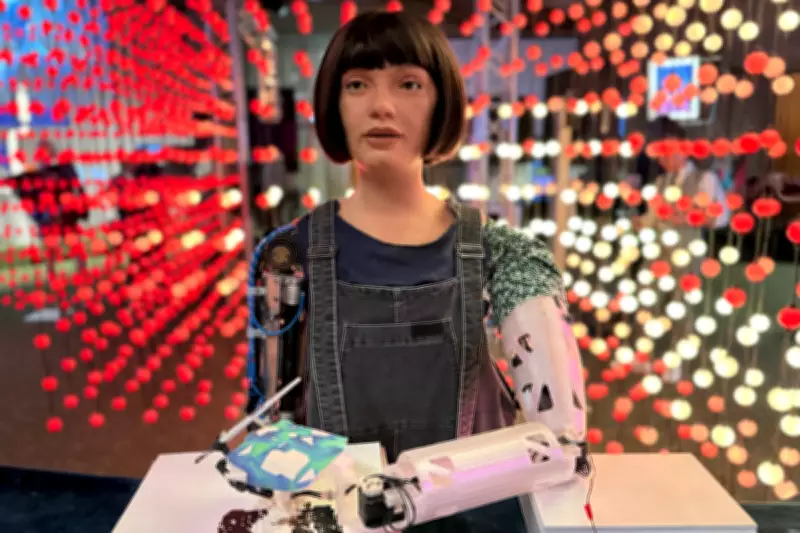
The most prominent questions about AI creativity surround Ai-Da, described by creator Aidan Meller as the "world's first ultra-realistic artist robot." With camera eyes feeding visual data to her creativity algorithm, Ai-Da controls a robotic arm to create paintings, including portraits of Queen Elizabeth II and King Charles III, and recently designed her first building.
Meller, a former gallerist, says Ai-Da's primary purpose is posing ethical questions about technology, art, and society. He was inspired to create the robot after his son showed him a Lego robot figure, experiencing what he calls the "flash of inspiration" we associate with human creativity. "Ai-Da can have that Eureka moment too," Meller insists, arguing that human consciousness and machine capability are becoming increasingly intertwined.
Fundamental Questions About Creativity
As AI models train on the entire global art canon, capable of generating any combination of styles and motifs within seconds, fundamental questions emerge: Does art require conscious creation? What constitutes genuine originality? Can machines be creative like humans?
Ridler suggests these questions ultimately concern artistic intent: "The important question is what is the artist trying to talk about? What are they referencing in their work?" While Ai-Da herself may lack consciousness, approximately 30 people across four universities contributed to her creation, making her both a technological achievement and a collaborative human endeavor.
Meller concludes with a provocative thought: "We are absolutely embedded within a structure we are creating for the future, which it is going to be harder and harder to disentangle ourselves from." As artists continue exploring AI's creative potential, they challenge us to consider whether this technological fusion represents the future we truly desire.