Former Archbishop Rowan Williams Examines the Complex Nature of Solidarity
In today's digital landscape, expressions of solidarity flood social media feeds, often serving as quick declarations of support for victims of injustice. However, former Archbishop of Canterbury Rowan Williams argues in his new book that true solidarity represents something far more profound than these surface-level gestures.
Beyond Simple Identification
Williams challenges the contemporary understanding of solidarity as unequivocal identification with victims. He positions solidarity as "a moral intensifier" that places individuals firmly alongside those suffering, while also serving as a declaration of innocence that distances us from perpetrators. The author offers sharp criticism of modern empathy culture, suggesting it frequently serves "a clamorous self" that cannot tolerate genuine otherness.
According to Williams, authentic solidarity represents less a cultivated virtue and more a fundamental human condition requiring acknowledgment. This recognition demands acceptance of two stubborn truths: our inherent separation from others in mind and body, and our innate social nature bound by invisible threads of obligation and reciprocity.

The Hard Work of Human Connection
Williams presents solidarity as demanding work requiring significant time and emotional labor. He critiques contemporary human rights frameworks as individual entitlements or "cheques to be cashed," arguing they risk becoming conflicting absolutes evident in current free speech debates. The author suggests moral interdependence necessitates continuous dialogue where rights coexist with obligations.
This process involves what Williams describes as "dislodging" the self, drawing inspiration from Czech philosopher Jan Patočka's concept of "solidarity of the shaken." This radical togetherness emerges from accepting shared vulnerability and mutual reliance in what Williams characterizes as a fallen world.
Practical Applications and Scholarly Focus
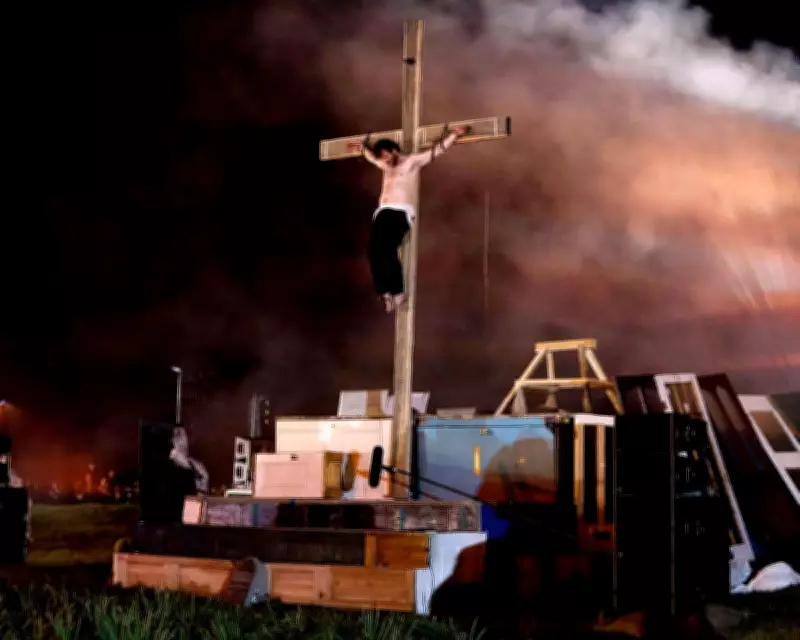
While offering few practical prescriptions, Williams suggests solidarity requires ceremonial expression through public acts of "rebalancing" that help us reimagine ourselves as collective beings. He references examples including South Africa's Truth and Reconciliation Commission and actor Michael Sheen's 2011 Passion play performed in Port Talbot streets.
The book primarily engages in scholarly discussion, carefully unpacking ideas from 20th-century religious thinkers including Edith Stein, Józef Tischner, and Dietrich Bonhoeffer. Williams demonstrates particular insight into Christian struggles over gender and sexual identity, knowledge gained during his tenure navigating Anglican communion divisions.
Accessibility Challenges and Humanistic Vision
Despite Williams' subtle and probing intellect, the book occasionally suffers from dense academic prose filled with abstract nouns and caveated clauses. The author frequently employs throat-clearing phrases like "it is important to remain alert to" where analogies might better serve readers.
Nevertheless, the work emerges as fundamentally humane and heartening, embodying what Williams might call "woke" in its original, meaningful sense. The author concludes that solidarity should not reassure us of our innocence but rather acquaint us with how most people remain implicated in global unfairnesses and inequalities.
Rather than inspiring egoistic self-reproach, this recognition should alert us to our shared, flawed humanity—what Joseph Conrad beautifully described as "the subtle but invincible conviction of solidarity that knits together the loneliness of innumerable hearts."
Solidarity: The Work of Recognition by Rowan Williams is published by Bloomsbury.