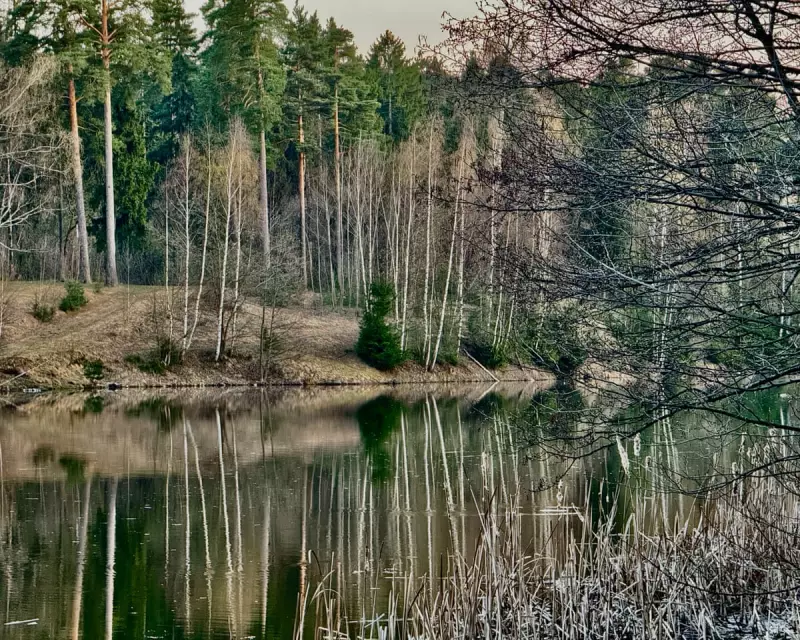
In her compelling new work, The Oak and the Larch: A Forest History of Russia and Its Empires, scholar Sophie Pinkham presents a startling fact: Russia is home to roughly 642 billion trees. This figure, she notes, surpasses the estimated number of stars in our galaxy. This isn't mere poetry but a statistical truth that underpins her exploration of how this immense, inhospitable landscape has fundamentally shaped a nation's soul.
Pinkham, a professor at Cornell University, charts the profound influence of the forest on Russian history, society, and literature. Stretching from the Arctic to the Pacific, this vast expanse has been a source of danger and beauty, of furs and minerals, and a powerful symbol in the nation's identity, often represented by the bear.
From Battlefield to Ideological Arena
The Russian forest has been more than a backdrop; it has been a decisive actor in conflict. From the 13th-century Mongol invasions to the current war in Ukraine, military success has frequently hinged on understanding the woodland. During the Second World War, partisan fighters used the trees as cover, sabotaging German supply lines and helping thousands of Jewish people find refuge.

Politically, the forest has served as both a place of resistance and a symbol in ultranationalist rhetoric promoting self-sufficiency. Leaders throughout history have oscillated between exploiting its resources—for Peter the Great's fleet or Soviet industry—and attempts at preservation, creating cycles of deforestation and replanting.
A Literary and Cultural Canopy
Pinkham provides a comprehensive account of the forest's imprint on Russian culture. Writers and artists have consistently sought meaning beneath its boughs. She cites Tolstoy's War and Peace, where Prince Andrei has an epiphany on encountering an oak, realising he should live "in interconnection with all the beings around him".
The book is populated by vivid characters, from environmental activist Andrei Khristoforov, who identified as a tree, to the Lykov family, a religious sect who lived undetected in the taiga for decades. Pinkham also sensitively recounts indigenous customs, such as the Khanty people's bear ceremonies.
Resilience in the Face of Crisis
The climate crisis casts a long shadow, with a 2021 wildfire burning an area twice the size of Ireland. Yet Pinkham highlights the forest's remarkable resilience, even in the Chornobyl exclusion zone, where rewilding has brought back bison, lynx, and bears.
Ultimately, Pinkham argues that the forest is a crucial prism for understanding Russia and the former Soviet space. She suggests it operates on a timescale beyond human politics; an oak can live over a millennium, outlasting any dynasty. As one activist in the book poignantly states: "Do you know how many Putins there have been in our time? Go into the woods, hide, don't stick your head out, and wait."
The Oak and the Larch: A Forest History of Russia and Its Empires by Sophie Pinkham is published by William Collins (£25).