From Notebook to Narrative: How Political Reality Shapes Fiction
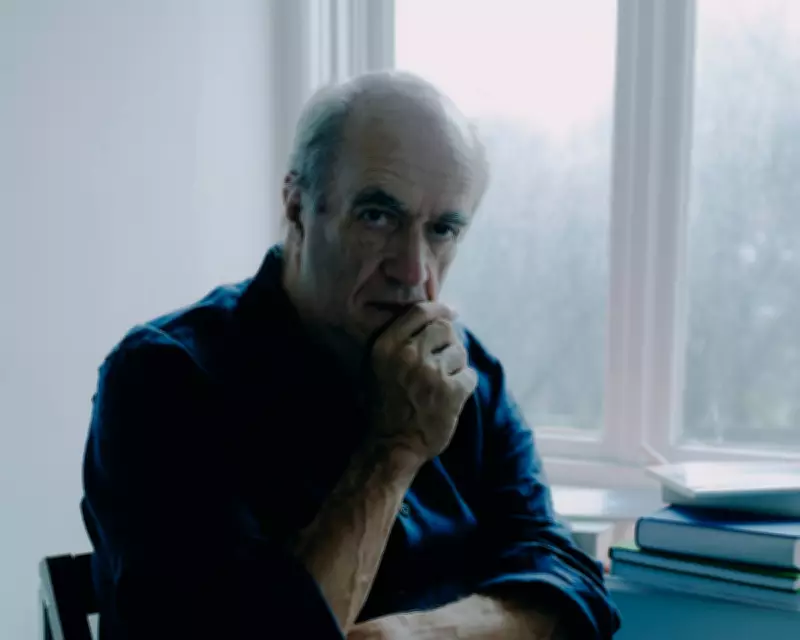
Colm Tóibín, the celebrated Brooklyn-based Irish author, has developed a distinctive approach to crafting stories that often begins with a simple notebook entry. "I frequently write the first paragraph of a story in a notebook," Tóibín explains, "adding to it periodically or leaving it dormant to see what might eventually emerge." This methodical yet organic process recently yielded profound results when political events in the United States intersected with his creative imagination.
The Spark of Inspiration: An Irish Plumber's Dilemma
In 2008, while hiking near Muir Woods overlooking the Pacific Ocean with friends, Tóibín began imagining a character: an Irish plumber working illegally in the Bay Area who had decided to return home. "This was his last big outing in the American landscape," Tóibín recalls. "Dotted throughout the Bay Area were houses where he had repaired pipes and installed fixtures—his tangible legacy in America. He was someone dependable in emergencies, yet his undocumented status meant he faced an impossible choice."
Over subsequent years, the story developed further. The character had a daughter from a failed marriage whom he adored, creating an agonizing conflict: leaving America meant losing connection with her. Tóibín envisioned one final day out between father and daughter in that breathtaking setting, then set the story aside for nearly sixteen years.

Political Reality Meets Creative Urgency
The story resurfaced dramatically with Donald Trump's re-election and the prospect of intensified crackdowns on undocumented immigrants. "The election of Donald Trump for a second term and the likelihood of him targeting illegal immigrants became the actual spur for my character's decision," Tóibín states. He meticulously timed the narrative: the character would depart on January 20, 2025—Trump's inauguration day—with the farewell hike occurring on January 18.
Tóibín employed an unusual creative technique: writing the hike scene on the exact day it would occur in the story, synchronized to the same time zone. "As my protagonist and his daughter set out from the city, I was writing what they might say and do at that precise morning hour," he describes. "The inauguration loomed, ICE seemed to approach, Trump grew louder and more ominous. I aimed to complete this section before Trump took office—it felt both superstitious and critically serious."
The Creative Process: From Germ to Narrative
Tóibín's approach echoes Henry James's concept of the "germ"—what James called "a mere floating particle in the stream of talk" containing "the virus of suggestion." For Tóibín, minimal inspiration often proves most potent. "If you're seeking story inspiration, very little is more than enough," he observes. "Something hinted—a clue, a suggestion—can accomplish more in the imagination than something explicitly spelled out."
This principle manifested powerfully during research in the Catalan Pyrenees approximately twenty years ago. Interviewing a historian who had documented every Spanish Civil War death in the remote Pallars region, Tóibín learned about an unusual summer in 1938 when fascist soldiers partied by the river while conflict raged elsewhere. Decades later, a retired general returning to the area encountered a local woman who remembered those summer parties—she came from a vehemently anti-Franco family that preferred to forget those events.
"That was all I needed," Tóibín emphasizes. "I almost asked the historian to tell me nothing beyond that single street encounter. From that brief interaction, I could imagine those riverbank nights during the civil war summer, then envision the woman years later learning that the young soldier she'd loved—now a retired general remembering her name—wanted to see her again."
The Power of What Doesn't Happen
For Tóibín, absence often creates greater dramatic tension than confrontation. In the story inspired by the Catalan encounter, he realized the woman and soldier shouldn't actually meet after fifty years. "The story centers on how she spends those hours knowing he's nearby but not meeting him," he explains. "The confrontation that doesn't occur is frequently more dramatic than the one that does."

This approach appears in another story, A Sum of Money, where a young man sent home from boarding school for theft must face his parents. "I sat gazing at a blank page, working out how to write this fraught encounter until I realized it didn't need writing at all," Tóibín recalls. "In the finished story, no one speaks. They almost do, then think better of it. Yet something significant happens—the lack of open drama allows a shift in sensibility."
Memory and Imagination: Blurring Boundaries
Tóibín's longest story in his new collection, The Catalan Girls (30,000 words), originated from a brief encounter thirty years earlier. Waiting to view a Barcelona apartment in spring 1988, he met three sisters in their sixties who had returned from Argentina. "We spoke for just two or three minutes," he remembers, "but enough to learn they were Catalan sisters back from Argentina, finding Barcelona prices high, finishing each other's sentences."
Three decades later, Tóibín imagined their lives: why they went to Argentina, how each lived there, their return to Catalonia. He made the middle sister lesbian, the youngest dreamy, the eldest bossy—even having the bossy sister pressure the others into matching haircuts before returning to Spain. He incorporated real locations: the Pallars festival he attended in July 2017, the Buenos Aires house where he lodged in 1985, the apartment he occupied in 2013.
"In writing stories, I draw energy from rooms I knew but no longer inhabit, from things gone, from spaces that seem oddly haunted and have lodged in memory or might return in dreams," Tóibín reflects. Settings range from a Wexford dormitory he hasn't seen since 1971 to American university cities where he taught temporarily, Barcelona bars he once frequented, and the back room of his childhood home, long sold.
When Fiction Anticipates Reality
In Five Bridges, Tóibín imagined an undocumented Irishman in San Francisco realizing the danger of staying. A year after publication, reality mirrored fiction. On February 9, The Guardian reported on Seamus Culleton from County Kilkenny, who arrived on the same visa as Tóibín's character and built a life over decades. Culleton was arrested by ICE while shopping at a Massachusetts hardware store, detained in overcrowded facilities he described as "like a concentration camp, absolute hell."
"This is a fate my character managed to avoid," Tóibín notes soberly. "In future stories, such characters won't be so fortunate."
Writing in the Shadow of Political Reality
Now working from his New York room, Tóibín reflects on writing during the Trump era. "This is the room where I learned first-hand not only what evil is like but how evil is tolerated," he states. "What's strange about being in America during Trump's time is how ordinary it feels, how what was unimaginable just over a year ago is suddenly, shockingly no longer surprising."
He anticipates future perspective: "If I live long enough, I'll see this room as framed, completed—part of memory and history. Then I'll be able to write about it." For now, his latest collection, The News from Dublin, captures this moment where political reality and creative imagination intersect, demonstrating how fiction can both anticipate and respond to the world's evolving tensions.