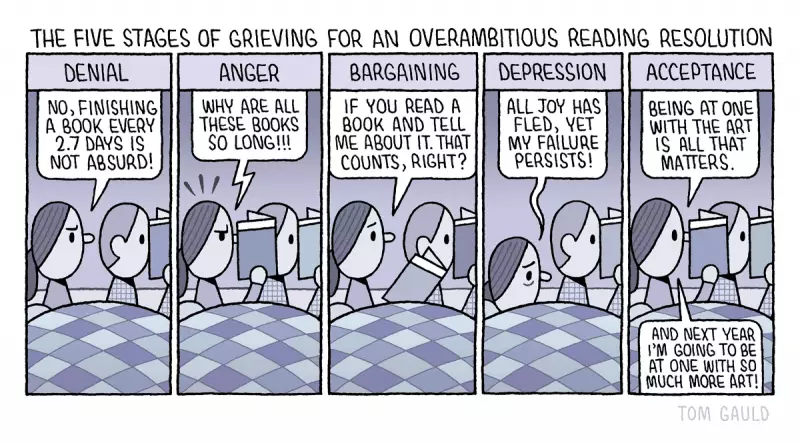
As the new year dawns, countless Brits make earnest promises to themselves, with ambitious reading lists often topping the resolution chart. In a characteristically astute and humorous single-panel cartoon published in The Guardian on Saturday 4 January 2026, the celebrated illustrator Tom Gauld captures the inevitable fate of these well-intentioned literary plans.
The Anatomy of a Doomed Reading List
Gauld's cartoon, a staple for the newspaper's literary audience, presents a familiar scene. It visualises the stark chasm between our aspirational and our actual selves when it comes to annual reading goals. The artwork typically contrasts a towering, intimidating stack of 'important' books we feel we *should* read with the modest, comforting pile we are far more likely to actually enjoy.
This annual offering from Gauld has become a cultural touchpoint, offering a moment of self-recognition and gentle absolution for book lovers. It speaks directly to the guilt associated with that growing 'to-be-read' pile and the societal pressure to consume weighty classics or contemporary prize-winners, often at the expense of personal reading pleasure.

Why Gauld's Work Resonates with Readers
Tom Gauld has long been revered for his ability to distill complex cultural anxieties into deceptively simple comic strips. His style, marked by clean lines and understated wit, provides the perfect vehicle for commenting on the quirks of literary life. The 2026 reading resolutions cartoon continues this tradition, acting as a mirror to our own over-ambition.
The genius of the piece lies in its specificity. It doesn't just mock the idea of resolutions; it understands the unique psychology of the reader. It acknowledges the sincere desire for self-improvement through literature while also forgiving the human inclination towards comfort, familiarity, and sheer enjoyment. In doing so, it offers a collective sigh of relief across the reading community.
Beyond the Cartoon: A Cultural Commentary
This single image does more than just generate a chuckle. It serves as a pointed commentary on how we engage with culture and set personal goals. The cartoon subtly questions the metrics we use for a 'successful' reading year—is it quantity, perceived quality, or simple enjoyment?
By highlighting this annual ritual of list-making and subsequent abandonment, Gauld encourages a more forgiving and perhaps more realistic approach to our literary consumption. The cartoon's publication in early January is perfectly timed, arriving just as the first cracks in our New Year's resolve begin to show, offering solidarity instead of criticism.
Ultimately, Tom Gauld's 2026 contribution is a reminder that the joy of reading shouldn't be shackled by self-imposed, daunting obligations. His work, as always, champions the simple, personal, and often delightfully trivial relationship we have with books, reminding us that the best reading list is the one you actually want to pick up.