The first James Bond game in 14 years is out next month, and we’ve played several hours of what may be one of the best licensed video games ever made. There have been over two dozen James Bond games over the years, starting as far back as 1982, but the most famous by far is, of course, 1997’s GoldenEye 007. It was a seminal first person shooter in its own right, but while the Bond licence added an extra level of appeal it could easily have been removed and the game wouldn’t have suffered too much, as spiritual successor Perfect Dark proved. But that could not happen with 007 First Light. The game is so authentic to the Bond mythos that it joins the ranks of Alien: Isolation, RoboCop: Rogue City, and Indiana Jones And The Great Circle as near perfect interactive recreations of their respective franchises. And, like them, it may end up being better than many of the actual movies.
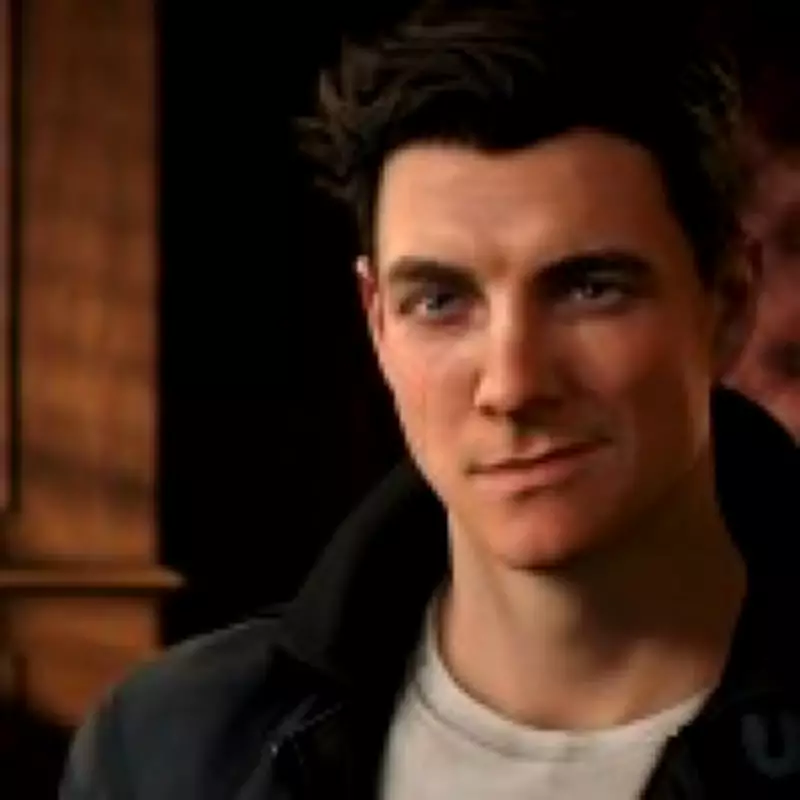
This came as a surprise to us, in our recent playtest of the game, as while we’d been impressed by what we’d seen before, in hands-off previews, we were worried as to whether Hitman developer IO Interactive had the necessary gaming experience, or affinity for the Bond franchise, to make it work. After playing the game for over three hours those concerns have now been firmly extinguished. For a start, we weren’t convinced that the idea of playing as a young James Bond was a good idea. It’s something that’s been tried multiple times before in novels, and a barely remembered cartoon series (technically that was his nephew), but since even the franchise itself describes Bond as a ‘sexist, misogynist dinosaur’ it’s hard to see how those qualities could be represented in a game where Bond is a twentysomething in the modern world, without him coming off as an awful person. But despite these and many other concerns we were almost immediately won over by First Light. That began with Patrick Gibson’s version of Bond, which portrays him as fearless and cocksure but also charming and earnest, with no hint of Joss Whedon/Marvel style snarkiness. Bond films often wink at the camera, sometimes very literally, but this Bond actually feels something like a real person.
Expert, exclusive gaming analysis
Sign up to the GameCentral newsletter for a unique take on the week in gaming, alongside the latest reviews and more. Delivered to your inbox every Saturday morning.

What we played was split up into three separate sections, with no connecting tissue, so we didn’t get a lot of context about the overall plot. The game starts off with Bond as a lowly Naval recruit during an SAS raid in Iceland, that goes disastrously wrong when his helicopter is shot down by a band of mercenaries. As the lone survivor he’s guided, over the radio, by MI6 in what is a fairly typical tutorial level, that lays out the basics of the game’s melee combat and platforming, which brings to mind the Uncharted series. Only the later sections of the third demo featured any gunplay (which was all perfectly competent) and in the Iceland level in particular you’re strongly advised to stay out of sight and use distractions, such as setting off a remote vehicle. In fact, once Bond has scouted enough for MI6 to understand what’s going on he’s told to leave the hostages and escape. Bond refuses to do what he’s told though and one of our favourite bits in the preview came when he’s informed he only has a 1% chance of success, at which point he gives a smirk and a whisper of the Bond theme can be heard for just a moment. Although it’s so subtle that many other journos we spoke to missed it.

The sound design and use of music is excellent throughout, with the Iceland sequence ending with the Bond theme rising up more obviously, but still not quite in full voice, indicating that Bond is not yet a 00 agent. The level concludes with the Lana Del Rey credit sequence and we were so impressed by it all that we asked to speak to audio director Dominic Vega afterwards. ‘Games are this unique medium where music and music design… they’re sort of intertwined in an interesting way. We wanted to take some of the identity from the film world and bring that in. I think Bond… while it’s one of the most recognisable sonic IPs out there, if you play it against any image it becomes parody,’ said Vega. ‘It has to be something that works in tandem with the picture. In our case our medium is interactivity and gameplay, so from the earliest days we had this tagline with the composers and the audio team, which was that because this is a beginning for a young James Bond, that James Bond has to earn his theme. ‘So we’re taking tentpole moments from throughout the story, where we start to weed that out to the player. If you go all out too early, it’s just parody. It has to be something the player engages with over time, to accept this character, to accept this world and story. ‘But in Iceland it’s pre-music Bond. And we wanted to make it feel like the music is trying to poke through, it’s a piece of him. It’s a piece of his innate behaviour. But it’s not quite there yet, that early in the game and that early in the story.’ Vega’s obvious enthusiasm for his role, and that of the other developers we met at the event, is also encouraging, with Vega adding: ‘This has been a huge honour, as a lifelong Bond fan. The opportunities have been amazing.’ ‘We have an incredible music team, we have incredible partners helping us make this thing, and a great studio that is backing us a thousand percent, he said. ‘So as a Bond-head, and as a music fan, and as an audiophile… pinch me, this couldn’t be a better gig.’
The second level was a literal training stage, set on Malta and faintly reminiscent of the opening to The Living Daylights (the bleak darkness of the Iceland level has a broad strokes similarity to the end of Skyfall). At this point Bond has been recruited into MI6 and is tasked with completing an assault course, that involves getting to the top of a tower and capturing a flag. This is where you get a better feel for the full scope of what the game is and where the influences from Hitman start to come to the fore. The level is basically a sandbox, with soldiers (armed with paint guns) wandering around and multiple ways to get to your goal. Although we never managed it, you could in theory fight your way through, but it’s far better to keep out of sight and use your Q watch, which can both activate nearby machinery, such as door shutters and target practice dummies, or fire a dart that briefly disorients the target. Although weirdly, both abilities have to be constantly refuelled by picking up mobile phones and/or cleaning chemicals. We get IO have to make a game of it, but that aspect seemed very clunky and in danger of breaking the immersion. Mechanically though, that’s the only real complaint we have, and we had great fun trying to work out the stealthiest route to success and the one we thought the developer would’ve least anticipated. We were also impressed that none of this was easy; the AI is quite competent and while the guards have typical goldfish memories we didn’t find the level to be at all trivial. First Light is not a straight action game and while we can’t yet tell how the different elements break down over the course of the whole game there’s a lot of stealth and a lot of just brazenly walking around and bluffing people, with information from overheard conversations or hacked devices. But there’s more to it than that, with a number of shorter and more linear action sequences.
The third section started with Bond at his London flat, mulling over recent events by reading notes from his flatmates and, at one point, taking a drink of vodka. It’s very encouraging to see the game take time out for some introspection, which is then interrupted by a great action sequence where a sniper has to be evaded, as you scamper across the rooftops, using the Q watch to overload air conditioners to create smoke cover. You’re then able to clamber up a crane and catch-up with the sniper, which involves a chase and the realisation that something untoward is going on at a charity event at a Kensington museum. Bond tricks his way in, with the help of Moneypenny, who is supposed to be on a date and is speaking through his earpiece. The whole first half of this section involves working the crowd, noting where the security guards are, and trying to get into the main computer records. It’s another big sandbox area and there seemed to be at least two or three different ways to overcome each major obstacle, the most obvious being how to get past the guards on the ground floor – which we managed by eavesdropping on a conversation about how one of them was late and unreliable and then pretending to be their boss when speaking to the more dutiful guard. This opened up a whole other section of the building, where you try to convince the police you’re MI6. They didn’t believe us (we’re not sure if there was a way to convince them) but that led to a lot more sneaking around and doing things like using a photocopier as a distraction or briefly turning off CCTV cameras.
Again, we found this quite hard, as the stealth is taken very seriously – as you’d expect from the makers of Hitman – and apart from that series there really aren’t many games like that anymore. There is plenty of action as well though, with the level culminating in a boss fight against a mid-level goon where you have to use your watch to attack him with machinery and set off traps. It’s only after this that you get a gun, but you still have to be careful given just how many enemies are thrown at you. We took to creeping around in ceiling ducts and dropping down from the ceiling, as well as using the Q watch to electrocute people as they passed by machinery. We’ve learnt never to assume a game’s final quality from even the most positive preview, but we were thoroughly impressed by First Light, which proved to be considerably better than we were expecting. The thought of future Bond films being owned by Amazon is very disquieting, no matter the talent involved, but no matter how all that turns out it’s very clear that Bond’s video game career couldn’t be in better hands. Formats: PC (previewed), PlayStation 5, Xbox Series X/S, Nintendo Switch 2, and PC. Price: £59.99. Publisher: IO Interactive. Developer: IO Interactive. Release Date: 26th May 2026 (Q3 2006 for Switch 2). Age Rating: 16.