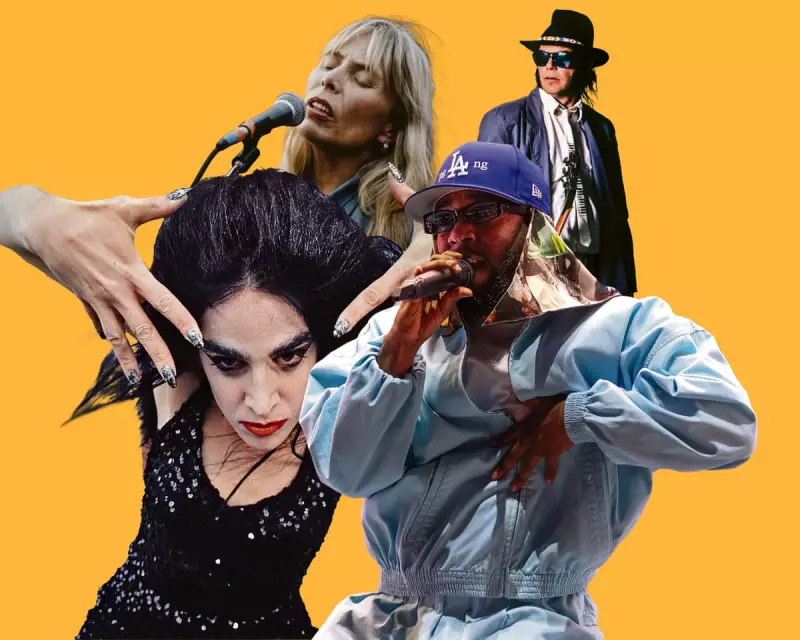
In an age where streaming algorithms can cocoon listeners in familiar sounds, a group of music writers has made a radical resolution for 2026: to confront the artists they have spent years avoiding. Moving beyond their comfort zones, these critics have dedicated time to deeply engage with the celebrated discographies they had previously dismissed, from folk legends to avant-garde pioneers and hip-hop titans.
Re-evaluating the Icons: Joni Mitchell and Neil Young
For one writer, the journey began with Joni Mitchell, an artist long filed away as too "adult," folky, or jazzy. Having only encountered her work through samples in Janet Jackson's 'Got 'Til It's Gone' or a Travis B-side, Mitchell's voice was considered an acquired taste. Inspired by author Ann Powers, the critic delved into Mitchell's 1975 experimental album, The Hissing of Summer Lawns. They discovered a vibe-y, socially critical masterpiece, finding parallels in the avant-pop of 'The Jungle Line' and recognising influences on artists from Prince to Laura Marling. A subsequent listen to the starkly emotional Blue proved even more powerful, leading to a newfound appreciation for Mitchell's unflinching honesty.
Similarly, another writer confronted the daunting, 60-album-strong catalogue of Neil Young, an artist previously categorised alongside Bob Dylan and Leonard Cohen as potentially "miserable and boring." Guided by Mojo editor John Mulvey, they explored Young's diverse eras, from the classic Harvest and Zuma to the chaotic, synth-driven 1980s work like Trans. While the process sometimes felt like homework, tracks such as 'Computer Age' and the hypnotic 'Like an Inca' offered surprising entry points, demonstrating Young's remarkable stylistic range.

Confronting Hip-Hop and Avant-Garde Challenges
A self-professed Drake fan who had never warmed to Kendrick Lamar decided to tackle his primary barrier: Lamar's voice. Previously finding it nasally and grating, the critic sought to understand the Pulitzer-winning artist's acclaim. Turning to superfan Derrien for guidance, they explored deep cuts like 'Black Boy Fly' and 'ADHD', which resonated with inner-city upbringing and overstimulation. The emotional climax came with the 12-minute narrative 'Sing About Me, I'm Dying of Thirst', where Lamar's vocal delivery suddenly felt cinematic and profoundly moving, sparking a potential conversion.
In the realm of the avant-garde, one writer returned to the formidable Diamanda Galás, whose 2012 Royal Festival Hall performance had left them moved but mystified. Seeking insight from Quietus co-founder Luke Turner, they learned that Galás's work demands focused attention, not background listening. Exploring her politically charged 1986 album The Divine Punishment, part of a trilogy addressing the AIDS crisis, and her chilling 2008 rendition of 'O Death', the critic connected with the spooky, confrontational, and compositionally radical elements that aligned with their taste for the weird and politically radical.
The Indie Everest: A Radiohead Reckoning
Finally, one critic addressed a long-held resistance to Radiohead, a band previously deemed too morose and self-important—an opinion formed partly to impress older kids in high school. With guidance from a dedicated fan, they were presented with a "non-canon" playlist designed to highlight a more sympathetic side. Tracks like 'Weird Fishes' and 'Where I End and You Begin' revealed a compelling rage against corporate automation and omnipotence in Thom Yorke's songwriting, offset by hypnotic drumming. While a full dive into the catalogue seems unlikely, the exercise provided a new lens through which to appreciate the band's influential sound.
This collective project underscores a vital truth in an algorithmic age: purposeful, deep listening can dismantle preconceptions and unlock profound artistic connections. By stepping outside their self-curated sonic bubbles, these writers not only gained a richer understanding of iconic artists but also challenged the very habits that define modern music consumption.