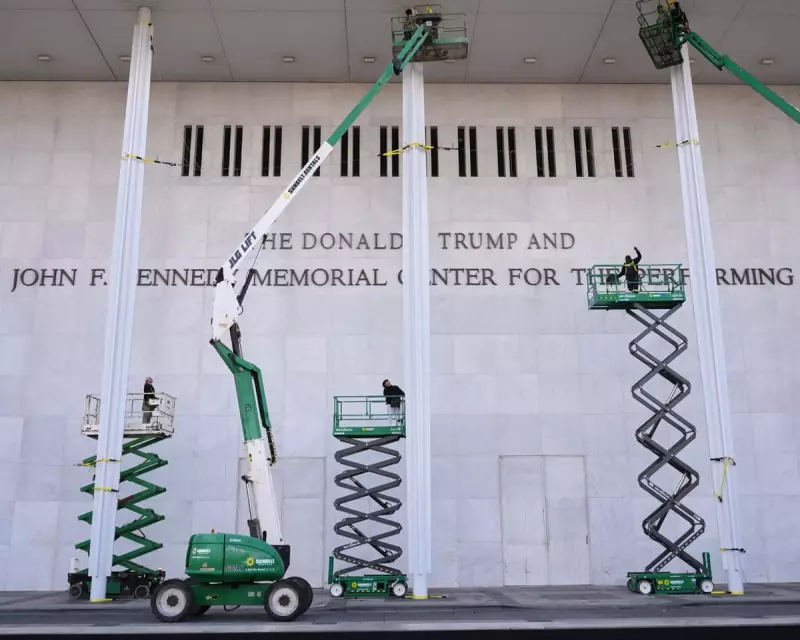
A wave of artistic protest is sweeping through Washington DC's prestigious Kennedy Centre, following a controversial decision to rebrand the institution with former President Donald Trump's name. The move has triggered a series of high-profile cancellations and ignited a fierce debate about the intersection of politics and culture.
Jazz and Folk Acts Lead the Boycott
The backlash began swiftly after the board of the John F. Kennedy Centre for the Performing Arts voted in mid-December to rename it the "Trump-Kennedy Centre." New signage displaying the change was installed at the Washington DC complex on 19 December. The reaction from the artistic community was immediate and pointed.
First, drummer and vibraphonist Chuck Redd cancelled his scheduled Christmas Eve performance. The centre's president, Trump appointee Richard Grenell, responded aggressively, threatening to sue Redd for $1 million in damages, labelling the cancellation a "political stunt."

The boycott gained significant momentum as the year ended. The Cookers, a Grammy-nominated jazz septet, pulled out of a New Year's Eve gig with just two days' notice. While not explicitly citing the name change, the group posted a statement on their website declaring that "Jazz was born from struggle and from a relentless insistence on freedom: freedom of thought, of expression, and of the full human voice."
They were swiftly followed by folk singer Kristy Lee, who cancelled a concert scheduled for January. Lee was more direct, stating on social media: "When American history starts getting treated like something you can ban, erase, rename, or rebrand for somebody else’s ego, I can’t stand on that stage and sleep right at night."
A Wider Political Backdrop
The controversy at the Kennedy Centre unfolds against a busy backdrop of other Trump administration actions drawing legal and political challenges. In related news from 30 December:
- A US district judge in Boston, Angel Kelley, halted the termination of Temporary Protected Status for South Sudanese immigrants, blocking its expiration planned for 5 January.
- The office of Israel's President, Isaac Herzog, denied a claim by Trump that Prime Minister Benjamin Netanyahu was about to receive a pardon for his ongoing corruption trial.
- Iranian Foreign Minister Abbas Araghchi urged Trump to defy Netanyahu and re-engage in nuclear talks, arguing the Republican base desires a deal, not more wars.
Furthermore, a federal judge ruled that the Trump administration must continue funding the Consumer Financial Protection Bureau (CFPB), an agency Trump vowed to shutter upon his return to office. The ruling protects the watchdog, which supporters say safeguards Americans from predatory financial practices.
Cultural Institutions and Political Symbolism
The artists' withdrawals highlight the deep unease many feel about politicising a cultural institution named for a former president. The Kennedy Centre, a national memorial to President John F. Kennedy, has long stood as a symbol of American arts patronage. The decision to append Trump's name, taken by a board he appointed, is seen by critics as an act of historical revisionism and self-aggrandisement.
The growing list of cancellations suggests the issue is far from settled. With legal challenges already filed against the name change itself, the "Trump-Kennedy Centre" faces an uncertain future, potentially struggling to attract top-tier talent as long as the controversy persists. The standoff presents a stark image of a cultural world pushing back against perceived political overreach, using the most powerful tool at its disposal: the refusal to perform.