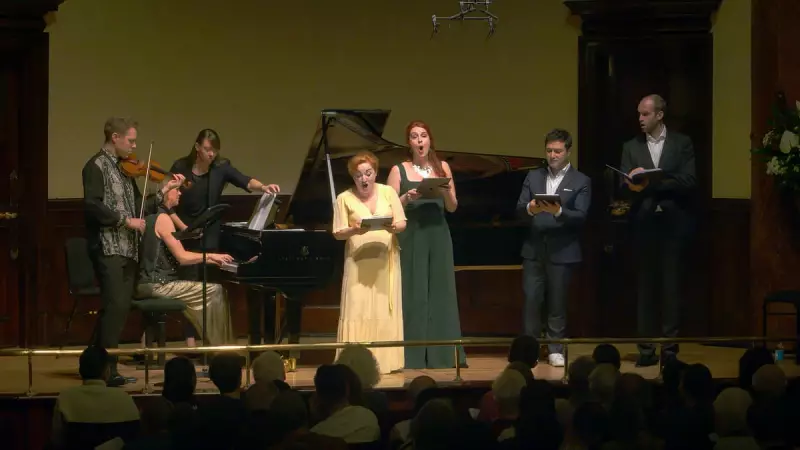
The musical legacy of composer Rebecca Clarke received a long-overdue celebration during a special study day at London's prestigious Wigmore Hall. The event culminated in a beautifully curated concert that showcased the remarkable breadth of her work, performed by an ensemble of distinguished British musicians.
A Composer Finally Receiving Her Due
Among the many female composers gaining recognition in recent years, Rebecca Clarke stands apart for her exceptional quality and consistent artistic inspiration. Born in 1886, Clarke studied under Stanford, collaborated with Vaughan Williams, and made history as one of London's first professional female orchestral players through her virtuoso viola skills. Although her compositional output diminished after relocating to the United States, her vibrant chamber music and recently rediscovered songs provide rich material for contemporary performers.
An Exceptional Ensemble Brings Clarke's Work to Life
The concert featured an impressive lineup of talent. Soprano Ailish Tynan opened the programme with superb diction and a soaring voice that illuminated songs showing Vaughan Williams' clear influence. The Orientalist style of Ravel emerged in settings of Chinese poetry, perfectly suited to Kitty Whately's vibrant mezzo-soprano with its rich lower register.

Ashley Riches employed his warm baritone to great effect, delivering a memorable interpretation of Clarke's melody for Yeats' Down by the Salley Gardens while bringing humour to The Aspidistra, a melodramatic piece about murdering a houseplant.
American tenor Nicholas Phan contributed his bright lyric instrument to several early German songs, maintaining an expressive stillness and bringing subtle sensuality to The Cherry-Blossom Wand. Clarke herself once remarked that the boundary between music and sex was "so tenuous as to be almost non-existent".
Masterful Instrumental Performances
Max Baillie proved a sensitive interpreter of Clarke's masterly viola sonata, diving fearlessly into the passionate outer movements and revelling in the playful energy of the central scherzo. Throughout the evening, Anna Tilbrook provided poetic and authoritative accompaniment at the piano.
While not every composition reached the same golden standard, the overall hit rate remained remarkably high. The programme cleverly juxtaposed Clarke's youthful works with pieces from her most productive period during the 1920s.
The concert's standout moments included a spellbinding performance of Clarke's best-known song, The Seal Man, a John Masefield setting about a young woman drawn to her death by a mysterious sea figure. Whately delivered this in a compelling new arrangement for voice, piano and viola.
Tynan, demonstrating why she's considered a singer at her absolute peak, presented a formidable act to follow. Accompanied by Baillie on violin, she brought delicate wit and an authentic touch to the sparkling Three Irish Country Songs.
This Wigmore Hall event firmly established that Rebecca Clarke's music, after decades of relative obscurity, deserves its place in the standard repertoire and continues to resonate powerfully with modern audiences.