Luca Guadagnino Takes on Controversial Opera in Florence Production
In a rehearsal room high above the complex backstage of Florence's strikingly modern Maggio Musicale Fiorentino theater, acclaimed Italian director Luca Guadagnino demonstrates entrance techniques to the women's chorus. Dressed casually in a loose cardigan and slacks, the filmmaker runs forward, halting precisely at the tape marking the stage edge. Slightly breathless, he turns to conductor Lawrence Renes, inquiring about the sound of stamping feet during the performance.
"I never mind when we hear them talk, walk, breathe," Renes responds warmly. "It's live theater." Though better recognized for cinematic works like After the Hunt, Challengers, and the Oscar-winning Call Me By Your Name, Guadagnino occasionally punctuates stage rehearsals with instinctive film commands like "Cut!" and "Action!" Today, however, he directs opera - his second ever and first in over fifteen years, tackling one of the most contentious works in contemporary opera history.
A Controversial Masterpiece Returns
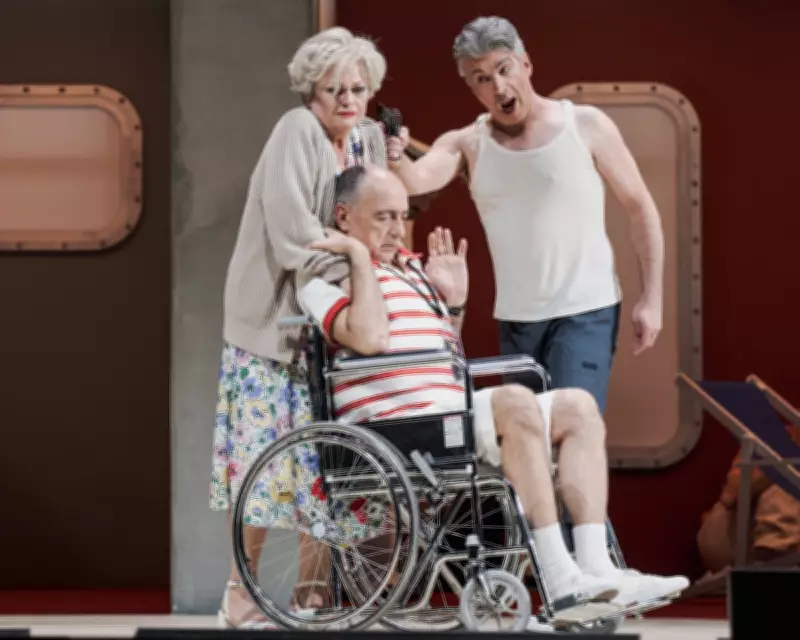
The Death of Klinghoffer, the 1991 opera with music by John Adams and libretto by Alice Goodman, has consistently sparked accusations of antisemitism and controversy since its premiere. The work depicts the 1985 hijacking of the cruise ship Achille Lauro by the Palestinian Liberation Front, the murder of disabled Jewish American tourist Leon Klinghoffer, and the profound grief of his wife Marilyn, all framed within historical and mythic contexts.

This Florence production marks the first new staging of Klinghoffer conceived since the Hamas attacks of October 7, 2023, and the subsequent Israeli bombardment of Gaza. Guadagnino passionately defends the work's relevance, stating: "The invisibility of victims is violent, odious and definitely fascistic. One of the great successes of not only autocracies but also so-called democracies has been to create a mirror where you do not see what is behind it. One of the great qualities of Klinghoffer is that it destroys that mirror and transforms the invisible, the unspeakable, the unsayable, into something you have to see, be confronted by and think about."
Musical Complexity and Artistic Vision
Guadagnino first discovered Adams' music in the mid-2000s through a CD gift, describing how "this music somehow preceded me within me. I felt my unconsciousness was inhabited by it." He later incorporated Adams' compositions into his 2009 film I Am Love, eventually securing rights from the composer himself.
Conductor Lawrence Renes, leading his first Klinghoffer production despite extensive experience with Adams' operas, acknowledges the work's exceptional difficulty. "There is a lot of scope for interpretation," Renes explains. "Not in how you play the first five notes, maybe, but in how you build the architecture." The score features complex, repetitive rhythms and demanding melismatic choral writing that challenges performers at every level.
Central to Guadagnino's production concept is innovative choreography that will "bleed out" from the chorales and accompany selected monologues. Choreographer Ella Rothschild has developed movement vocabulary where specific gestures become extended, almost endless, creating what she describes as "accumulation. You feel the weight as you go in." This dance element, Guadagnino believes, can "defy the need for clarity" and open new interpretive spaces for audiences.
Historical Controversy and Contemporary Relevance
The opera has faced heated debate since its 1991 debut. A 1992 San Francisco Opera revival encountered protests, while planned performances at Glyndebourne and Los Angeles festivals were cancelled. During the Metropolitan Opera's 2014 New York revival, Leon Klinghoffer's daughters Lisa and Ilsa criticized the work for presenting "false moral equivalencies without context" and "rationalising, romanticising and legitimising the terrorist murder of our father." That production faced protests from Jewish groups and former mayor Rudy Giuliani, resulting in cancelled simulcasts.

Musicologist Richard Taruskin famously accused the opera of "romanticising terrorists" following the 9/11 attacks, particularly criticizing a prologue scene featuring the Klinghoffers' bickering neighbors that was cut after the premiere. Though this scene remains excluded from the Florence production, librettist Alice Goodman maintains it served as the work's moral center, "positioning the human moral decency of ordinary life, of ordinary people, as opposed to the grand romantic nationalism that chews ordinary people up."
Goodman, who converted from Judaism to Christianity and became an Anglican minister following the opera's controversy, considers Klinghoffer "the best thing I've written. It's about human beings. All the people who have objected to it have objected to their enemy being shown as human. One was not supposed to make the terrorists human beings."
Defending Artistic Integrity
Guadagnino rejects Taruskin's claim that the opera musically favors Palestinians while mocking Jewish characters until they encounter death. "That is a false claim," the director asserts. "Who can say that with a straight face, knowing that the opera has the incredible aria where Marilyn is reminded of her husband before she knows he's dead, or the Chorus of the Exiled Jews, which is one of the great arias?"
Carlo Fuortes, general manager of Maggio Musicale, reports no political pressure or protest plans thus far, affirming that "theater has to take risks. We have to do something real, something that speaks to people, not just tradition or entertainment."
For Guadagnino, criticism of the opera reveals "false consciousness and moral hypocrisy. Goodman is able, like every great writer, to understand human nature and the intricacies of how we perceive the Other." He believes the work fundamentally addresses pain and the dignity of suffering, stating: "The attacks this opera has received are immoral. They are a testament to the decadence of our time, and to the constant freefall into immorality in the decades since the piece first premiered."
The production features French bass-baritone Laurent Naouri and British soprano Susan Bullock as the Klinghoffers, with twelve specially assembled dancers. As rehearsals continue, Guadagnino reflects: "I don't know how this opera is going to be welcomed here. But so far, so good." The Death of Klinghoffer runs at Maggio Musicale Fiorentino from April 19 to 26, with streaming available on RaiPlay.