A powerful new visual history seeks to redefine the complex narrative of Latin America, moving beyond its well-documented cycles of violence and political turmoil to celebrate its profound cultural resilience and creativity.
Beyond Revolutions and Dictatorships: A Visual Chronicle
In História da América Latina em 100 Fotografias (History of Latin America in 100 Photographs), journalist and historian Paulo Antonio Paranaguá constructs a transnational narrative of the continent. The work spans from the era of colonisation and slavery through to modern dictatorships and revolutions, using imagery as its primary source.
Born in Rio de Janeiro in 1948, Paranaguá's own life mirrors the region's turbulent politics. The son of a diplomat, he grew up under Franco's Spain before being imprisoned for two years by Argentina's dictatorship in 1975. After escaping with French aid, he forged a career between journalism and academia, becoming a leading scholar of Latin American cinema.

The book deliberately sidesteps national histories, arguing they are inadequate for explaining the region's evolution. Instead, it builds a connected, global history encompassing Indigenous civilisations, migration, and even the non-Latin Caribbean.
Iconic Images and Hidden Stories
The selection challenges clichés and broadens historical perspective. The Mexican Revolution is viewed through images of female soldiers, not just Pancho Villa. The brutality of Rafael Trujillo's Dominican Republic dictatorship is portrayed via the murdered Mirabal sisters.
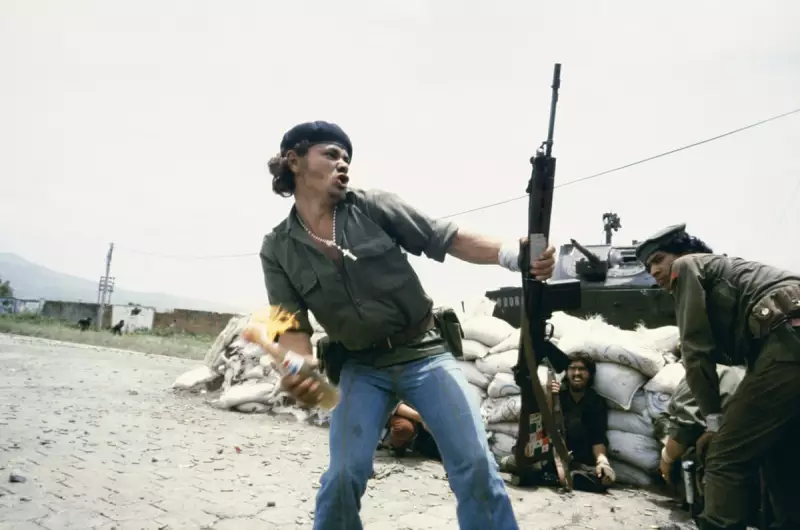
Famous photographs are given new context. The iconic image of Che Guevara's body displayed in Vallegrande, Bolivia, in 1967 is included, sourced from an archive in Buenos Aires. The renowned 'Molotov Man' shot by Susan Meiselas, capturing Sandinista guerrillas in Nicaragua in July 1979, also features.
Paranaguá's archival work unveils startling connections to the present. A photograph of a massive pro-Nazi rally at Buenos Aires' Luna Park in 1938, complete with swastikas celebrating the Anschluss, is presented as a direct echo of the far-right resurgence seen across the region today. "These moments help us understand the present," Paranaguá states. "Today's far-right movements are not unprecedented."
A Legacy of Inequality and a Vibrant Future
The historian argues that political independence did not dismantle entrenched social hierarchies. "At the heart of Latin American societies, exclusion is the rule," he asserts, linking contemporary state violence and urban inequality in Brazil directly to the legacy of colonisation.
Yet, alongside this narrative of subjugation, the book highlights a parallel history of vibrant cultural expression. It features the self-portrait of Peruvian photographer Martín Chambi at Machu Picchu, Frida Kahlo crafting her image, and artist Wifredo Lam fusing surrealism with Afro-Cuban culture.
In an age of AI-generated imagery, Paranaguá emphasises the evidential value of historical photography. "A photograph, like a letter or document, isn't the absolute truth but evidence," he notes, warning of the need for stricter criteria to analyse image provenance.
The final portrait is of a continent forever caught between tragedy and hope, brutality and breathtaking creativity—a region that is far from being a passive backdrop in global affairs.