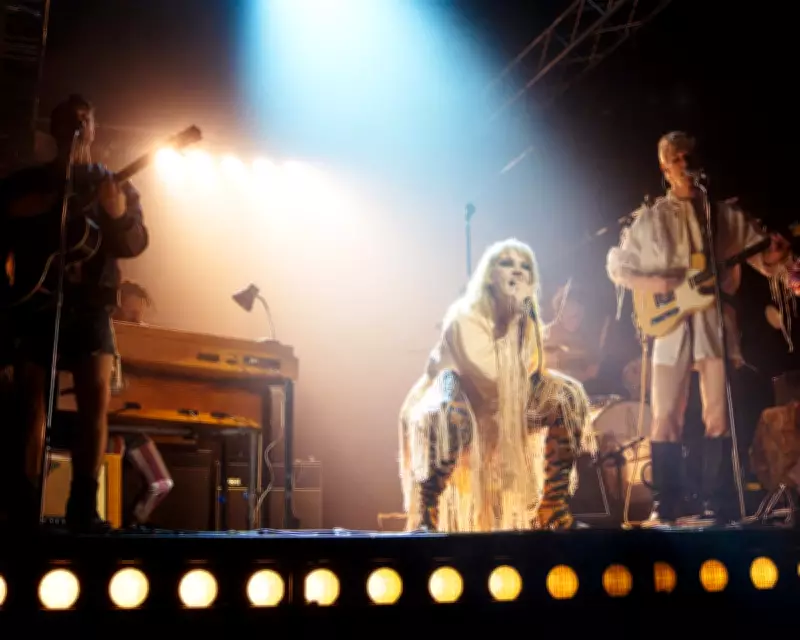
Rebecca Lucy Taylor, the acclaimed musician performing under the stage name Self Esteem, has ignited a fresh revival of David Hare's seminal 1975 rock drama, Teeth 'n' Smiles, currently captivating audiences at London's Duke of York's Theatre until June 6. This production marks a powerful resurgence for a play that originally stunned the Royal Court with its raw portrayal of a hippie band's chaotic implosion, now reinterpreted through the lens of contemporary music industry struggles.
A Play That Mirrors Modern Music Realities
When Taylor first encountered Hare's script, she describes the experience as mind-blowing, noting an uncanny reflection of her own life and the current state of the music business. "The way I feel about my actual life is so mirrored in this play," Taylor reveals. "It just mirrors what the music industry today is like." Set in 1969, the narrative follows a band unraveling amid drugs, alcohol, and violence backstage at a Cambridge May ball, yet its themes resonate deeply with today's era of TikTok trends and AI-driven content.
David Hare, the playwright, recalls the original 1975 production starring Helen Mirren as a groundbreaking event that "shook the plaster off the ceiling" of the traditionally puritanical Royal Court. Despite initial doubts about its revival due to its strong ties to the disillusioned mid-70s mood, Taylor argues that the play's exploration of universal truths—such as the mundanity of tour life and the lack of duty of care for performers—makes it strikingly relevant now.

Disillusionment Across Decades
Taylor draws parallels between the 1970s' countercultural collapse and today's political and artistic frustrations. "The disillusionment—I feel like something is dying that I grew up believing in," she confesses, referencing her liberal ideals and the challenges of sustaining a career in an industry dominated by viral marketing over artistic merit. Hare adds that the play was inspired by his own ambivalence toward the 60s counterculture, which he saw as dismantling repressive bourgeois norms but falling short of revolutionary change.
Interestingly, Hare notes the play's "modestly prophetic" anticipation of punk, with elements like the song "Bastards" and the manager character Saraffian echoing Malcolm McLaren's persona. McLaren, who later managed the Sex Pistols, attended the original production and praised its alignment with emerging punk sensibilities. "Malcolm loved it," Hare recalls, "he thought it was just heaven."
Embracing Maggie's Fearless Spirit
In her role as Maggie Frisby, the band's vocalist originally played by Mirren, Taylor finds inspiration in the character's clear-eyed defiance and thirst for experience. "Maggie can see it's not working, it's all bullshit," Taylor explains, admiring Frisby's refusal to settle for conventional comforts. This portrayal adds new music and lyrics by Taylor, enriching the play's sonic landscape while staying true to its gritty essence.
Hare expresses nervous excitement about how modern audiences will receive what he once called "a sloppy, dirty, funny play about hippies behaving badly." Taylor, however, embraces the discomfort, stating, "I want people to be uncomfortable." This revival not only celebrates a classic but also sparks dialogue on enduring issues in music and society, proving that great theatre can transcend its era to speak to new generations.