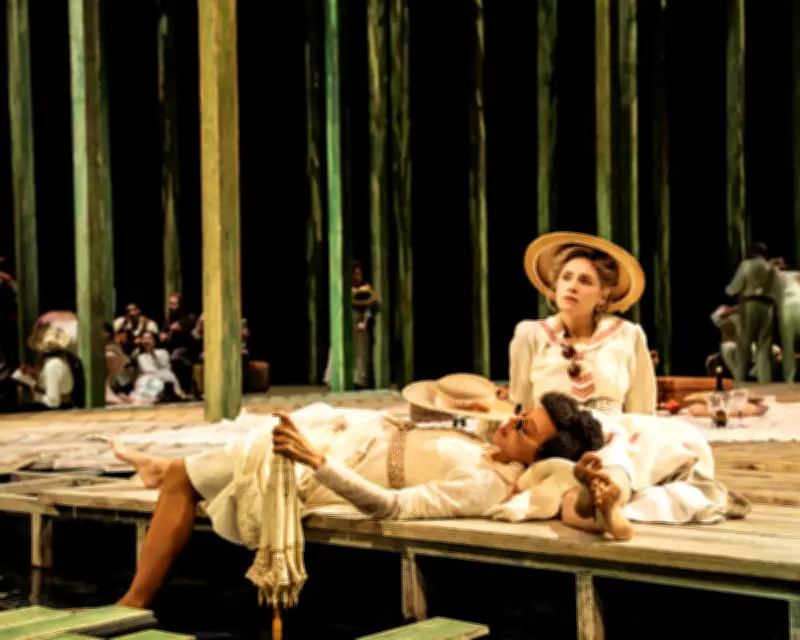
Summerfolk Review: Lazy Days of Passion and Privilege at Gorky's Doomed Dacha
In a stunning revival at the National Theatre's Olivier theatre, Maxim Gorky's Summerfolk takes center stage with a fresh adaptation by sibling playwrights Nina and Moses Raine. This production, directed by Robert Hastie, infuses Gorky's 1904 satire of the holidaying elite with contemporary humor and raunch, while remaining faithful to its original critique of privilege and idleness.
A Response to Chekhov's Legacy
Written as a direct response to Anton Chekhov's The Cherry Orchard, Gorky's play explores similar themes of class downfall but with a sharper, more humorous edge. The story unfolds at a summer dacha belonging to Sergei Bassov (Paul Ready) and his wife Varvara (Sophie Rundle), where languid members of the elite gather to picnic, sip champagne, and ponder life's futility.
Peter McKintosh's breathtaking set design presents the dacha as an exoskeleton of a house, resembling a draughtsman's sketch nestled in the woods. This visual metaphor underscores the fragility of the characters' privileged existence, which is further emphasized by two watchmen stalking the forest edges—a visible representation of the invisible underclass coldly observing the wastrel summer-homers.

Comedy and Raunch in Period Dress
The Raine adaptation adds a comic lilt to Gorky's satire, incorporating modern swearing and raunchy elements while maintaining the period setting. The first two acts flow with breezy comings and goings, punctuated by occasional prickles of tension. A subplot involving a staging of A Midsummer Night's Dream in the forest provides meta-theatrical reflections on writing and performance, edging towards parody of Chekhovian tropes.
The large cast features discontented characters—depressed or pompous men, bored or trapped women—who are portrayed as shallow and superficial. However, emotional intensity surges in scenes exploring Varvara's oppressive marriage and her anguish in love for the grey-haired doctor, Maria Lvovna (Justine Mitchell). Women are generally presented with compassion, while men face more savage satire.
Emotional Depth and Ominous Undertones
After the interval, the production gains texture as the set opens to a glorious symbolic forest, an Arden-like escape in imperial Russia. Emotional dramas between couples unfold, and the satire gleams in moments like poet Kaleria's (Doon Mackichan) dismissal of suffering beyond her class with the exclamation, "What about poetry?"
A nod to Uncle Vanya appears in the unrequited love story between Maria and young clerk Vlass (Alex Lawther), a plotline that nearly steals the show. Mitchell and Lawther masterfully depict tormented love with comedic flair, while a tender moment between Maria and her daughter Sonya (Tamika Bennett) adds heartfelt depth.
Gorky's characters, self-made rather than landed gentry, declare their nature with self-excoriating summaries. Maria's line, "We, who are children of washerwomen, cooks and healthy workmen, should be different," highlights their failure to escape shallowness. The production offers a more ominous ending than the original, with rebellious forces—hinting at the 1917 Russian Revolution—closing in on the characters.
An Ambling Yet Intense Experience
At nearly three hours, Summerfolk ambles like a summer's day but sparks with intensity. One character's hostile review of The Cherry Orchard—"Went on too long. Didn't like it"—echoes this production's length, though it remains likable and engaging. With strong performances from Adelle Leonce as Yulia and Sophie Rundle as Varvara, supported by a talented ensemble, this revival breathes new life into Gorky's classic.
Summerfolk runs at the Olivier theatre, National Theatre, London, until 29 April, offering a timely exploration of privilege, satire, and the human condition.