West Gate Review: Jaw-Dropping Staging Recounts Melbourne's Tragic Bridge Collapse
The stage feels dangerous from the opening seconds in Melbourne Theatre Company's production of Dennis McIntosh's West Gate, a play that hums with dread as it builds toward a mighty crash at the Sumner theatre. A subsequent royal commission described the events leading up to the collapse of Melbourne's West Gate Bridge as moving "with the inevitability of a Greek tragedy." On 15 October 1970, a buckled 2,000-tonne section of the bridge fell into the Yarra River, killing 35 people in Australia's worst-ever industrial accident.
A Lifelong Fascination with Tragedy
Playwright Dennis McIntosh was an 11-year-old boy when the bridge collapsed, and he never forgot. West Gate results from this lifelong fascination, aiming to cut through the legalese of commission reports to reveal the raw human story underneath. McIntosh employs a two-act structure, with the collapse occurring at the midway point—in place of an interval, we get catastrophe and death. The play's architecture neatly underscores the actual cause of the accident: the two sections of the bridge that failed to seam properly.
Liberal use of working-class banter circa 1970 conjures life on an industrial site with charm and authenticity. The long opening scene commences with a roll call that will be heartbreakingly repeated after the accident and ends with a vote on a stop-work motion that might have saved the men's lives, placing us uncannily under that bridge in peril. Sparks fly, men rib each other, and fatal matters are decided. McIntosh has a terrific ear for the vernacular of a burgeoning migrant city, with several lines feeling like instant classics.

Flawed Characters Amidst Technical Brilliance
Less successful are the many scenes between bickering executives about contractual obligations, steel ruts, and concrete; they quickly become turgid and repetitious. The actors do their best, but McIntosh never lifts this material beyond class tropes and cardboard villainy. He has similar problems later with the only female part, grieving widow Frankie, played by Daniela Farinacci, who seems designed as an icon of stoic migrant pride. Even his central characters, while amiable company, are cobbled from clichés.
Despite this, the performances are flawless, lived-in, and vital, filling in blanks left by the script. Steve Bastoni shines as the honest ironworker with his eye permanently on the star of hope, radiating an earned and melancholy joy. Farinacci is just as good, rigid with anger and buzzing with determination, a lean and watchful survivor. Simon Maiden and Rohan Nichol are both excellent as rival union members, even when their parts sink into mawkishness.
A Production Overshadowed by Its Central Cataclysm
Directed by Iain Sinclair—reuniting with most of the creative team from his transfixing 2019 production of Arthur Miller's A View From the Bridge—West Gate is a play of two halves. The lead-up to the tragedy hums with unspoken dread, and the aftermath slides mournfully into eulogy. All of it, however, is eclipsed by the cataclysm at the centre of the story, and the staging of this coup de theatre surely ranks among the most jaw-dropping the Sumner theatre has ever seen.
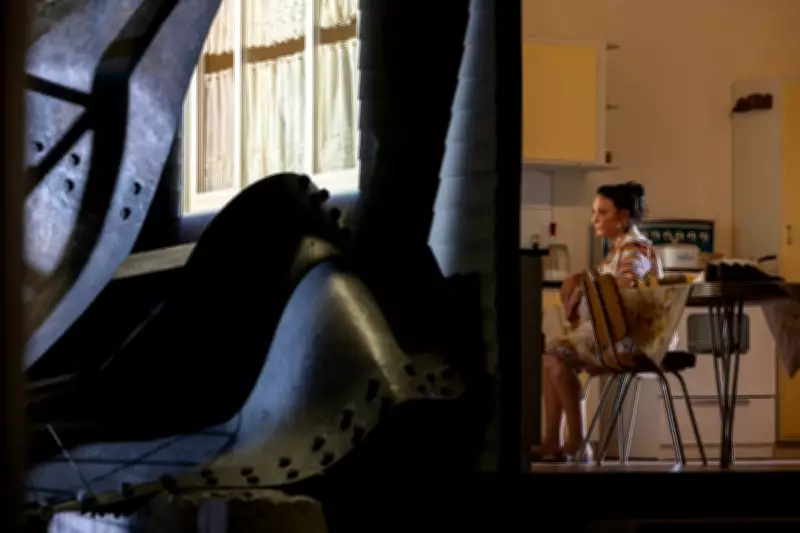
We get a hint of what it might feel like at the very beginning, as Niklas Pajanti's full lighting rig lifts slowly into the fly and Kelly Ryall's profoundly disturbing rumbling is punctured by the awful sound of twisting metal. The stage, dominated by a huge monolithic concrete pylon, feels dangerous and charged from the opening seconds. When that bridled horror is unleashed with such suggestive force and conviction at the moment of impact, it feels like a rift in the natural order. After that, the play limps to a worthy but dull conclusion, a lot of dust settling.
Technical Marvel and Narrative Shortcomings
Sinclair directs with consummate ease and consideration. He is a master of blocking, of the meaningful and dynamic placement of the actors within his tightly marshalled space. Technically, the production is a marvel, with Pajanti's startling, angular lighting combining with Ryall's deeply affective compositions to convey the chill and magnitude of that dreadful day.

West Gate is a moving and respectful tribute to the lives lost on 15 October 1970. But the playwright assumes a meaning for the disaster he never successfully articulates, with characters who rarely move beyond the obvious and sentimental; it doesn't move with the inevitability of a Greek tragedy but the diligent recounting of a tragic event. Nothing resonates outwards, and the stakes remain merely personal. Sinclair's production of A View from the Bridge worked because Arthur Miller poured his social conscience into indelible characters who could carry the burden of his lofty theme. McIntosh's play, on the other hand, seems dwarfed by the sheer weight of his own fascination. Still, it's a mighty crash. Melbourne Theatre Company's production of West Gate runs at the Sumner theatre until 18 April.