For one Scottish teenager, a late-night viewing of a comedy VHS tape didn't just provide laughs—it fundamentally altered the course of his life, career, and continental identity. The catalyst was comedian Eddie Izzard and a groundbreaking multilingual performance that turned a school subject from a chore into a calling.
A Surreal Spark in Stirlingshire
Until the age of 13, French lessons held little appeal. Family driving holidays to Brittany and Normandy involved parents handling all communication, making the intricacies of le and la seem pointless. This changed one evening in his family home in Stirlingshire, Scotland, when he put on a recording of Izzard's celebrated stand-up show, Dress to Kill.
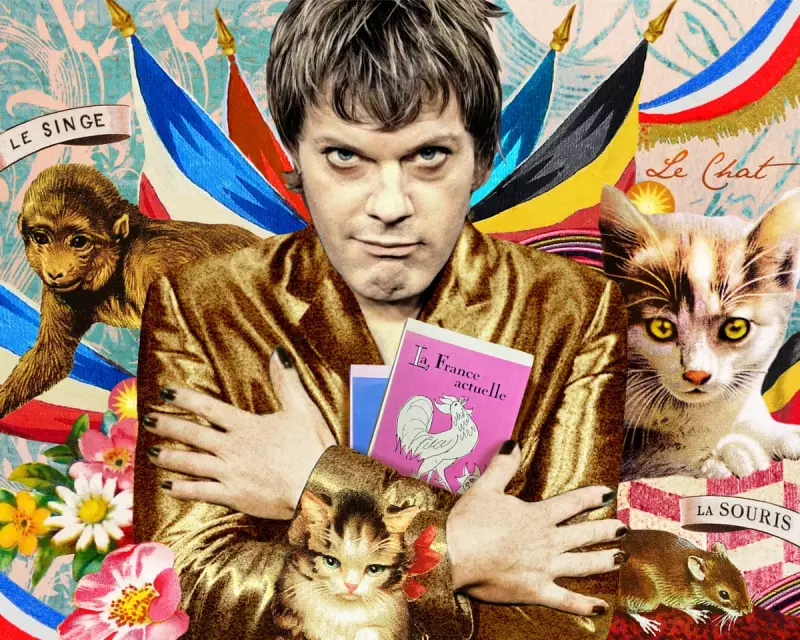
Drawn by the surreal and absurd humour, he was captivated. A particular segment resonated deeply: Izzard's routine about learning French and constructing absurd scenarios using random school phrases during a trip to France. The comic famously attempted to force the words for cat (le chat), mouse (la souris), and monkey (le singe) into conversation.

The Moment Language 'Clicked'
The true revelation came during the encore. Izzard re-performed an entire section of the show in fluent French. To the teenager's astonishment, he could understand it. One line in particular—"le singe a disparu" (the monkey has disappeared)—made an entire verb table suddenly make sense. Another sequence about escaping awkward talk by declaring "Je dois partir parce que ma grand-mère est flambée" (I must leave because my grandmother is on fire) sealed the deal.
Being able to follow the jokes didn't just grant access—it amplified the humour. The dry verb conjugations and vocabulary lists from school finally had context and purpose. Languages were revealed to be not just functional, but inherently funny and enjoyable.
From Classroom to Continent: A Multilingual Path
Inspired, he immersed himself in French at school, transforming it into his favourite and best subject. This newfound passion made picking up German easier, leading him to study German and Turkish at university. After graduation, he moved to Berlin for an online marketing job, thrilling at the immersion in a foreign language and culture.
In early 2014, a flyer announced Eddie Izzard was performing a show in German at a Berlin theatre. The experience was profoundly familiar: an English comic taking a painstakingly learned language and rendering it hilarious once more.
His journey continued to Amsterdam, where he added Dutch to his repertoire, before a pivotal move in 2016 to Brussels to work for the European Commission. His role in communications, research, and innovation primarily uses English, but he liaises with people of all nationalities, utilising his languages whenever possible.
Full Circle in Brussels
Life in the French- and Dutch-speaking capital brought delightful reacquaintance with the language that started it all. Poignant reminders of that initial spark appear unexpectedly, like the first time he walked from Bruges station and passed a hotel named Le Singe d'Or (The Golden Monkey), prompting a smile and a memory of Izzard's pronunciation.
Reflecting on the journey from a teenager who had rarely left Scotland to a Belgian citizen, naturalised in 2022 (completing the application in French), he ponders the chain reaction. Would he have ever worked for the EU, moved to Brussels, or even moved abroad at all, without that fateful encounter with Eddie Izzard asking a confused Frenchman: "Où est le singe?"
The story stands as a powerful testament to how cultural exposure, particularly through the unconventional and joyful medium of comedy, can unlock potential, reshape identities, and build bridges across Europe.