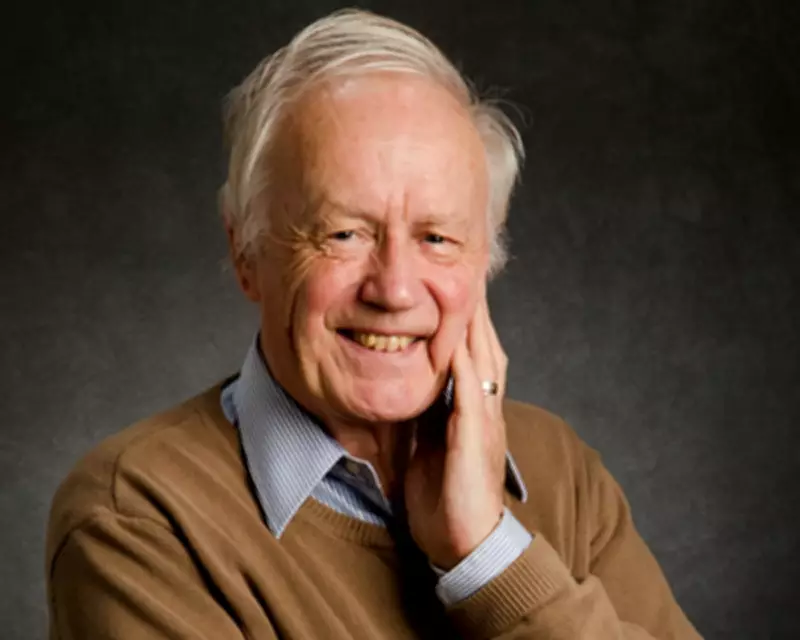
The world of theoretical physics has lost one of its most brilliant minds with the passing of Sir Anthony Leggett at the age of 86. A Nobel laureate renowned for his pioneering contributions to the understanding of superfluidity and quantum mechanics, Leggett's work fundamentally reshaped modern physics and inspired generations of scientists.
A Distinguished Career in Physics
Born in 1938, Anthony Leggett embarked on an academic journey that would see him become a leading figure in condensed matter physics. He earned his doctorate from the University of Oxford and later held prestigious positions at institutions including the University of Sussex and the University of Illinois at Urbana-Champaign. His research focused on low-temperature physics, where he made seminal discoveries about the behavior of matter at near-absolute zero temperatures.
Groundbreaking Work on Superfluidity
Leggett's most celebrated achievement was his theoretical explanation of superfluidity in helium-3, for which he was awarded the Nobel Prize in Physics in 2003. Superfluidity is a state where a fluid flows without viscosity, and Leggett's models provided deep insights into this quantum phenomenon. His work not only solved long-standing puzzles in physics but also opened new avenues for exploring quantum systems and their applications.

Beyond superfluidity, Leggett made significant contributions to the foundations of quantum mechanics, particularly in understanding macroscopic quantum phenomena. He authored influential papers and books that continue to be essential reading for physicists worldwide, cementing his reputation as a thought leader in the field.
Legacy and Impact
Throughout his career, Anthony Leggett received numerous accolades, including knighthood in 2004 for his services to physics. He was a fellow of the Royal Society and a member of several international academies, reflecting his global influence. His mentorship of young scientists and his commitment to public engagement in science further underscored his dedication to advancing knowledge.
Leggett's passing marks the end of an era in physics, but his legacy endures through his groundbreaking research and the many scientists he inspired. His work on quantum fluids and macroscopic quantum coherence remains pivotal in ongoing studies of superconductivity, quantum computing, and other cutting-edge technologies.
In summary, Anthony Leggett's life and work exemplify the power of theoretical inquiry to unlock the mysteries of the universe. His contributions have left an indelible mark on physics, ensuring that his influence will be felt for generations to come.