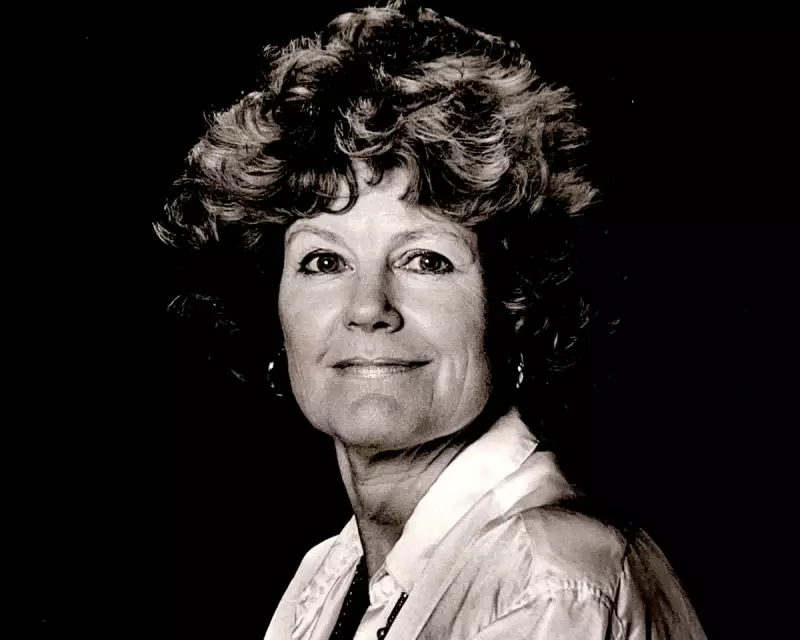
Dr Nancy Lane Perham, a celebrated electron microscopist and a formidable champion for women pursuing careers in science, has died at the age of 89. Her pioneering work in cell biology at the University of Cambridge and her dedicated advocacy left an indelible mark on both scientific research and gender equality in STEM fields.
From Halifax to Cambridge: A Pioneering Career
Born in Halifax, Nova Scotia, Nancy was told at Queen Elizabeth High School that women could only become laboratory technicians, not scientists. This dismissive attitude only fuelled her determination. She earned a degree in cell biology from Dalhousie University in 1958, followed by a master's degree.
Her academic excellence was recognised with the prestigious Imperial Order of the Daughters of the Empire scholarship and the Governor General’s Gold Medal. These awards enabled her to undertake doctoral studies at Lady Margaret Hall, Oxford, where she completed her DPhil in 1963.

A postdoctoral position at Yale University followed, where she met fellow scientist Richard Perham. The couple married in 1969 and moved to Britain the following year when Richard took up a research post in Cambridge's biochemistry department.
A Cambridge Legacy: Research, Teaching, and Advocacy
Nancy Perham joined the University of Cambridge's Department of Zoology in 1970 and became a fellow of Girton College. She was known for her outspoken and flamboyant presence, helping to usher the college into a new era. Over her career, she authored more than 100 scientific papers.
Her passion, however, extended far beyond the laboratory. She had a lifelong impact on generations of students, not only through her infectious enthusiasm for biology but through her active championing of careers for women. She understood the barriers firsthand and worked tirelessly to dismantle them.
This commitment led her to become the first director of the Women in Science, Engineering and Technology (WiSET) Initiative at Cambridge. She also played a key role in establishing and running the UK-wide Athena Swan Project, a charter mark recognising advancement of gender equality in academia. In 1994, her services to science were honoured with an Officer of the Order of the British Empire (OBE).
Artistic Science and Personal Life
Nancy Perham's creativity found another outlet in painting. Using oils and acrylics, she created artistic interpretations of the cellular structures and interactions she studied under the microscope. Her scientific art was featured on journal covers and was part of the Royal Academy of Art’s summer exhibition in 1995.
Her husband, Richard, died in 2015. Nancy is survived by her two children, Quentin and the author of the original obituary, her two grandchildren, Isabella and Tristan, and her sisters, Elise and Susan.
The death of Dr Nancy Perham marks the passing of a true pioneer—a brilliant scientist who used her position to hold the door open for countless women who followed, ensuring her legacy will resonate for decades to come.