The head of a leading UK university has declared that a degree can no longer be considered a guaranteed 'passport to social mobility', arguing the country now has a 'surfeit' of graduates facing intense competition for professional roles.
The End of a Simple Promise
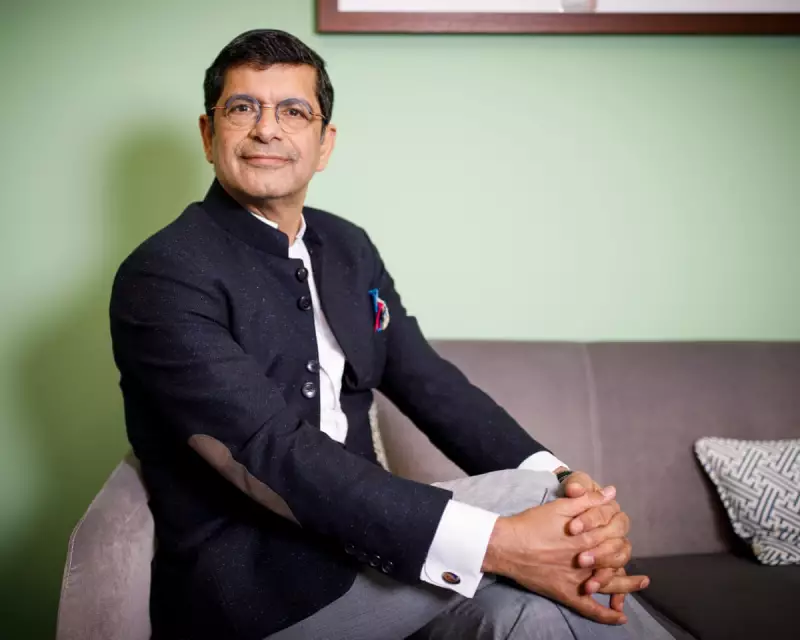
Professor Shitij Kapur, vice-chancellor of King's College London, stated that the era when universities could confidently promise their graduates good jobs is over. This shift comes as nearly half of young people enter higher education. He described a modern degree as being more akin to a 'visa' for social mobility rather than a passport, offering a chance to enter the professional world but with no certainty of success.
'The competition for graduate jobs is not just all because of AI filling out forms or taking away jobs,' Kapur explained. 'It's also because of the stalling of our economy and it's also because of a surfeit of graduates. So I feel that that simple promise has now become conditional on 'Which university did you go to? What course did you take?''

A Predicted Decline in Graduate Premium
Kapur pointed to the long-standing predictions of sociologist Martin Trow, who forecast that mass participation in higher education would change the status of degrees. Trow predicted three key outcomes as the sector moved from educating an elite 5-10% to a more universal system:
- Social regard for graduates would diminish.
- The graduate pay premium would shrink as degrees became less scarce.
- A university education would shift from a privilege to a necessity for participating in advanced society.
'I think in the UK we are reaching that point now,' Kapur stated. Official figures show that while graduates still enjoy higher employment and pay than non-graduates, real earnings for younger graduates have been stagnant for a decade.
A 'Triangle of Sadness' and the International Student Lifeline
Kapur linked the economic challenges to policy, noting that the introduction of £9,000 tuition fees and student loans in 2012 coincided with slow national growth, calling it 'the worst possible time' for such a transition. In 2022, he described a 'triangle of sadness' between debt-laden students, a government cutting funding via inflation, and overstretched staff.
He believes the situation has since worsened, with domestic tuition fees 'fossilised' at a level that does not cover teaching costs. However, Kapur maintains that UK universities still provide world-class education, largely subsidised by the premium fees paid by international students. This funding supports the research that bolsters global rankings, which in turn benefits domestic students through access to leading academics and course variety.
He warned that recent government restrictions on international student visas and new levies on their fees threaten this vital ecosystem. 'Often people think that international students are some sort of self-serving indulgence. But what I would like people to understand is that this is now a feature of our system,' Kapur argued.
Concluding, Kapur emphasised that reversing the UK's productivity slump depends on leading the next technological revolution. 'It will only turn around if we are able to ride the new wave of technology better than others... and universities will have a central role in doing that.'