Behind the gleaming facade of Los Angeles's 'City of Champions', a fierce battle is being waged over the future of its public schools. Inglewood, California, home to the spectacular SoFi Stadium and the new Intuit Dome, is grappling with a deepening educational crisis that has seen eight schools shuttered since 2012, five of them announced just last March.
A Dream School Crushed by Sudden Closure
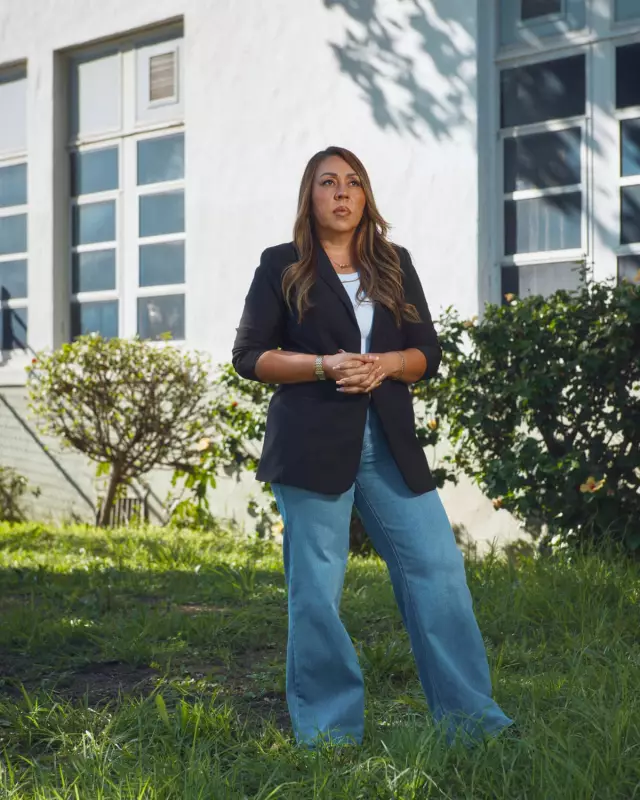
For Victoria Preciado, a lifelong Inglewood resident and teacher, Worthington Elementary was a beacon of hope. She enrolled her daughter in its celebrated Spanish-English dual-immersion programme, where the child thrived within a tight-knit, supportive community. "The teachers were excellent. My daughter was receiving a quality education," Preciado recalls. This dream was shattered just days before the 2022 winter break when a notice arrived discussing school closures.
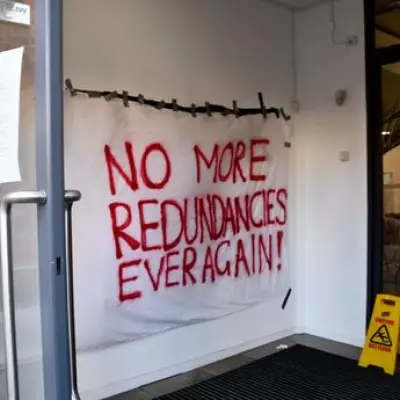
Despite Worthington having one of the district's highest enrollments and a deeply engaged parent body, it was placed on the chopping block. Preciado, alongside other blindsided parents and the school's principal, formed the coalition Stop IUSD School Closures. They packed board meetings, with children pleading for their school's survival. An advisory committee of local residents voted to keep Worthington open, prompting cheers from advocates who thought they had won.

The victory was short-lived. A new county-appointed administrator, James Morris, assumed sole decision-making power. At a subsequent meeting where community members chanted "Escúchanos!" (Listen to us!), Morris and the board vacated the room, deeming the demonstrators disruptive. They reconvened privately, streaming the meeting to the packed hall. Through a crackly monitor, Preciado heard Morris announce he would ignore the committee's recommendation and close Worthington. The school was shuttered in December 2023.
The Long Shadow of State Receivership
This conflict is rooted in a pivotal 2012 event. After years of funding cuts and competition from charter schools, the Inglewood Unified School District (IUSD) faced financial collapse. State Senator Rod Wright authored SB 533, providing a $29 million emergency loan. The condition was a state takeover, placing IUSD under receivership.
Governor Jerry Brown signed the bill into law on 14 September 2012, making IUSD the ninth California district to lose local control. The district was placed under the oversight of the Fiscal Crisis and Management Assistance Team (FCMAT), which audits it across five key areas. To exit receivership, IUSD must score highly while repaying its loan with interest—a yearly cost of about $2.3 million on a budget already running a $16 million deficit.
Experts argue such takeovers disproportionately target communities of colour and often fail. "Takeovers overwhelmingly fail to improve the outcomes they promise," states Domingo Morel, a political scientist at New York University. The consequences for IUSD have been stark: enrollment has plummeted from 18,000 students in the early 2000s to fewer than 7,000 today, with test scores and graduation rates following a similar downward spiral.
Competing Visions for a District's Future
Administrator James Morris, a veteran educator, sees his mission as "right-sizing" the district. He points to a new $240 million high school under construction and partnerships with figures like Dr. Dre as signs of progress. He argues closing under-enrolled schools is a painful but necessary step to consolidate resources and eventually attract the estimated 3,500 to 4,000 Inglewood children currently educated outside the district.
Community activists see a different narrative. They contend decisions are made with minimal local input, prioritising development over existing residents. "This is about developing Inglewood to look a certain way—to invite certain people in and push certain people out," says attorney Fredrisha Dixon of the Inglewood Coalition for Educational Equity. They note schools in poorer, immigrant-heavy areas are closing, creating "school deserts," while those near affluent borders remain open.

The activists drafted the California Public School Sovereignty Act to reclaim local control and sought support from State Assemblymember Tina McKinnor. She declined, stating, "We must close the schools." Meanwhile, the group, alongside the teachers' union and the ACLU, has filed a formal complaint asking the state attorney general to investigate the closures and the receivership.
The human cost remains central. For parents like Melissa and Nicholas Deloach, who enrolled their daughter in a recently reopened school, involvement is key. "Parents really can make a difference at these schools," Melissa says. For Victoria Preciado, who removed her daughter from the district, the fight continues. Her conclusion is a sobering rallying cry for her community: "There is nobody who is going to come to save us... It is just going to be the regular folks from Inglewood. And we're going to have to save ourselves."