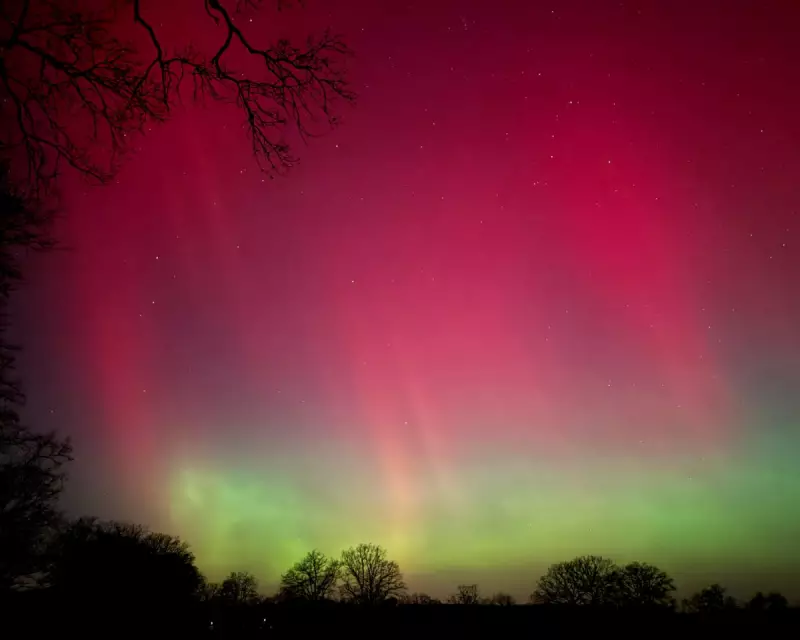
A spectacular and intense geomagnetic storm has painted night skies across the Northern Hemisphere with vibrant auroras, making the celestial display visible far further south than usual. The phenomenon, known as the aurora borealis or northern lights, was captured illuminating the sky over Quickborn in northern Germany on Monday night.
Unprecedented Solar Activity Disrupts Earth's Magnetic Field
The cause of this widespread light show is a major disturbance in Earth's magnetic field, driven by intense solar activity. According to forecasts from the US National Oceanic and Atmospheric Administration's (NOAA) Space Weather Prediction Center, the storm created conditions for the aurora to be visible across Canada and much of the northern United States on Monday night, with potential sightings even further south.
Shawn Dahl, a service coordinator at the prediction centre, confirmed the severity of the event, stating that the intensity of this geomagnetic and solar radiation storm had not been witnessed in more than two decades. The storm was not expected to weaken significantly until sometime on Tuesday.

Potential for Disruption and Widespread Visibility
While creating a beautiful spectacle, such powerful space weather events carry risks for modern infrastructure. The US Geological Survey notes that these storms can interfere with satellite operations, GPS communications, and other critical technological systems.
The current event echoes a similar occurrence in November, when solar storms brought vibrant auroras to parts of Europe, including Hungary and the United Kingdom. On that occasion, the lights were seen as far south in the United States as Kansas, Colorado, and Texas, indicating the potential reach of the latest disturbance.
What This Means for Skywatchers
For residents in regions unaccustomed to the aurora, the storm presents a rare opportunity. The key factors for visibility are a clear, dark sky away from city lights and looking towards the northern horizon. The storm's power means that, unlike typical displays confined to polar latitudes, the shimmering greens, pinks, and reds could dance in skies much closer to the equator.
This event underscores the dynamic and sometimes impactful relationship between our sun and our planet, blending natural beauty with a reminder of our technological vulnerability.