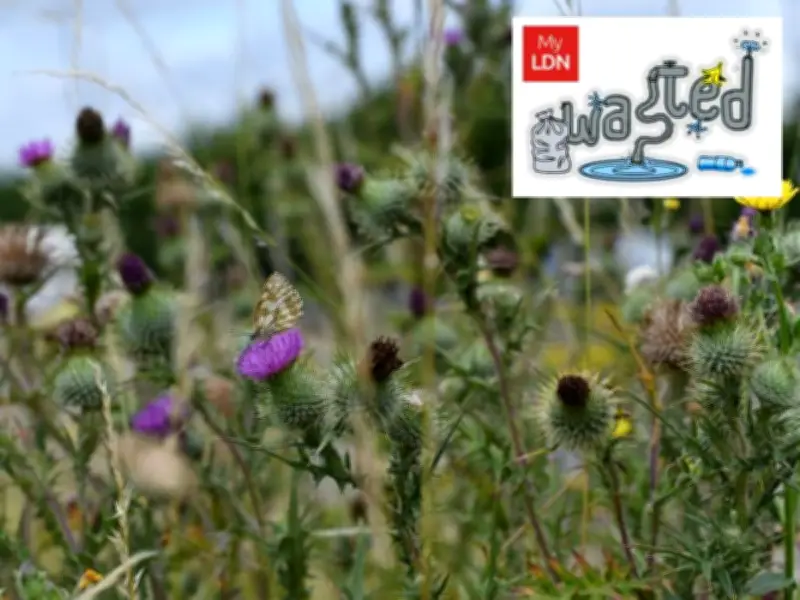
Butterfly sightings at roadside wildflower verges in London have increased by more than 50 per cent in the last year, Transport for London (TfL) has reported. Colourful borders are now blooming along the A10 in Enfield, the A2 in Bexley, and the A217 in Sutton as part of a scheme to boost biodiversity and support wildlife in the capital.
Expansion of wildflower verges
The planted area has reached 520,000m² since 2024, a major expansion from the original 260,000m². Seeds donated by the charity Butterfly Conservation have also been sown near Rotherhithe Roundabout, on Redbridge Roundabout, and alongside a shared path by the A40 in Hillingdon. By reducing mowing from up to eight times a year to twice annually, and removing grass cuttings, the verges are better able to support wildflowers and create richer habitats for wildlife. This creates a supply of nectar, food, and shelter for bees, butterflies, birds, and small mammals.
Species spotted
Essex Skipper, Marbled White, and Meadow Brown butterflies have all been spotted enjoying the new green spaces. In 2025, 118 surveys across 34 sites recorded around 720 butterflies from 22 species, as well as around 100 day-flying moths. TfL is working with Butterfly Conservation to monitor the sightings.

Official comment
Lilli Matson, Chief Safety, Health and Environment Officer at TfL, said: “We’ve doubled wildflower verges across London in just two years – and we’re already seeing wildlife return. Our approach has really blossomed over the years and it’s really encouraging to see the number of butterflies begin to pick up again. Ultimately, taking action to improve biodiversity and reduce carbon emissions, such as through our approach to wildflower verges, isn’t just about improving the capital for wildlife, but about improving it for everyone in the capital. Supporting and creating healthy green infrastructure allows us to shape our city, so that it becomes more resilient to the impacts of climate change and also a more pleasant, liveable place to spend time in.”