Marine scientists have issued a stark warning of a potential 'regime shift' in the world's oceans, as vast blooms of floating seaweed expand at an alarming rate, fuelled by global heating and nutrient pollution from human activity.
Satellite Data Reveals Staggering Global Increase
Researchers from the University of South Florida have conducted a groundbreaking global study, analysing 1.2 million satellite images taken between 2003 and 2022. Using artificial intelligence and deep-learning models, they tracked the spread of floating macroalgae – commonly known as seaweed – across the oceans.
The findings, published in Nature Communications, are startling. The team discovered that the area covered by these seaweed blooms has been growing by 13.4% per year in tropical regions like the Atlantic and western Pacific. The most dramatic acceleration in growth began after 2008.

"Before 2008, there were no major blooms of macroalgae reported except for sargassum in the Sargasso Sea," explained Professor Chuanmin Hu, the study's senior author. "On a global scale, we appear to be witnessing a regime shift from a macroalgae-poor ocean to a macroalgae-rich ocean."
A Visible Crisis From Space to Shore
The phenomenon is now visible from space. The most famous example is the Great Atlantic Sargassum Belt, a colossal mass of seaweed stretching from the Gulf of Mexico to West Africa. Other significant blooms include a ring around New Zealand's Chatham Islands and the frequent 'red tide' events off the coast of Florida.
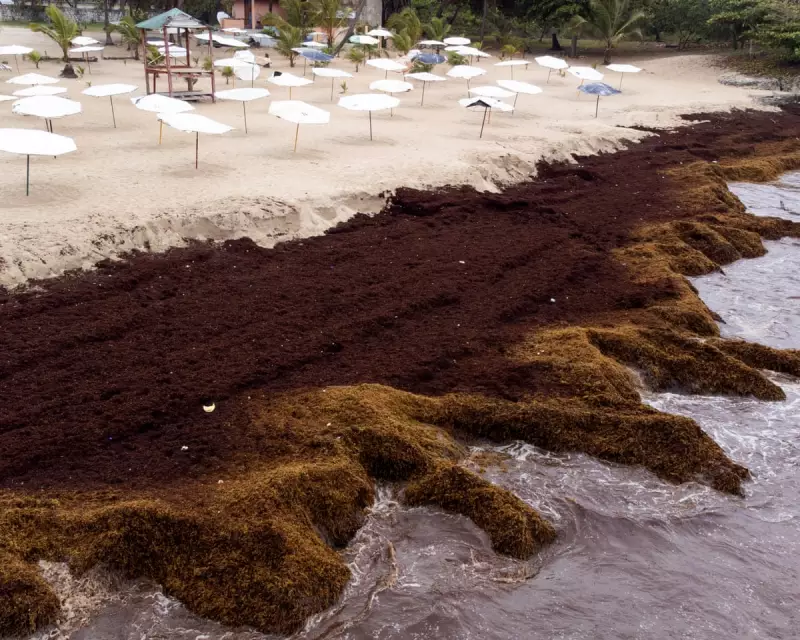
On shorelines, the impact is direct and often devastating. Beaches like Playa Caribe in the Dominican Republic have been periodically blanketed in thick, rotting sargassum, harming local tourism and ecosystems. This brown seaweed forms vast colonies that drift on ocean currents before washing ashore in unprecedented quantities.
Heating Waters and Human Pollution as Key Drivers
The research directly links the explosive growth to two primary factors: accelerated global ocean warming and excessive nutrient enrichment from sources like agricultural runoff. The study notes that the most intense increases align with the period of accelerated ocean heating observed since 2010.
Interestingly, while macroalgae like sargassum have thrived, microscopic algae (phytoplankton) have shown a much more modest yearly increase of around 1%. This suggests different environmental sensitivities and indicates a fundamental change in ocean conditions favouring larger seaweeds.
The scientists warn this shift could have profound consequences, including darkening waters to alter light availability, changing ocean geochemistry, affecting carbon sequestration, and potentially accelerating climate breakdown through altered radiative forcing.
This first global picture of floating algae signals an ecosystem under severe stress, prompting calls for urgent attention to the combined crises of climate change and nutrient pollution affecting our seas.