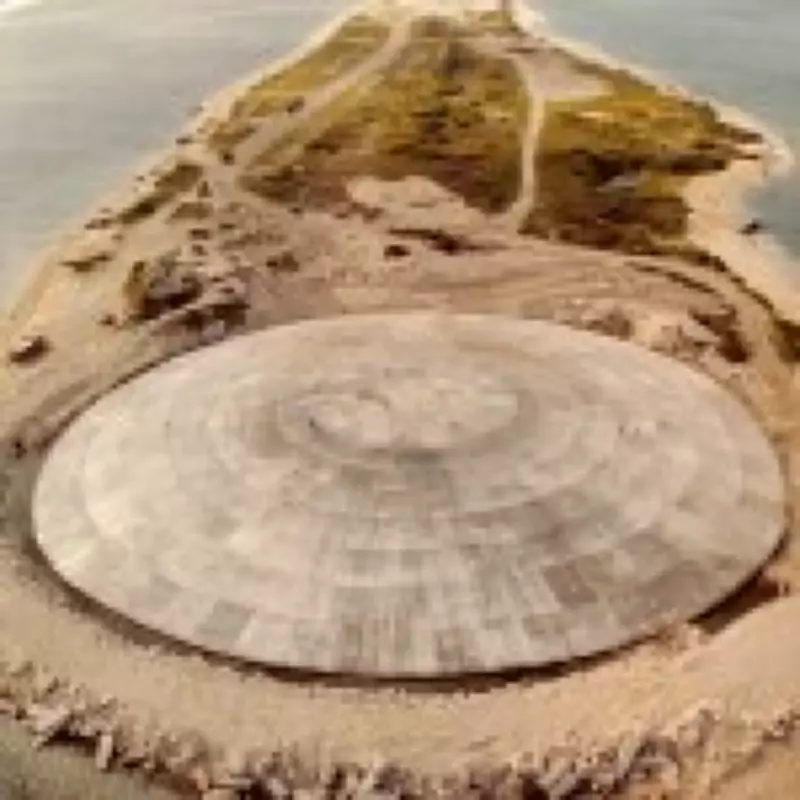
Fears are mounting that a massive nuclear waste dump buried under a concrete dome in the Pacific Ocean could be unleashed into the sea, posing a catastrophic environmental threat for centuries. The structure, known as the Runit Dome, is located on Runit Island in the Enewetak atoll of the Marshall Islands and is showing alarming signs of deterioration, according to recent scientific findings.
A Legacy of Cold War Testing
The dome dates back to a period of intensive nuclear testing by the United States between 1946 and 1958, during which 67 nuclear tests were conducted across Enewetak Atoll and Bikini Atoll. These tests displaced over 300 Marshallese people and left a lasting radioactive legacy. One notable test, an 18-kiloton explosion called "Cactus," destroyed part of Runit Island and created a massive crater.
Construction and Current Risks
In the late 1970s, the 10-meter-deep crater from the Cactus test was repurposed to store more than 120,000 tonnes of radioactive soil and debris collected from across the atoll. The site was sealed with an 18-inch (46 cm) concrete cap, forming the Runit Dome. However, over five decades later, the structure is visibly aging, with cracks appearing on its surface and groundwater flowing beneath it.

Researchers have discovered that this groundwater moves in and out with the tides, potentially carrying radioactive material into the surrounding lagoon. Studies indicate the dome is not watertight, raising concerns about leakage. Ivana Nikolic-Hughes, of Columbia University and president of the Nuclear Age Peace Foundation, observed cracks during a 2018 visit while measuring radiation levels. She noted that these findings highlight the ongoing impact of radioactive fallout on the Marshall Islands and will inform future assessments of risks to current inhabitants and potential resettlement efforts.
Long-Term Hazards and Expert Warnings
While American officials have stated the structure is not at immediate risk of collapse, experts warn of extreme long-term dangers. Plutonium-239, a radioactive element used in nuclear weapons, remains hazardous for over 24,000 years. Arjun Makhijani, president of the Institute for Energy and Environmental Research, emphasized that no concrete structure can be expected to last even a fraction of that time. He pointed out that cracks have already appeared within decades, underscoring the immense challenge of containing radioactive material over such extended periods.
Broader Implications of Climate Change
Scientists argue that the Runit Dome illustrates a wider problem: sites once considered safe for toxic waste disposal may become vulnerable due to climate change. Rising sea levels and increased rainfall can alter water and food supplies, exacerbating the risks of contamination. The dome's proximity to the ocean's edge makes it particularly susceptible to these environmental shifts, threatening to pollute marine ecosystems for generations.
This situation serves as a stark reminder of the enduring consequences of nuclear activities and the urgent need for sustainable waste management solutions in the face of global environmental changes.