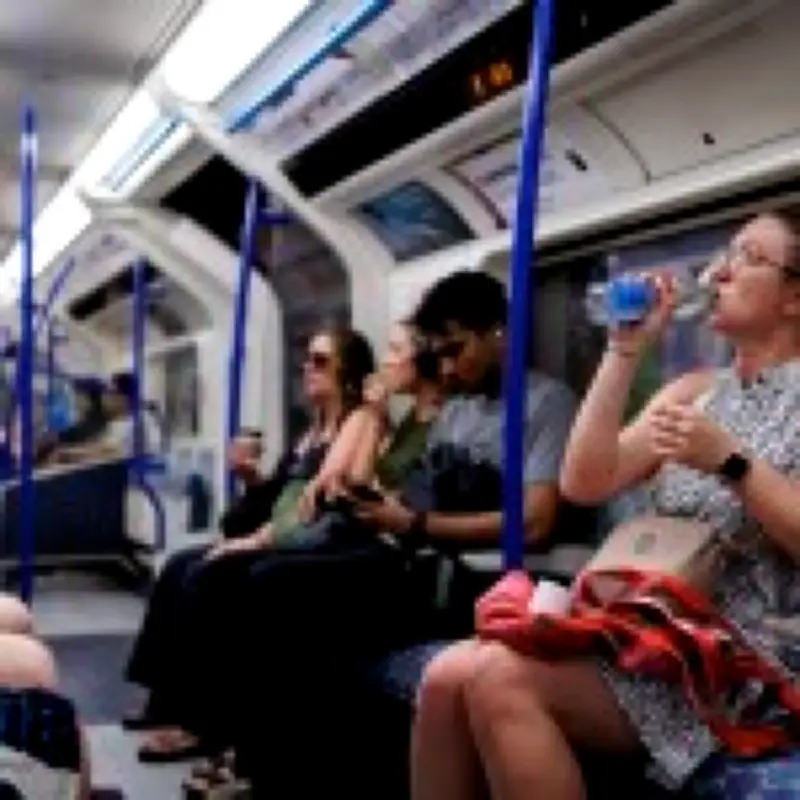
Mayor of London Sadiq Khan has unveiled the capital's first-ever heat plan, titled 'Heat Ready London', acknowledging that the city is not equipped to handle increasingly frequent extreme heatwaves driven by global warming. The plan draws inspiration from hot US cities like Phoenix and Los Angeles, which have decades of experience in coping with high temperatures.
London's heat crisis and the new plan
London has been hit by a rare red weather warning for extreme heat, with residents suffering on the Central Line, in poorly insulated tower blocks, and seeking refuge in cafes. Flash flooding after thunderstorms destroyed homes, and 300 people were trapped on a stranded train as Transport for London struggled. Khan stated that 40°C summers, like the infamous 2022 heatwave, are becoming 'the new normal'.
The plan reveals that over 1,300 schools, 60 hospitals, and 350 care homes are at risk of overheating. To address this, London will retrofit buildings with air conditioning and expand access to green and blue spaces, prioritizing poorer areas with limited park access. Khan emphasized social justice, noting that in the 2022 heatwave there were 400 premature deaths and 4,000 A&E visits.

Learning from US cities
Khan told Metro: 'Phoenix, for example, is a city in the USA that’s one of the hottest cities in the world. One of things they do is when it comes their roofs, they paint them a certain color.' He added: 'Los Angeles has issues with water shortages we are looking at too. They, and places like Paris and Milan, are decades ahead of us so we’re learning from them, from the design of our buildings to the types of trees we are planting.'
London Fire Commissioner Jonathan Smith has consulted the Los Angeles Fire Department on predicting wildfires. He told Metro: 'They shared a lot of lessons on using AI and algorithms to predict where the fires will occur. I think there are real lessons from the USA, and Europe and Australia.'
Focus areas and challenges
Heat Ready London covers six sectors: built environment, business and economy, emergency preparedness, health and care, green space and nature, and infrastructure. It outlines 37 focus areas, including expanding cooling spaces and public drinking water, adapting high-risk homes, and strengthening health system resilience.
However, a fully air-conditioned London Underground remains distant. Khan noted: 'When I became mayor, it was a dream to have air conditioned tubes, and I got 40% of them done. But it’s very difficult for some of our deeper trains to retrofit air conditioning, because they are so deep. So the most efficient way to do it is when we renew stock.'
Residents on Collingwood Estate in Sutton reported temperatures reaching 30°C by 4am, describing themselves as 'cooking' and suffering heat exhaustion. Khan stressed: 'It is not just an issue of the environment, but of social justice.'