As global sea levels surge at an unprecedented rate, a bold new scientific front is opening in the battle to protect coastal communities. Researchers are now moving beyond mere observation to actively explore whether cutting-edge technology, including lab-based 'artificial glaciers' and subglacial heat pumps, can slow or halt the catastrophic collapse of the world's most vulnerable ice sheets.
The Looming Crisis: A 'Doomsday' Glacier and Mass Displacement
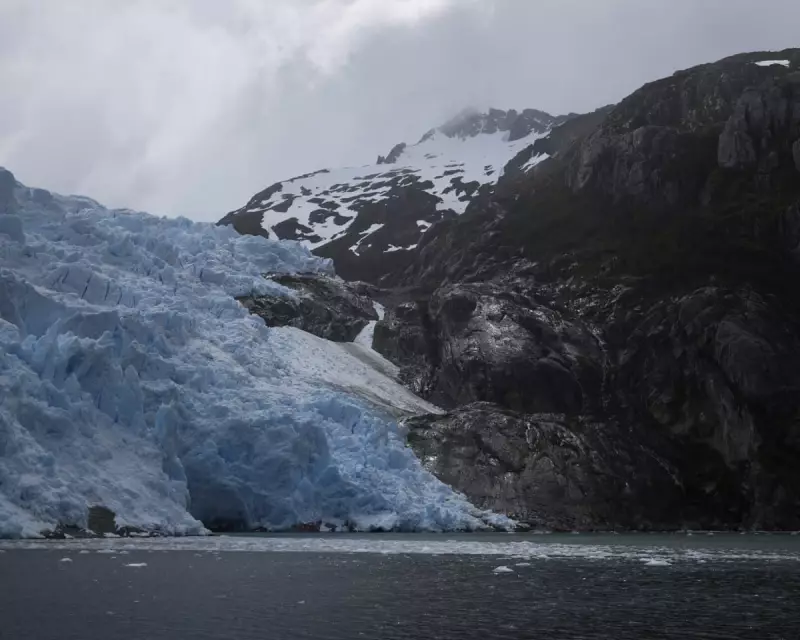
The scale of the challenge is immense. For every foot sea levels rise, an estimated 100 million people are displaced from their homes. Current projections suggest around 300 million individuals could be forced to migrate inland in coming decades, triggering profound social and political upheaval. The primary driver of this threat is the melting of ocean-bound glaciers, a process largely fuelled by warm water eroding their bases—a deep-ocean phenomenon that will continue even if global emissions are slashed.
Most alarming is the situation in West Antarctica. The Florida-sized Thwaites Glacier, often dubbed the 'doomsday glacier', acts as a keystone holding back the far larger West Antarctic Ice Sheet. Satellite data indicates it is collapsing. If it fails entirely, the entire sheet could follow, raising global sea levels by over six feet. This would displace more than half a billion people, potentially within our children's lifetimes. Critically, scientists stress that even reducing emissions to pre-industrial levels would not stop this specific collapse.

From Passive Study to Proactive Intervention
Confronted with this daunting reality, a growing cadre of glaciologists and engineers is adopting a more interventionist stance. "We were resigned to documenting their demise," admit scientists Dr Brent Minchew and Dr Colin Meyer, co-founders of the Arête Glacier Initiative. Now, they argue, we must treat ice sheets as systems we can "understand, anticipate and conserve."
This new approach leverages a suite of innovative technologies to both improve forecasts and test solutions. These include:
- Satellite-based radar and solar-powered drones for precise monitoring.
- Robot submarines to study the warm water currents attacking glacier bases.
- Laboratory-created 'artificial glaciers' to model ice behaviour under controlled conditions.
- Advanced computing and artificial intelligence to create accurate predictive models.
Nature-Inspired Solutions on the Drawing Board
Inspired by natural phenomena, researchers are sketching out potential geoengineering strategies. One example is the Kamb ice stream in West Antarctica, which froze itself to its bed about 200 years ago and has barely moved since. This natural stabilisation, which did not harm surrounding areas, suggests targeted interventions might be possible.
One promising concept involves drilling to the bed of the Thwaites Glacier to install passive thermosiphons—essentially heat pumps—to cool its base and encourage refreezing. Such ideas are in their infancy and would require years of rigorous research and development under established engineering frameworks, like NASA's Technology Readiness Level system, to assess viability and environmental impact.
"We cannot 'move fast and break things'," the scientists caution, "but we also cannot afford to debate until the tide is at our door."
The Funding Gap and a Call to Action
A major obstacle remains a critical lack of investment. While reducing greenhouse gases remains paramount, funding for intervention research is minuscule. The major International Thwaites Glacier Collaboration (ITGC) between the US and UK allocated only about $7 million annually from 2018 to 2025—a sum dwarfed by the hundreds of billions lost yearly to coastal flooding. Philanthropy is currently filling gaps where governments have not committed at scale.

The article's authors conclude with a determined note: combining emissions reduction with careful exploration of interventions is now essential. "If we fail to find new options, we will at least know that we did everything we could," they write. Success, however, could achieve the once-unthinkable: preserving the world's coastlines and offering future generations the chance to live by stable seas.