Turkey's Sinkhole Crisis Threatens Farmers as Groundwater Vanishes
In the agricultural heartland of Turkey's Konya province, farmers are living in constant fear as giant sinkholes appear with increasing frequency, swallowing farmland and threatening homes. This geological phenomenon, accelerated by dwindling groundwater reserves and intensive farming practices, is forcing a complete rethink of agricultural traditions in a region once known as Turkey's breadbasket.
The Terrifying Reality for Farmers
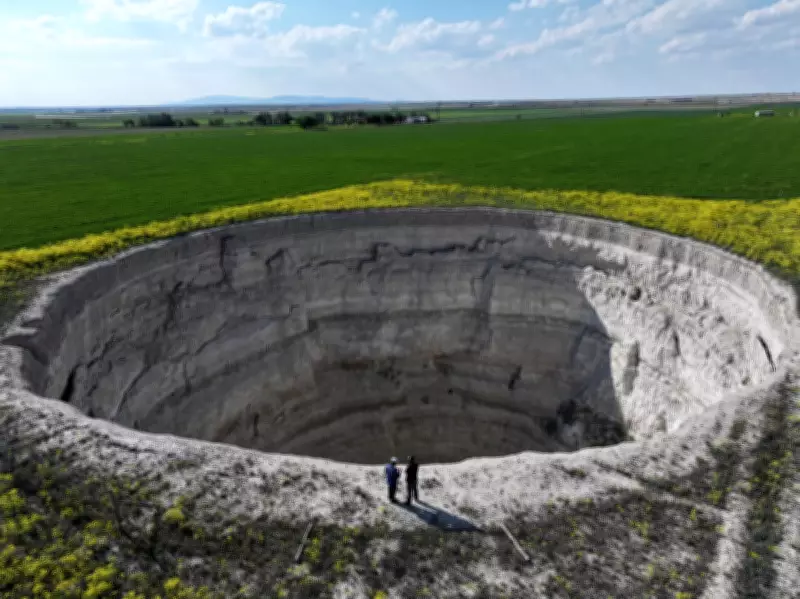
Fatih Sik experienced this terror firsthand when a massive sinkhole, measuring fifty meters wide and forty meters deep, opened on his property. "I live in constant fear that a sinkhole will take my house," Sik confessed, describing how he prays nightly for protection. The sinkhole appeared almost exactly one year after another had formed on his land, highlighting the accelerating nature of this crisis.
Sik represents generations of farmers whose families have worked this land for decades, yet scientists now warn the area may no longer be livable. One nearby house has already collapsed into a sinkhole, creating a palpable sense of impending disaster throughout the community.

Geological and Environmental Causes
According to Professor Fetullah Arik, a geology expert at Konya Technical University, the region now hosts nearly 700 sinkholes—the highest density anywhere in the world. While Konya has always been geologically prone to sinkholes due to its limestone bedrock, the problem has dramatically accelerated in recent years.
The primary drivers are threefold:
- Reduced rainfall and prolonged drought conditions
- Over-extraction of groundwater for irrigation
- Record-breaking heatwaves intensifying evaporation
Farmers who once needed to dig just thirty meters to reach water now must go ninety meters deep, reflecting the alarming depletion of aquifers. This creates a vicious cycle: as water tables drop, underground cavities lose their structural support and collapse.
Broader Climate Context
Turkey faces a severe drought crisis, with approximately 90% of the country at risk of desertification by 2030. The Central Anatolia region, where Konya is located, sits in one of the fastest-warming areas on Earth. Over the past sixty years, the region has lost 186 of its 240 lakes—a devastating indicator of ecological collapse.
This crisis presents particular irony as Turkey prepares to co-host the UN climate summit Cop31 this year alongside Australia. Climate Action Tracker rates Turkey's climate policies as "highly insufficient" to meet Paris Agreement goals, raising questions about the country's environmental leadership.
Agricultural Transformation
The traditional farming model in Konya—centered on water-intensive crops like corn, wheat, and sugarbeet—has become unsustainable. Sik, who has lost two beetroot fields to sinkholes at a cost of approximately £17,000 annually, represents a generation of farmers questioning whether their way of life can continue.
Innovative agriculturalists are pioneering alternatives. Mahmut Senyuz leads a farming collective reintroducing hemp production, which requires just three waterings per season compared to nine or ten for corn. Meanwhile, Dr. Ece Onur has abandoned an academic career to revive ancient dry-farming techniques in Burdur, growing roses and medicinal plants without any irrigation.
"Soil is a living organism," Onur emphasizes. "The only way to solve this crisis is to stop trying to make nature do things our way. We have to imitate her ways."
Economic and Social Consequences
The sinkhole crisis carries severe economic implications. Filling a single sinkhole can cost nearly £35,000—a prohibitive expense for most farmers. Sik has received no government support and believes he represents the last generation to farm this land, having sent his children to study nursing and dentistry rather than agriculture.
This agricultural heartland, which once sustained ancient civilizations and served as a vital stop on the Silk Road, now faces an uncertain future. The sinkholes serve as visible, terrifying markers of deeper environmental collapse—a warning that current practices cannot continue if the land is to survive.