

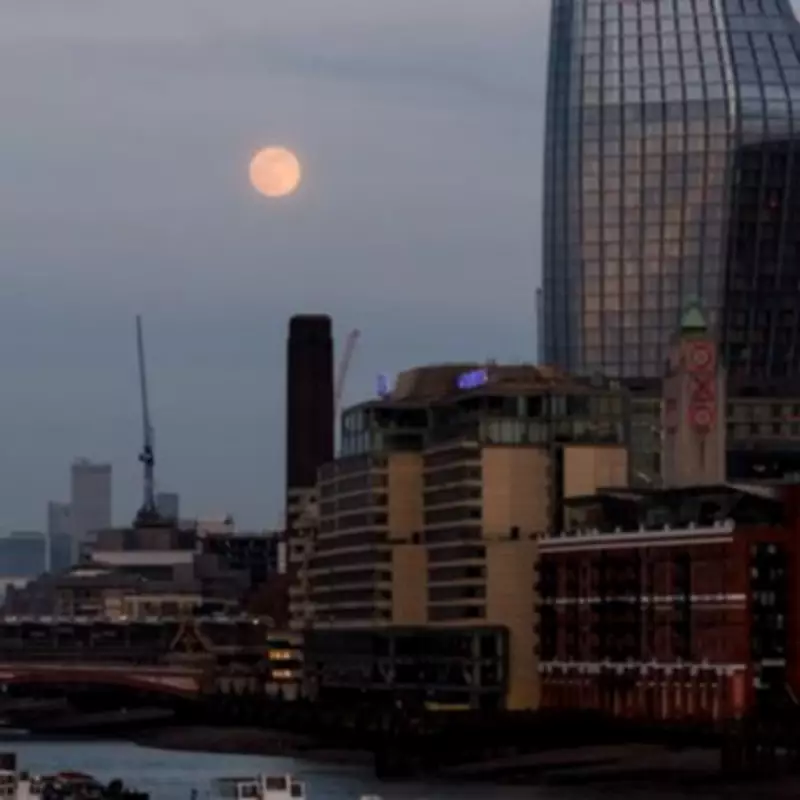
The skies above London are set to be graced by a remarkable celestial spectacle this week as the Pink Moon makes its annual appearance. This full moon event, traditionally associated with the arrival of spring, will be visible for three consecutive nights, offering multiple opportunities for observation despite potential weather challenges.
Pink Moon Viewing Schedule and Peak Illumination
The Pink Moon will maintain its full appearance from Tuesday, March 31st through Thursday, April 2nd, 2026. However, the absolute peak of illumination will occur during the early hours of Thursday, April 2nd, specifically at 3:12 AM. This timing means dedicated stargazers will need to either stay up late or set an early alarm to witness the moon at its maximum brightness.
Weather Considerations and Visibility Challenges
According to the latest forecasts from the Met Office, Londoners might face some difficulties obtaining clear views of the Pink Moon due to expected cloud cover. The atmospheric conditions could potentially obscure the lunar display, particularly during the peak viewing window. This makes timing and location selection crucial for those hoping to catch this astronomical event.

The Science Behind the Pink Moon's Name and Appearance
Despite its colorful name, the Pink Moon doesn't actually transform into a pink hue. The designation originates from traditional Native American naming conventions that reference the pink spring wildflowers, specifically creeping phlox, that typically bloom during early April. This lunar event serves as a seasonal marker rather than a description of its visual characteristics.
During the evening of April 1st, observers might notice the moon taking on a more orange or golden appearance, particularly when it sits low on the horizon. This color shift occurs because moonlight must travel through a thicker portion of Earth's atmosphere at lower angles, scattering the shorter blue light wavelengths and allowing the warmer red and orange hues to dominate the visual spectrum.
Spiritual Significance and Astronomical Context
The Pink Moon carries various spiritual meanings across different cultures, often symbolizing renewal, rebirth, and personal growth. As the fourth of thirteen full moons scheduled for 2026, this event represents an opportunity for reflection and new beginnings according to many spiritual traditions.
From an astronomical perspective, this is not a supermoon event, meaning the moon will appear at its standard size rather than the enlarged version visible during lunar perigee. The moon's entire surface will be illuminated by the sun's rays during this full phase, creating the brilliant display that captivates observers.
Expert Stargazing Recommendations for London Viewers
For optimal viewing conditions, astronomy experts recommend several key strategies:
- Look eastward during moonrise for the best initial views
- Seek elevated, open locations away from tall buildings and dense tree cover
- Bring binoculars to enhance detail observation
- Monitor weather forecasts closely and be prepared for multiple viewing attempts
- Consider traveling to areas with minimal light pollution for clearer skies
While the Pink Moon will be visible throughout the United Kingdom wherever skies remain clear, London residents should pay particular attention to weather patterns and consider venturing to higher ground or less urbanized areas for improved viewing conditions. The three-night visibility window provides multiple chances to witness this spring celestial event, even if cloud cover interferes during the peak illumination period.






