Sydney's Vanishing Front Gardens: A 46% Decline in Green Space
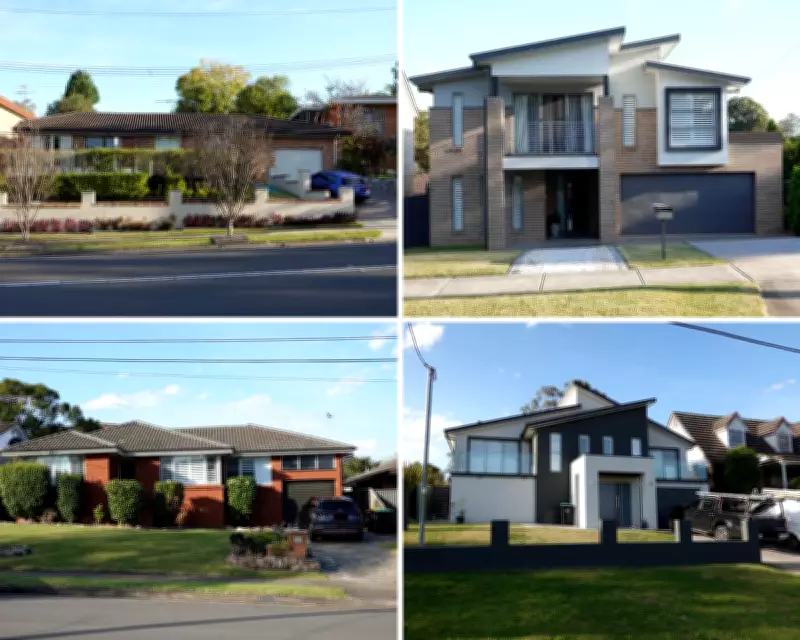
New research has uncovered a dramatic transformation in Sydney's suburban landscape, revealing that front gardens are disappearing at an alarming rate as residential redevelopment accelerates across the city. A comprehensive study examining 375 homes in Sydney's suburban ring has found that in areas where older low-density homes have been replaced by modern, larger houses, the average front garden has declined by a staggering 46% between 2018/19 and after 2023.
The Driveway Expansion Phenomenon
While front gardens shrink, the footprint of driveways and other artificial surfaces has increased by 57% to an average of 46 square meters per property. This dramatic shift represents what researchers describe as the "incremental dominance" of hard infrastructure over green space in Sydney's suburbs.
"What it starts to represent is in 30 years time we'll suddenly wake up and go 'where have all our front gardens gone?'" said Dr. Peter Davies, the lead author and a professor of sustainability at Macquarie University. "We're also starting to see the impact in backyards because the houses move further back."

Research Methodology and Findings
The study, due to be published in the Cities journal in coming months, used aerial imagery analysis across 13 suburbs in two local government areas – Ryde City Council and Parramatta City Council. The research team examined 370 properties across northern and greater western Sydney to quantify the changes in front yard size and composition.
The findings reveal several critical trends:
- Tree canopy coverage was reduced by 62% as older houses were demolished and rebuilt
- Driveway expansion has become a dominant feature of new developments
- Private green space is being systematically replaced by artificial surfaces
Planning System Gaps and Policy Challenges
Dr. Davies expressed surprise at the scale of the changes uncovered by the research. "I sort of knew they [driveways] were getting bigger. I didn't realise how much bigger," he admitted. The professor noted that successive governments have been reluctant to "over-regulate the mum and dad developer" who are knocking down properties and rebuilding.
"There's a soft approach to this sort of landscaping canopy," Davies explained. "There is no prescription through state instruments that says you need to have a minimum area of garden or area of canopy trees because it's really important for the community."
Multiple Factors Driving the Change
The research identifies several interconnected factors contributing to the loss of private green space:
- Greater car ownership and households increasingly having multiple vehicles
- Council requirements for off-street parking that necessitate larger driveways
- The replacement of older, smaller homes with larger modern dwellings
- Current planning instruments that lack mandatory green space requirements
"There is a need to put these cars somewhere," Davies noted. "Councils don't like people parking on the street so they then require bigger driveways."
Environmental and Community Impacts
The loss of private green space has significant environmental consequences, contributing to higher urban heat, reduced biodiversity, and fewer connections with nature. These changes occur against the backdrop of New South Wales needing to build 377,000 new homes by 2029 under the national housing accord.
Despite NSW having a target of 40% canopy coverage across greater Sydney by 2035, the state's environmental planning policy has no mandate on private tree canopy. "What we know is if you just leave it to existing planning instruments that are discretionary... you're just going to go backwards," Davies warned.
The Future of Sydney's Suburban Character
The research highlights how incremental development is changing suburban character in ways that often remain "below the political radar." As more properties undergo redevelopment, the cumulative effect becomes increasingly significant.

"It doesn't take many years to suddenly wake up and go half of these houses are now new... and the character of my neighbourhood has changed," Davies observed. The study serves as a crucial warning about the need for updated planning policies that balance housing development with environmental sustainability and community wellbeing.