April's Celestial Calendar: A Guide to Night Sky Wonders
Night sky enthusiasts are in for a spectacular treat this month, with a lineup of intergalactic events that promise to dazzle observers across the UK. From a unique full moon to a fleeting comet and a distant galaxy, April offers a rich tapestry of astronomical delights. The first highlight is the pink moon, a rare occurrence that sets the stage for a month of stellar viewing opportunities.
What Is the Pink Moon?
Contrary to its name, the pink moon is not a Barbie-inspired phenomenon. It is the traditional name for the full moon that graces the sky in April, as documented in The Old Farmer's Almanac, the oldest almanac in the United States. Each month's full moon carries a distinctive title, such as last month's worm moon or May's full flower moon. While the exact origins of these names are uncertain, folklore suggests they derive from the Algonquian Native American tribe. The term "pink" refers to the sprouting of moss pink, a vibrant spring wildflower that blooms around this time. Additionally, this moon is known as the Paschal moon, as it is the first full moon following the spring equinox, used historically to determine the date of Easter, which always falls on the first Sunday after this lunar event.
When to See the Pink Moon
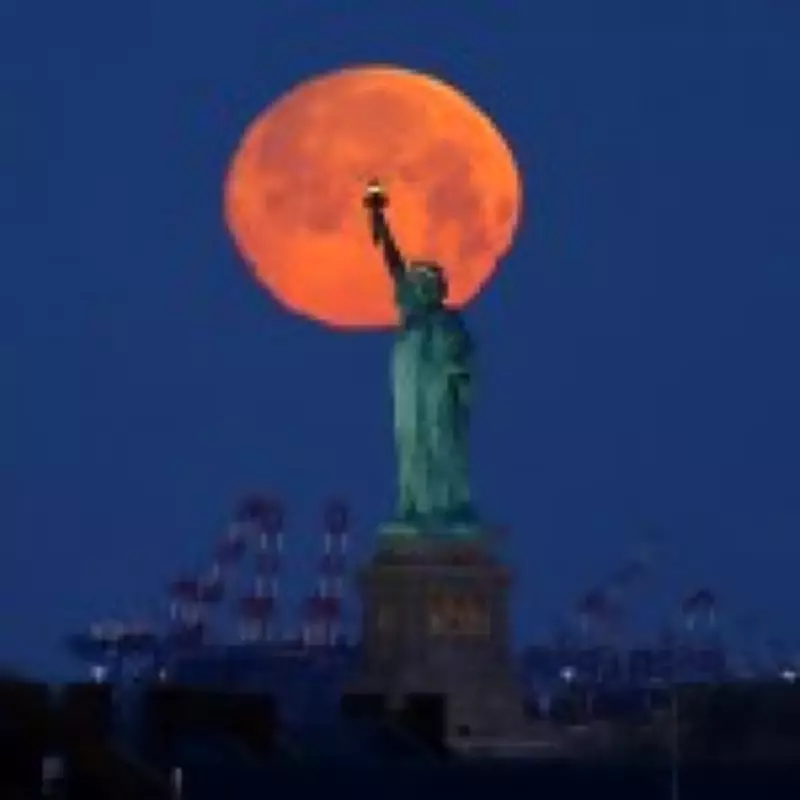
The pink moon will reach its peak brightness on Thursday, April 2, 2026, at 03:12 am, with no April Fools' tricks involved. Despite its name, it will appear more orange-hued as it sits low on the horizon, creating a larger visual effect known as the "moon illusion." The best views will be enjoyed by the four astronauts on NASA's Artemis II mission, but for Earth-bound observers, clear skies are forecasted for Scotland and Northern Ireland, while other regions may experience cloudy and rainy conditions.

Other Astronomical Highlights in April
Beyond the pink moon, April's sky offers a host of other celestial events. Comet MAPS (C/2026 A1), discovered in January, is a Kreutz sungrazer that will pass perilously close to the sun, potentially disintegrating but offering a bright, twinkling spectacle from April 4. The optimal viewing window is on April 5, before it vanishes on April 15, appearing low on the UK horizon—ensure an unobstructed view free from trees or buildings. If missed, it may reappear as a fuzzy smudge between April 19 and 26.
The Lyrid meteor shower, running from April 14 to 30, provides cosmic fireworks from the dusty debris of Comet Thatcher, with peak activity overnight from April 21 to 22. Meanwhile, the Whirlpool Galaxy, a spiral-armed interstellar neighbor, will be visible high in the sky around midnight throughout the month, appearing as a sparkly smudge through binoculars or a spiral through a telescope.
From April 16 to 23, a planetary parade will feature Mercury, Mars, and Saturn clustered together, visible as tinted dots to the naked eye. Use apps like Stellarium for precise timing and location. For all stargazing, seek dark areas with a clear eastern horizon, and consult light pollution maps if in urban settings to enhance your viewing experience.