

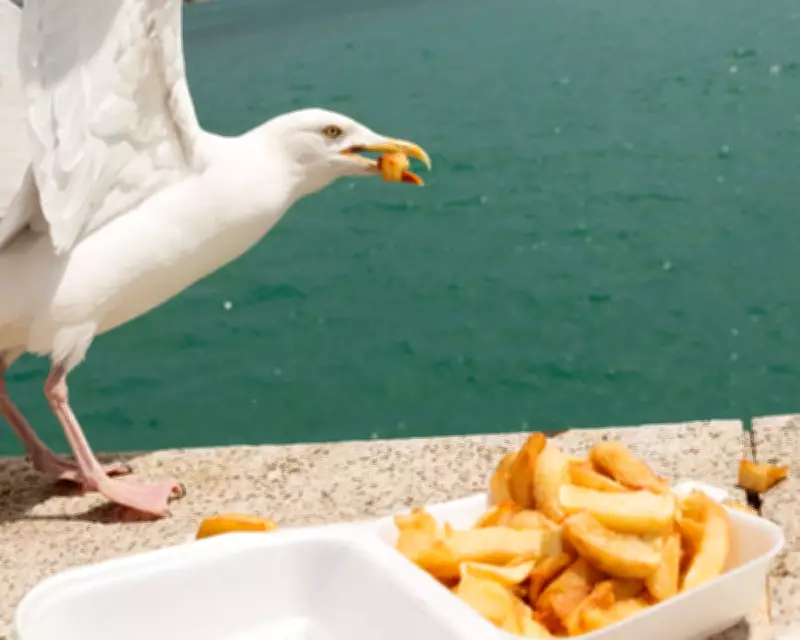
Painting Eyes on Takeaway Boxes Proves Effective in Deterring Gull Chip Theft
New research from the University of Exeter has uncovered a simple yet powerful method to combat the common nuisance of gulls stealing chips from beachgoers. The study reveals that painting a pair of eyes on takeaway boxes can significantly reduce thefts by as much as 50%, offering a practical solution for seaside towns.
Experimental Findings in Devon and Cornwall
Led by Laura Kelley and her team, the research involved presenting herring gulls with tempting takeaways in various seaside locations across Devon and Cornwall. When gulls were given a choice between a plain box and one adorned with painted eyes, they exhibited clear behavioral changes. The gulls were notably slower to approach the box with eyes and demonstrated a reduced likelihood of pecking at it. These findings, published in the journal Ecology and Evolution, indicate that the deterrent effect is sustained over time, with gulls remaining wary of the eye-painted boxes even after repeated exposure.
Broader Applications of Watchful Eyes as a Deterrent
The concept of using watchful eyes as a deterrent extends beyond gull control. Previous studies have shown that similar methods can effectively keep starlings away from crops, prevent raptors from approaching airports, and even reduce predator attacks on livestock by painting eyes on animals' rumps. Humans are also influenced by the sensation of being watched, with images of human eyes successfully used to deter bike theft and encourage charitable donations. However, the effectiveness of this approach varies; for instance, bolder gulls may not be as easily deterred by painted eyes, and in such cases, shouting has been identified as an alternative deterrent.

This research highlights an innovative, non-invasive strategy to manage wildlife interactions in urban and coastal environments, potentially reducing conflicts between humans and gulls while promoting coexistence. The study's implications could lead to wider adoption of similar visual deterrents in other contexts where animal behavior poses challenges.






