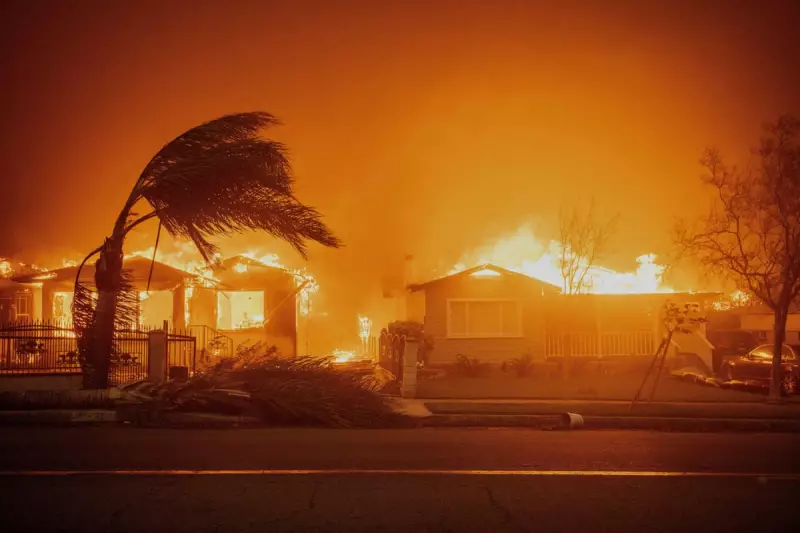
One year ago, a catastrophic firestorm engulfed Los Angeles County, leaving an indelible scar on the landscape and its nearly 10 million residents. Driven by fierce winds through tinder-dry vegetation, multiple blazes erupted in quick succession last January, consuming roughly 16,000 structures on all sides of the sprawling metropolis.
The human cost was profound: 31 lives were lost, and thousands more were irrevocably altered. For many, the extinguishing of the flames marked not an end, but the beginning of a new, arduous chapter defined by loss, bureaucracy, and a slow, painful road to recovery.
Their stories reveal a shared chaos but also the deeply personal ways in which climate-fuelled disasters leave their mark. Here, three survivors reflect on the horror, the year that followed, and their fragile hopes for the future.

An Altadena Family Uprooted: Five Homes in One Year
For Elliott Hostetter and his family, Altadena was a sanctuary. They had spent a decade there, raising two children in a friendly, diverse neighbourhood that felt like a small town within Los Angeles. Their home was filled with the sounds of a thriving garden and their own chickens and ducks.
All of it vanished in January 2025. "Most of the spring was spent just dealing with various levels of shock," Hostetter recalled. The family of four embarked on a nomadic existence, moving into their fifth temporary dwelling just before the end of the year.
The memories of the fire remain vivid: the power failing, howling winds keeping the family awake, and the decision to evacuate early. The next morning, an eerie orange sky and a black cloud shrouding the mountains greeted them at a friend's house. Learning their home was gone, they slipped past barricades to witness their peaceful sanctuary transformed into "hell on earth," the ruins still smouldering.
The cascade of practical horrors followed: "We have nowhere to live. We have nothing. What are we going to do?"
After considering moves from Palm Springs to the Pacific Northwest, the Hostetters decided to try to rebuild in Altadena. They secured a government loan for a process whose costs far exceed their insurance. "Ultimately we have been left on our own to wade through so much bureaucracy," he said, a sentiment echoed by neighbours "cobbling it together."
Hostetter expressed deep frustration with the official response, citing investigations that showed evacuation warnings failed to reach thousands. "To be safe rebuilding where I live, there needs to be some changes – and I don't see those changes happening on a larger level." Yet, solace is found in the community itself. "It is a great tragedy that befell our town – but the people are still showing up."
The Palisades Renter Saved by Community Kindness
On the opposite side of Los Angeles, in the ocean-view neighbourhood of Pacific Palisades, Jenny Weigle-Bonds faced a parallel nightmare with different challenges. She and her husband were renters in a tight-knit community also reduced to ruins.
The days after the fire were defined by a "zombie-like" mental fog, where grief collided with relentless logistics. Miraculously, one week after learning their home was destroyed, they found a new rental amidst fierce competition. That set of keys was all they had; they had evacuated with little more than passports and prescriptions.
"Everything we have in here is thanks to them," Weigle-Bonds said of the friends, family, and complete strangers who filled their empty rental. "It is because of the kindness that we started to make this a home."
She is still haunted by the evacuation. No official alerts came; instead, a community text thread she started was their lifeline. Their escape was traumatic, involving gridlocked traffic in smoke-choked canyons and a second evacuation from a friend's Santa Monica home. The final blow came via a texted photo from her husband, who had hiked past barricades to confirm their loss.
Weigle-Bonds feels the official support has waned over time. "As time goes on, the urgency and need of the survivors is being forgotten." A phrase from her community resonates painfully: "You are the ones you are waiting for." "I hate that that's become true," she added.

The Architect Witnessing Altadena's Fragile Rebuild
Steven Lewis, an Altadena architect, watched trees on his street ignite as he and his wife drove through black smoke to safety. Flames reached his neighbour's shed and his own fence. Against the odds, his home survived, but toxic smoke infiltration meant they could not return for eight months.
By last autumn, he saw tentative signs of recovery. "New homes are being framed up, coming out of the ground," he observed. Lewis has monitored the rebuilding codes closely, noting a difficult balance between promised speed, future resilience, and crippling costs.
"Most of what we see going up is traditional stick-built wood-frame construction," he said, with few opting for safer steel studs. However, some fire-safe elements like interior sprinklers and finer mesh on vents are being discussed. Homeowners are largely navigating this alone, working within the limits of their financial settlements.
The human toll of the complex process is evident. Some neighbours have abandoned rebuilding, exhausted. "Most people have never designed a home... there are so many voices coming at them," Lewis explained, highlighting the potential for predatory practices.
His primary concern now is preserving Altadena's unique character. For-sale signs are appearing as older residents cannot wait years to return. Debates simmer over new zoning and lot splitting. "The question is going to be: how do we get a younger population that's as diverse as the one that was here the day before the fire?"
Local businesses face a classic conundrum, he notes: reopen without a customer base, or wait and deprive the community of vital services. "Do you have to build back the neighbourhood and then restore the services? That's a real conundrum."
One year on, the physical and emotional reconstruction of Los Angeles continues, a testament to resilience but also a stark warning of the escalating challenges posed by a warming climate.