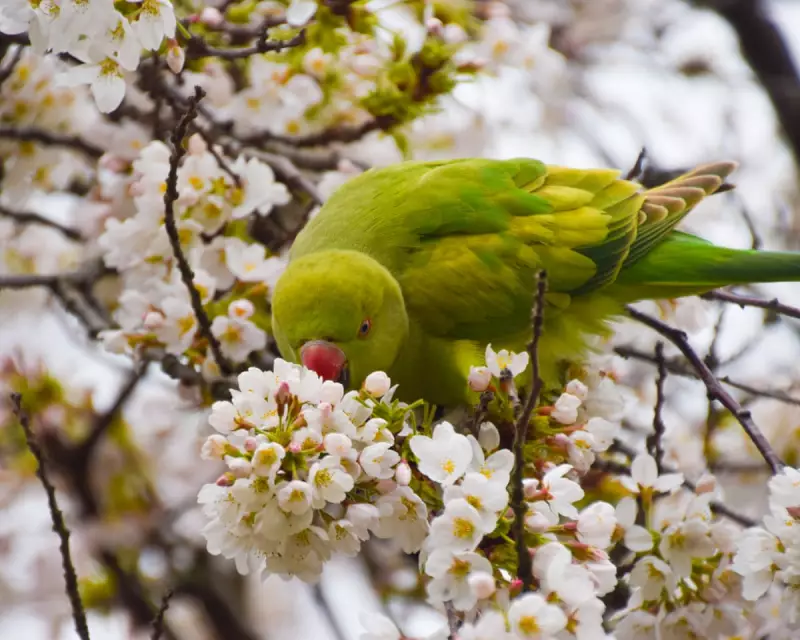
The rapid expansion of brightly coloured ring-necked parakeets across the UK, particularly in London, is causing significant concern for gardeners, conservationists, and native birds. A recent Guardian report on the issue, dated 2 January, has sparked a lively correspondence from readers sharing their experiences and, in some cases, inventive solutions.
A West Londoner's Atavistic Solution
Stephen Pound, a resident of west London, described the parakeets as "green beasts" whose "rapacious greed" drove native species away from his bird tables. He objected "most strongly to the flashmobs" that descended on his garden. However, Mr Pound devised a clever, non-lethal deterrent rooted in the birds' biology.
Reasoning that the tropical parakeets would harbour an atavistic fear of snakes within their DNA, he draped his feeders with realistic rubber serpents. The result was an "almost instant absence of the greedy greens," allowing his local avian neighbours to return and enjoy their food in peace.

Ecological Impact and a Timely Stitch
Other correspondents highlighted the broader ecological damage caused by the non-native birds. Dr Andrew Bodey from Oxford noted that watching a flock attack a flowering tree is remarkable, but devastating. Unlike native birds, they rapidly devour its flowers, leaving a sea of confetti below, which spells bad news for fruit farmers, gardeners, and Britain's already pressured natural ecosystems.
Dr Bodey pointed out that while the full effect of their continued spread may not be fully known, the general impact of invasive species is well understood. He invoked the adage "a stitch in time saves nine," suggesting pre-emptive action is crucial.
A Historical, if Drastic, Culinary Suggestion
From Hutton Roof in Cumbria, Nigel Walker offered a more historical perspective on parakeet control. He referenced a recipe found in a Mrs Beeton's book for parrot pie, which lists its first ingredient as "1 dozen paraqueets." This suggestion, while perhaps not a modern solution, underscores the long-standing human response to managing prolific bird populations.
The letters collectively paint a picture of a growing wildlife dilemma. The vibrant ring-necked parakeets, whose origins in the UK are often debated—whether from a film set or a rock star's garden—are now a common sight. Their success, however, comes at a potential cost to biodiversity and the peace of mind of those trying to feed smaller, native birds in their own gardens.