Stranded Humpback Whale Rescue in Baltic Sea: 'Every Minute Counts'
A massive rescue operation is underway in the Baltic Sea off Germany, where a 10-meter humpback whale has been stranded since Monday, defying all attempts to free it. Conservationists are sounding the alarm, emphasizing that "every minute counts" in the race to save the animal's life.
Critical Situation for the Stranded Whale
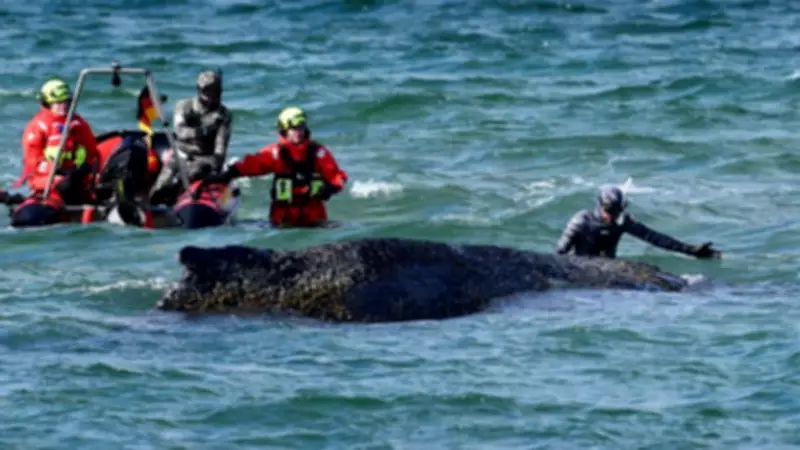
The whale, estimated to weigh several tonnes and believed to be a male, is stuck in shallow waters near Timmendorfer Strand beach in the Schleswig-Holstein region. Sven Biertumpfel, a representative from the Sea Shepherd marine conservation group, told Sky News that if the whale cannot be moved off the shore, "it will probably die there because it's exhausting for the whale." He added that an animal of this size could take up to a week or longer to suffocate if it remains trapped.
Rescue Efforts and Challenges
Rescue teams have deployed a range of strategies to free the whale, including using an underwater earth mover to dig a channel, along with police boats, inflatable boats, and drones. However, by Thursday afternoon, all attempts had proven unsuccessful. At one point, rescuers managed to turn the whale so its head faced deeper water, hoping it would swim away, but it merely returned to its previous position.

Boats from the coastguard and fire department also created large waves in an effort to dislodge the whale, but this too failed. Experts are cautious about pulling the whale out to deeper water due to the risk of injury from its immense weight.
Health Risks and Unusual Habitat
The Baltic Sea poses significant health risks to the humpback whale, as it has lower salt content compared to the North Sea or Atlantic Ocean. Biertumpfel explained that this environment is "bad for the skin," potentially leading to fatal infections. He speculated that the whale may have entered the area by following fish or food, noting that the Baltic Sea is not its natural habitat.
Additionally, the whale became entangled in nets, which rescuers have partially removed. A biologist who inspected the whale in the water reported that some netting remains in its mouth, complicating the rescue.
Community Response and Safety Measures
Local authorities have set up fences on the beach to keep onlookers at a distance, ensuring the whale "does not become even more stressed," according to police spokesperson Ulli Fritz Gerlach. Nearby residents, like Stefan Stauch from Scharbeutz, expressed concern after hearing the whale's sounds during the night, saying, "Poor thing. I hope he can still be saved."
The ongoing rescue operation highlights the urgent need for marine conservation efforts and the challenges faced in protecting large marine mammals in unfamiliar environments.