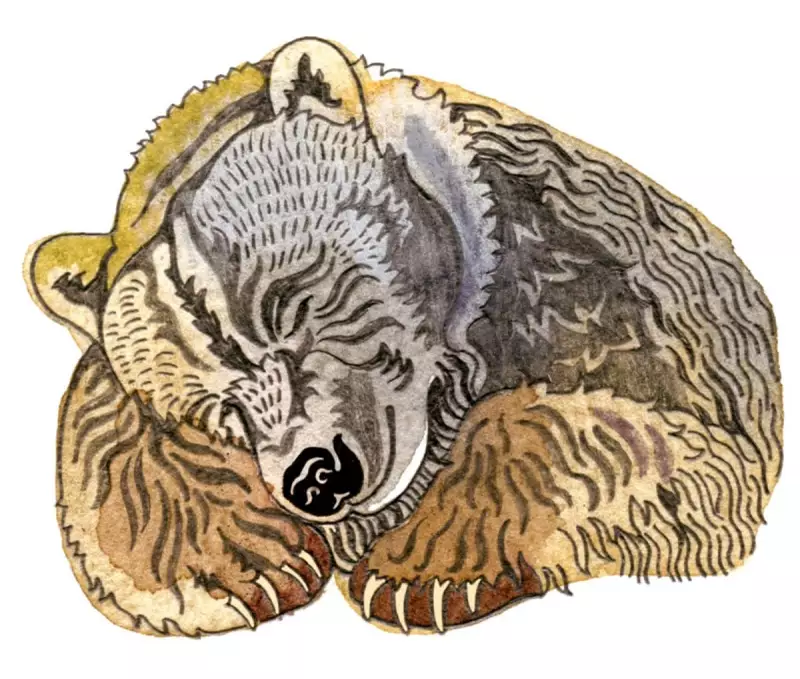
Have you ever wondered how a slumbering bear knows the precise moment to stir from its deep winter sleep? The process of hibernation is one of nature's most remarkable feats, governed by a complex internal system far more sophisticated than a simple alarm clock.
The Internal Clock of the Wild
Bears don't rely on a calendar or a sudden warm sunny day to rouse themselves. Instead, their awakening is orchestrated by a combination of internal biological signals and subtle environmental cues. Their bodies are finely tuned instruments, monitoring changes that are imperceptible to us.
The primary driver is their circadian rhythm, an innate biological clock present in most living creatures. This internal timer continues to tick, albeit at a slower pace, throughout the hibernation period. It helps the animal track the lengthening days as winter progresses towards spring.

Furthermore, a bear's metabolism undergoes dramatic changes. During hibernation, it plummets to conserve energy. As the season turns, hormonal shifts, particularly related to temperature and fat stores, begin to signal that it's time to become active again. The animal's body starts to prepare for the energy demands of being awake.
Environmental Nudges and Survival Instincts
While the internal clock is crucial, the outside world provides important prompts. The increasing ambient temperature in the den, caused by the warming earth and air, serves as a key signal. Melting snow and the sound of running water can also permeate the bear's consciousness.
Perhaps most critically, a bear's physiology is directly linked to its physical condition. Hibernation is not a continuous, unbroken sleep. Bears do wake up periodically, and their bodies are constantly assessing their remaining fat reserves. When these energy stores dip to a certain level, it triggers the need to emerge and find food, regardless of the date on the calendar.
This fail-safe mechanism ensures survival. If a bear entered hibernation without sufficient fat, it might wake up prematurely. Conversely, an exceptionally long winter might delay emergence until conditions are viable for finding sustenance.
More Than Just a Long Nap
Understanding bear hibernation reveals the incredible adaptability of wildlife. It's a state of reduced metabolic activity, lowered body temperature, and minimal physical functions, all designed for survival during scarce months.
The precise 'wake-up call' is therefore a masterpiece of evolutionary biology. It's a blend of endogenous rhythms—the internal clock—and exogenous factors like temperature and light. This ensures the bear emerges when its chances of finding food and successfully breeding are highest.
So, while we might set an alarm, a bear relies on millions of years of evolutionary programming. Its awakening is a silent, precise response to the rhythms of the Earth itself, a true marvel of the natural world happening right under our feet, in hidden dens across forests and mountains.