When we consider Britain's most important trees, we often look for the tallest, the oldest, or the grandest specimens. The mighty oak or the ancient yew might spring to mind. Yet, according to a new perspective, one of the nation's finest trees is a far more modest and generous resident: the willow.
An Unrivalled Hub for Wildlife
Willows may lack a towering central trunk and rarely exceed seven metres in height, but they excel in a crucial sphere: supporting life. More invertebrates live on willow trees than on any other British species. A remarkable 452 insect and other invertebrate species call it home, even outdoing the oak, its closest competitor which hosts 423 species.
This generosity extends throughout the seasons. The tree's early March blossom provides a critical lifeline for emerging spring insects. Furthermore, willows support 23 different aphid species, creating a rich and sustained protein source for birds all summer long. As noted in Jon Stokes's authoritative guide, Trees of Britain and Ireland, willows also nurture 160 species of lichen. In essence, a single willow is not just a tree; it is a thriving, complex ecosystem.

A Symbol of Nature's Tangled Relationships
The very nature of the willow challenges our conventional view of the natural world as a catalogue of separate things. If we instead see nature as a fluid, interconnected web of relationships, the willow stands as its perfect symbol. Speaking of 'the willow' as a single entity is itself misleading. Britain is home to around 20 native species and a further 70 hybrids, 20 of which arise from just three family members.
This botanical promiscuity is another facet of the willow's incredible capacity to generate abundance. However, it also makes the tree difficult to categorise and fix within our dominant, list-based understanding of nature.
A Personal Sanctuary in Derbyshire
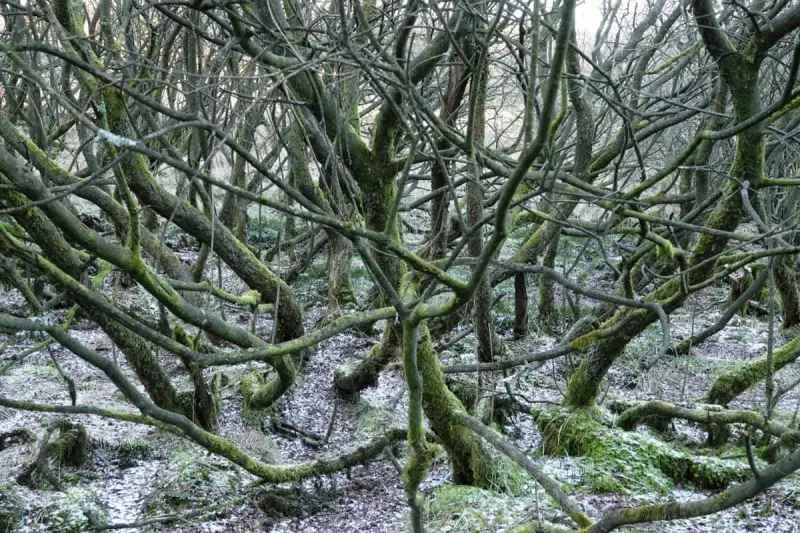
While pure stands of willow are uncommon, one such thicket exists near Buxton in Derbyshire. This dense, gloomy grove creates a profound sense of entering a contained space—a cavern or a sanctuary. Movement through it is slow and deliberate, requiring careful steps on black boggy ground and constant negotiation with low, sweeping branches.
This secluded spot is a shared secret with the local red deer, who visit to wallow in its muddy hollows. On a recent frosty visit, the slow black trickle of water at its heart was edged with silver ice. Wind rattled the moss-laden branches, and the only bird sighting was a woodcock, rising silently with wings brattling against the twigs before plunging into the next willow entanglement. It is a place that embodies the wild, interconnected spirit these trees represent.
The willow, in all its varied and hybrid forms, may not win prizes for stature or age. Yet, through its unparalleled support for wildlife and its embodiment of nature's complex web, it claims a quiet title as one of Britain's most vital and generous trees.