Sunshine Reveals Ancient Secrets in Storeton Wood
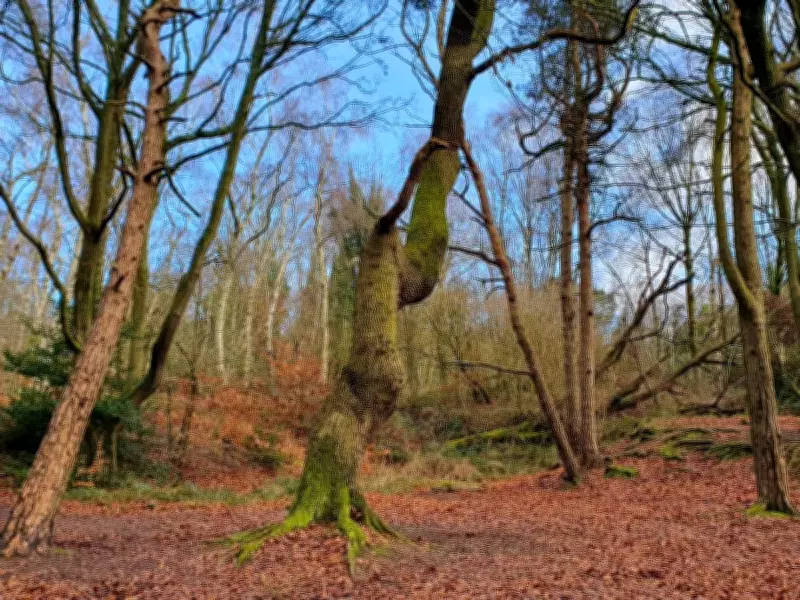
After weeks of relentless rain, the sun finally broke through, casting a dry, bright light over the Wirral. While the distant Welsh hills remained cloaked in snow, Storeton Wood offered a welcome respite. This secondary woodland, now home to oak, beech, and silver birch trees, was once a bustling quarry. Beneath the canopy, a coppery layer of fallen leaves protected the soil from recent downpours, while fallen limbs hosted a feast of fungi. In places, creamy white Storeton sandstone peeked through the earth like discarded vertebrae, and the rhythmic drumming of great spotted woodpeckers echoed through the air.
A Victorian Discovery Amid Industrial Bustle
Standing by the remnants of George Stephenson's quarry track, one can almost hear the clamor of 1838. Workmen were busy extracting sandstone for Liverpool's construction when they stumbled upon mysterious handprints in the rock. Initially, they believed these were signs of people lost in Noah's flood, but Victorian scientists later identified them as footprints of a crocodile-like creature named Chirotherium storetonense, meaning "hand beast." Dating back 240 million years to the Triassic period, these impressions were preserved in the muddy edges of a lake within a hot, Europe-wide desert.
Slabs featuring the footprints were sent to various museums, and the Liverpool Natural History Society—now defunct—rewarded the quarry workers with 20 shillings for their find. Today, the quarry is invisible, infilled with spoil from the first Mersey tunnel's construction, but its legacy endures.

Millennium Markers and Fungal Marvels
In a nod to deep time meeting the modern era, a replica Chirotherium was engraved on the wall surrounding Storeton Wood to celebrate the discovery. Navigating hummocky ground and fallen tree trunks, a quest for this replica led through a landscape rich with fungal wonders. After moments of doubt, the engraving suddenly appeared, bright and clear, depicting the creature scaled down from its original 2.5-meter length, with a long tail for balance, sparking vivid imaginations of the ancient beast.
This journey through Storeton Wood intertwines an archive of fossilised footprints from the Triassic, childhood memories of Stephenson's Sankey viaduct faced with Storeton sandstone, and the human impulse to mark the millennium. What began as a sunny woodland walk transformed into a profound exploration of time itself, connecting natural history, industrial heritage, and personal discovery in a single, serene setting.