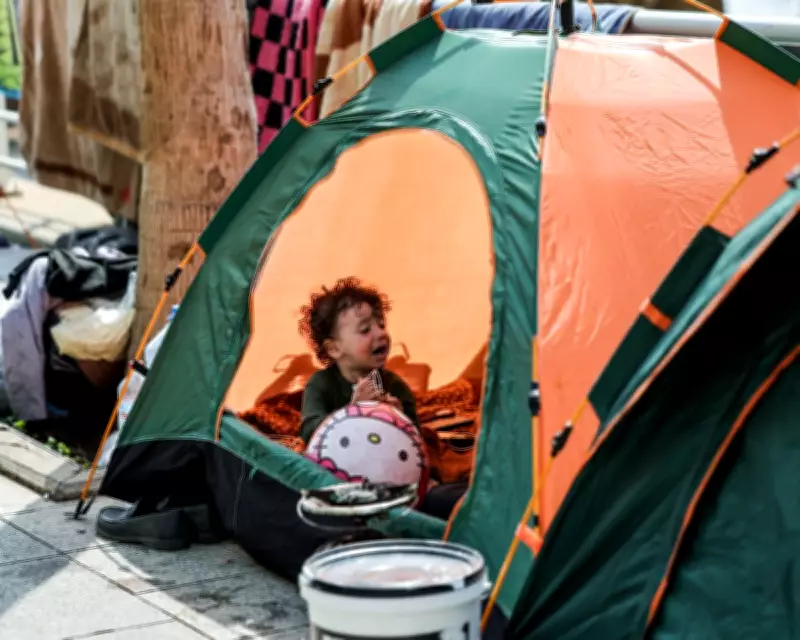
Global Outcry Over War's Psychological Toll on Children Intensifies
In response to Gordon Brown's recent article highlighting the devastating effects of war on children, a wave of letters from experts and concerned citizens has underscored the urgent need for international action. The discussion was sparked by the bombing of the Shajareh Tayyebeh school in Minab, Iran, which turned an educational institution into a graveyard, symbolizing the brutal reality faced by young victims in conflict zones worldwide.
Psychological Scars That Last a Lifetime
Dr. Maria Callias, Chair of Children and War UK, emphasizes that wars inflict profound psychological damage on children beyond physical injuries. In her work with child psychologists in Ukraine, Gaza, and other areas of conflict, she has observed how displacement, disrupted schooling, bereavement, and witnessing horrors can lead to lifelong mental health disturbances. Catastrophic experiences such as air raids or ground attacks leave deep emotional wounds that require immediate and sustained intervention.
Dr. Callias advocates for the international community to not only strengthen legal protections for children in war zones but also to increase support for trauma treatments. Evidence from Ukraine shows that up to 92% of traumatized children can recover their mental health with proper care, highlighting the potential for life-changing outcomes if resources are allocated effectively.

A Moral and Political Imperative
Mackenzie Smallman from Manchester argues that opposing the targeting of children and teachers should not be controversial. He calls on citizens to engage in democracy by raising these issues with MPs, councillors, and local leaders, ensuring that children are never again blown up in their classrooms. This perspective aligns with Brown's article, which blends moral, political, and legal standpoints to condemn such atrocities.
Ann Kramer from Hastings, East Sussex, echoes this sentiment, pointing to the staggering toll in Gaza. Citing Save the Children's report from September 2025, she notes that at least 20,000 children were killed in 23 months—an average of one Palestinian child per hour. She criticizes the government for failing to call out potential war crimes or genocide, urging a stronger stance against violence targeting the young.
The Broader Impact on Global Conflicts
The letters collectively paint a grim picture of how conflicts in Iran, Ukraine, and the Middle East are disproportionately affecting children. Beyond immediate fatalities, the long-term psychological and social consequences threaten to undermine future generations. Displacement to other countries and loss of community structures exacerbate the trauma, creating a cycle of suffering that extends far beyond the battlefield.
As the international community grapples with these issues, the call for action grows louder. From legal reforms to enhanced mental health support, the solutions proposed aim to safeguard the most vulnerable in times of war. The Guardian's letters section continues to serve as a platform for these vital discussions, encouraging public engagement and advocacy for change.