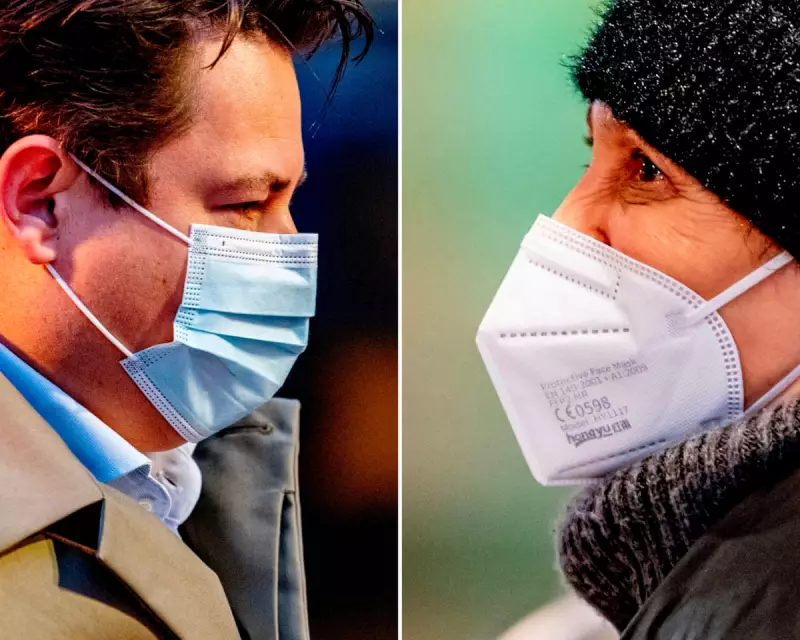
A coalition of leading health experts has issued a direct appeal to the World Health Organization (WHO), demanding an urgent overhaul of global guidelines for protective face coverings in medical settings. They argue that the ubiquitous surgical mask offers insufficient defence and must be replaced by respirator-grade masks, such as FFP2 or N95 models, as standard practice for healthcare workers.
The Case Against the Surgical Mask
In a formal letter addressed to WHO Director-General Dr Tedros Adhanom Ghebreyesus, the group states there is "no rational justification remaining for prioritising or using" standard surgical masks globally. They describe the protection these masks offer against airborne pathogens like Covid-19 and influenza as "inadequate."
Professor Adam Finkel of the University of Michigan School of Public Health, a former US regulatory chief and one of the letter's organisers, offered a stark analogy. He said surgical masks were "not designed to stop airborne pathogens" but were originally invented to prevent clinicians from contaminating open wounds. He compared them to obsolete technology: "Surgical masks are to respirators what the typewriter was to the modern computer."

The letter, authored by seven clinicians and scientists and endorsed by nearly 50 senior researchers and over 2,000 members of the public, emerged from discussions at an online conference. It highlights that while surgical masks may block around 40% of Covid-sized particles, respirators filter approximately 95%.
Call for a Respirator Standard in Healthcare
The experts contend that respirators—designed to seal tightly to the face and filter tiny particles—should be worn by doctors and nurses during every patient interaction. This shift, they argue, would lead to fewer infections among both patients and staff, reducing rates of sickness, absence, and burnout across the health workforce.
Professor Trisha Greenhalgh of the University of Oxford, a signatory whose research is cited in the letter, explained the critical difference: "By sealing against the face, respirators force airflow to pass through them, filtering out the airborne germs. Medical masks, in contrast, fit loosely and leak extensively."
The group suggests the WHO's own procurement systems could help improve access to respirators in lower-income countries, with production of surgical masks being phased down over time.
Potential Controversy and WHO Response
While the proposed guidance is specifically for high-risk healthcare environments, it touches a nerve in the ongoing debate about masks, which became a culture-war issue during the pandemic. The letter also calls on the WHO to "unambiguously inform the public" that Covid-19 spreads via airborne respiratory particles, after previous criticism of the organisation's slow recognition of this route.
Critics of stricter mask policies often point to a lack of randomised controlled trials proving their effectiveness in slowing community virus spread. Professor Finkel and his colleagues counter that such trials are impractical for masking, and that physical laboratory tests demonstrating filtration are sufficient evidence.
A WHO spokesperson confirmed the letter would "require careful review," adding that the organisation is currently revising its Infection Prevention and Control guidelines based on the latest scientific evidence to ensure health worker protection.
The experts propose that "off-ramps" could exist, where respirator use might be relaxed based on local infection rates or superior room ventilation. However, their central message remains clear: in the face of airborne threats, the global standard for medical protection must be raised from the basic surgical mask to the far more effective respirator.