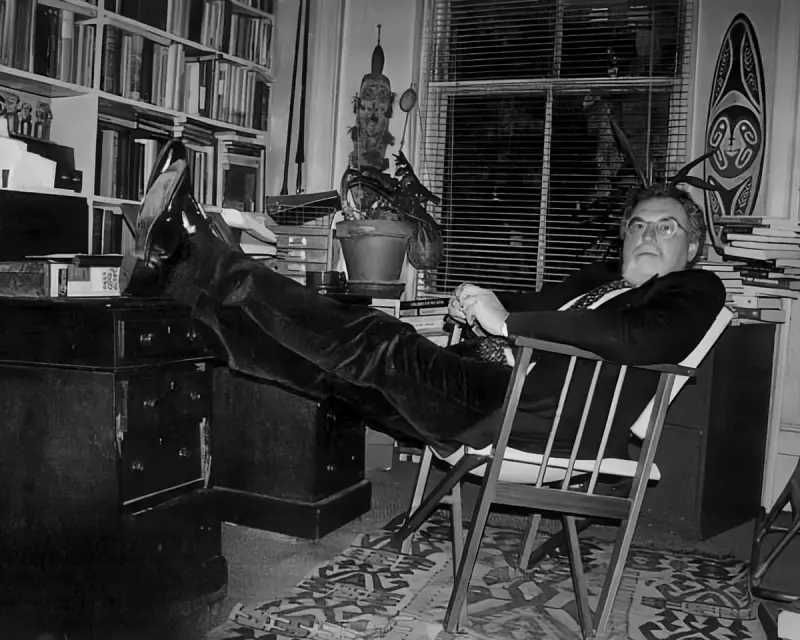
Professor Roland Littlewood, a distinguished and influential figure in the fields of medical anthropology and transcultural psychiatry, has died at the age of 77. His death marks the loss of a pioneering academic whose work fundamentally shaped the understanding of how culture and mental health intersect.
A Pioneering Career in Anthropology and Psychiatry
Born on the 26th of March, 1948, Littlewood's academic journey was both broad and deeply impactful. He studied natural sciences and social anthropology at the University of Cambridge before qualifying in medicine. This unique combination of disciplines laid the foundation for his life's work. He became a consultant psychiatrist and a professor of anthropology and psychiatry at University College London (UCL), where he co-directed the renowned Centre for Medical Anthropology.
His research took him across the globe, from the Caribbean to the Middle East and South Asia. He was particularly known for his ethnographic work in Trinidad, which informed his acclaimed 1993 book, Pathology and Identity. This work explored the condition of 'brain fag' and established his reputation for insightful, field-based research that challenged Western psychiatric norms.

Challenging Orthodoxies and Defining Concepts
Littlewood was a formidable intellectual who consistently questioned established dogmas. He was a critic of both rigid biological determinism in psychiatry and what he saw as the sometimes uncritical cultural relativism within anthropology. His work sought a nuanced middle ground, examining mental illness as a reality experienced within specific cultural contexts.
He made significant contributions to the understanding of culture-bound syndromes and developed the influential concept of 'medical syncretism'. This idea describes how patients and healers blend elements from different medical traditions, such as combining spiritual and biomedical treatments. His 1997 paper, co-authored with Simon Dein, on the 'evil eye' remains a seminal text in the field.
Beyond academia, Littlewood engaged with the arts and public discourse. He was a member of the Institute of Psychoanalysis and served on the Royal Anthropological Institute’s committee for medical anthropology. His literary talents were also evident in his regular contributions to the London Review of Books and his own poetry.
A Legacy of Interdisciplinary Insight
Professor Littlewood's legacy is one of profound interdisciplinary bridge-building. He demonstrated that psychiatry could be enriched by anthropological sensitivity, and that anthropology could engage meaningfully with the realities of human suffering and healing. His death on the 31st of December, 2024, leaves a void in both fields.
He is survived by his wife, Dr. Giselle Withers, his children, Ben and Hannah, and his grandchildren. Colleagues and former students remember him not only for his sharp intellect and scholarly rigour but also for his generosity, wit, and unwavering commitment to understanding the human condition in all its complexity. His work continues to inspire new generations of researchers exploring the intricate links between mind, body, and society.