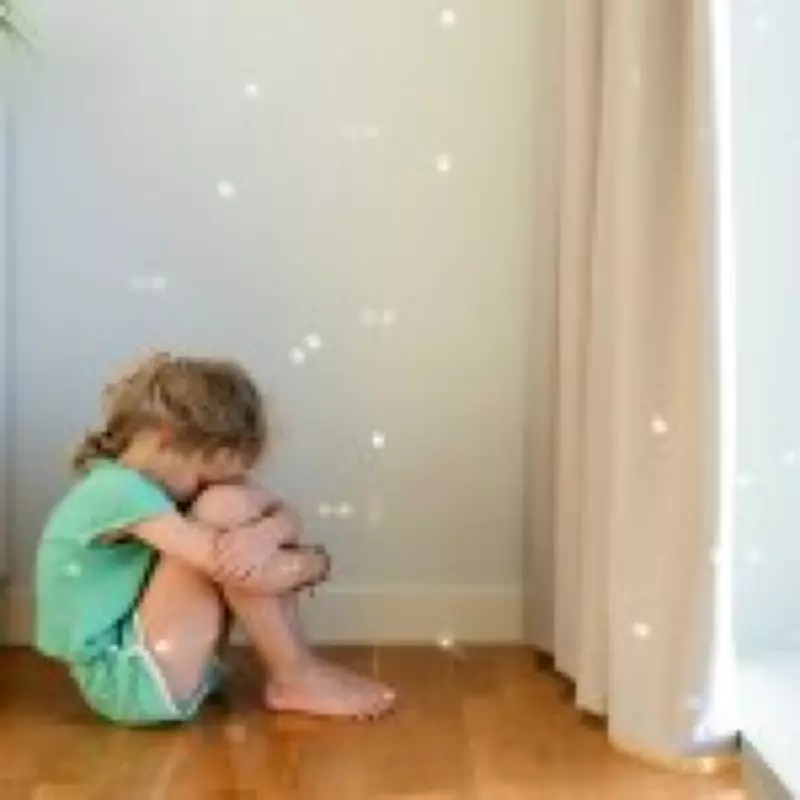
The Haunting Legacy of Childhood Witness to Domestic Violence
One of my most vivid childhood memories involves my father hurling a chair directly at my mother. I was approximately six years old at the time. I recall sliding down the back of the door, curling into a protective ball, covering my head with my hands, and sobbing uncontrollably. That particular day was not an isolated incident. My father would frequently erupt in anger over seemingly trivial matters. Following each violent outburst, he would inevitably convince my mother that it would never happen again. Yet, the pattern always repeated itself.
The Sounds That Linger Longer Than Images
Now, three decades later, it is often the sounds that haunt me more persistently than the visual memories. Nights were especially terrifying. I distinctly remember lying in bed, trying to fall asleep, while hearing the relentless sound of my father punching my mother repeatedly in the bathroom. On another occasion, I woke to find my mother's forearm wrapped in a towel that was completely soaked through with blood. My father had thrown a glass at her, and she was later informed the cut came dangerously close to a major artery. A constant, chilling fear that my father would eventually kill my mother took permanent residence in my young mind.
While I was never physically harmed to the same extreme degree, the psychological terror was ever-present. I remember being dragged down the stairs while wetting myself from sheer fear. I was regularly told I was fat. I did everything possible to avoid being alone with him—the person who was supposed to be my ultimate source of safety. I became an expert at reading the atmosphere at home, preparing myself for whichever version of my father would walk through the door. I grew hyper-attuned to sounds and shifts in mood, learning to assess danger within mere seconds.

Children Are Victims, Not Just Witnesses
This heightened state of alert is what I desperately wish people understood about children who grow up witnessing domestic abuse. They are unequivocally victims too, even when the violence is not always directed at them. Trauma manifests as having to witness abuse and live in perpetual fear. It is being forced to monitor for danger, mediate adult emotions, and hide the painful truth from the outside world.
Ironically, I was a high achiever and a model pupil at school. This was not by accident; I knew that any 'bad' behavior would inevitably make the situation at home even more volatile. My mother never reported the abuse. When she went to the hospital with her injured arm, she told the medical staff she had simply fallen over. This meant no professional ever became involved in our lives, and no one intervened to offer support. I often wonder if she had fully understood how the environment was impacting me, perhaps she would have left sooner. Ultimately, it took thirteen years, and she only left for good when I developed anorexia.
The Silence and Denial That Compound the Pain
I was vocal about the abuse to my friends from a young age, and adult family members were aware—they simply chose to look the other way. My father's family denied it completely, and I was told not to 'tell lies.' When children from abusive households grow into adults, society rarely connects the dots between their childhood experiences and their adult struggles with mental health. Too often, we are left to carry this burden alone, especially when family members insist we should just 'get over it.'
For me, the trauma has paradoxically intensified with time. Externally, I appear to be someone who has 'made it out.' I have a good career, I am married to a kind man who is the polar opposite of my father, and I have two beautiful children. Yet, internally, I struggle profoundly with emotional regulation. I can cycle through intense sadness, anger, stress, frustration, and elation all within a quarter of an hour. Sometimes, I am overwhelmed with a sense of self-hatred, feeling that if my own parents could not love and protect me, then it must be impossible for me to love and protect myself.

The Ongoing Battle for Healing
Seeing big, loving families together can trigger overwhelming grief, sadness, and anxiety. I mourn the family I never had and the extended family my children are denied because they are not safe around my parents. I still have days where I feel so overwhelmed that I self-harm or experience suicidal ideation, fighting those urges with every ounce of my strength. I feel a horrifying guilt that I continue to struggle, despite my outward success.
I have never felt worse than I do currently, and I have been seeking professional help for almost a year. I recently started private therapy, which provides some relief, but its cost means I can only afford a couple of sessions per month. Healing is not a linear process; it is messy, painful, and utterly exhausting. Some days I feel strong and proud of my resilience. On other days, I question how I can possibly carry on.
I maintain a cautious distance from my mother, seeing her about once a month. I do not believe she ever intended to hurt me, but the reality is that she did, and now she lacks the capacity to help me heal, as she has not resolved her own trauma. I have no contact with my father. It took me thirty-four years to accept that he will never change or care about the devastating impact his behavior has had on my life. In hindsight, I believe the most dangerous thing about him was his ability to be completely and utterly charming.
A Call for Systemic Change and Recognition
I have tried multiple times to 'forget' the abuse and 'move on,' but he remains the same person. I have been on the receiving end of his rage as an adult, even in front of my own children. This reinforces a crucial truth: children who witness domestic abuse must be recognized and treated as victims, not merely as passive witnesses.
It breaks my heart and fuels my outrage that hundreds of thousands of children are currently living through the nightmare I endured, and it feels as though their plight is rarely discussed. I am determined to help change that narrative. These children require and deserve specialized support from mental health services, safe family members and friends, domestic abuse charities, and social services. This intervention must happen early, before the trauma becomes a lifelong burden.
There are countless adults still struggling with what they were forced to see and experience as children, while the system barely acknowledges our existence. Most importantly, we need to remember that as adults, we are not powerless anymore. We deserve support, love, and safety—all the fundamental things we were denied from the very beginning. I know a better life is possible, and I fight for it every single day.